Theme editor

Scale Model Shop

Glue

  • Thread starter Thread starter Guest
  • Start date Start date
Status
Not open for further replies.
G

Guest

Guest
Thread owner
I am a newbe at plastic modeling and I need some help. Have an old Entex kit of the 1906 Rolls- Royce at 1/16 scale. Have washed off any mold release before painting some of the parts with surface primer and then Tamiya for plastic.Now am having problems glueing them together.Have tried Testors liquid cement and Zap-a-gap medium. Both take a long time to set up.Have scraped the paint from glue area with the same results. Is this normal or is there a better way. HELP


Mike
 
Thread owner
Glue for plastisc in model making is not a glue. Known generally as Poly cement it actually soften the plastic and welds it together as it cures. Some cements are fast some take a time to go off.


If you use these cements to try and stick together painted objects they will not work plus they may soften and wreck paint finishes. This is the best way in joining styrene plastic as used in model making.


Cementing together should be completed with out a paintbrush in sight. Or remove the paint from the edges to be joined together down to the bare plastic.


Super Glue (Zap being just one) is a glue ie a substance which lays between two edges and joins each edge to the superglue between.


Testors cement I have not used. I use mostly Mr Cement S and Tamiya thin Cement. These go off within a minute and I find you can then release but they do need further cure time to gain maximum strength.


Other cements Revell and Humbrol are slow and you will need to have the parts strapped together until cured. With the fast ones I hand hold until they have gone off enough to release pressure.


This is just a general insight. If you are going to use the fast ones come back for more info or look in the archives where there is lots of info.


Laurie
 
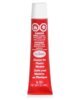
Here it is "Testors" plastic model cement, View attachment 113613

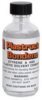
been using it for decades, for tougher bonds "Plastruct Bondene" styrene & ABS plastic solvent cement View attachment 113614

evaporates very quickly but is a real plastic "welder" just set pieces together with clamps, tape or whatever and apply a few drops it will run right into the seams and once dry is unbreakable;) hope this helps......Jim:) Oh yeah, scrape the paint always for best results no matter what cement you useView attachment 226636

View attachment 226637
 

Attachments

  • e%2bl9%2b6vhNjQ&w=300&h=300&c=0&pid=1.9&rs=0&p=0&r=0.jpg
    e%2bl9%2b6vhNjQ&w=300&h=300&c=0&pid=1.9&rs=0&p=0&r=0.jpg
    1.6 KB · Views: 0
  • th?&id=JN.Oe3lEriK6ERdJgDGGJb79Q&w=300&h=300&c=0&pid=1.9&rs=0&p=0&r=0.jpg
    th?&id=JN.Oe3lEriK6ERdJgDGGJb79Q&w=300&h=300&c=0&pid=1.9&rs=0&p=0&r=0.jpg
    1.7 KB · Views: 0
Thread owner
Welcome to the forum mate


Following adhesives I use


-Tamiya/Gunze Extra/ultra thin


-Revell Contacta Cement with needle


-BSI Industries extra thin Cyanoacrylate/superglue


-BSI Industries Cyanoacrylate Normal


Paint never helps adhesion, as it is effectively a barrier between the mating surfaces


Hope that helps and good luck


Cheers, John
 
Thread owner
\ said:
Here it is "Testors" plastic model cement, View attachment 124676been using it for decades, for tougher bonds "Plastruct Bondene" styrene & ABS plastic solvent cement View attachment 124677evaporates very quickly but is a real plastic "welder" just set pieces together with clamps, tape or whatever and apply a few drops it will run right into the seams and once dry is unbreakable;) hope this helps......Jim:) Oh yeah, scrape the paint always for best results no matter what cement you use
aghrh! I love the plastruct and I have used it, but gave up on it since I was such a clumsy guy, so I used the Tamiya flat squat ones. Have never knocked one since. Anyway, I highly rate that glue, as long as you are careful.
 
Thread owner
\ said:
aghrh! I love the plastruct and I have used it, but gave up on it since I was such a clumsy guy, so I used the Tamiya flat squat ones. Have never knocked one since. Anyway, I highly rate that glue, as long as you are careful.
Yes I have achieved, a number of times, the bottles ambition to fall over even with the square ones.


Easily solved. Bit of Velcro the soft hairy bit on the bottom of the bottle.


On the cutting board another two pieces the opposite type the coarse side.


Stick the bottle on either. Problem solved.


Actually I experimented with all three quick cements some time ago. Tamiya Thin, Mr Surfacer and Plastrut.


Mr Surfacer is the quickest and the one I use most as you can tack around pieces finger holding. Dries (holds) 30 sec or more depending on temp.


The mark left on the surface of the plastic is minute covered by a primer.


Tamiya slower. I use that when I need just a little time to fractionally position the pieces.


Mark left can disturb the plastic surface and there is a need to be carful not to spread the cement


and to use in minimal amounts.


Plastrut is much much slower and I did not find much time for it chucked it.


The above provide good joints but they are not as strong as Revell and Humbrol but there is the price of time to pay using these two.


Plus the joints have to be strapped together while curing.


I would recommend Tamiya and Mr Cement (where super strong joints are not needed) ie welding together two halves of a wing or fuselage.


The reason I think they are best is that they allow you to get on quickly with out long periods waiting for the weld to hold (although not totally cure).


Finally some squash the joints using the Tamiya and Mr Cement. This pushes out molten styrene to fill the joint.


I have, except in exceptional circumstances, found the cement does this itself, using fingers without pushing the


styrene proud of the joint. But then we all have our likes dislikes and personal techniques. :eek:


Laurie
 
Thread owner
\ said:
Here it is "Testors" plastic model cement, View attachment 124676been using it for decades, for tougher bonds "Plastruct Bondene" styrene & ABS plastic solvent cement View attachment 124677evaporates very quickly but is a real plastic "welder" just set pieces together with clamps, tape or whatever and apply a few drops it will run right into the seams and once dry is unbreakable;) hope this helps......Jim:) Oh yeah, scrape the paint always for best results no matter what cement you use
 
Thread owner
Thanking everyone for your good info. on glue. I feel much more confident and will do a little testing before moving on. Not sure I will ever be able to contribute much to this site, but I sure am enjoying it's contents.


Mike
 
Thread owner
\ said:
Not sure I will ever be able to contribute much to this site
Think you have done so with your question Mike.


If we do not get questions there is a lack of flow of ideas and information.


So the more the merrier.


Laurie
 
\ said:
Thanking everyone for your good info. on glue. I feel much more confident and will do a little testing before moving on. Not sure I will ever be able to contribute much to this site, but I sure am enjoying it's contents.
Mike
Nonsense, ALL contributions are valued on this site from stark beginner to seasoned veteran, please share with us your work so that we may help you along with any advice or tips you may require and before you know it you'll be chugging right along;)...........Jim:)
 
Thread owner
Thanks guys, being new myself to plastic kits, Iv'e learnt quite a bit about glues and how they react, from this thread. It's nice to know that experts are at hand. This can be a sticky subject for most newcomers. :oops:
 
I have a Swan-Morton No 3 handle fitted with a size 10 blade. As it became blunt I have carefully re-sharpened and re-shaped it to have a chisel end. I use this if necessary to scrape paint off joining surfaces.


Sorry, but I'd forgotten about this thread, so I've started a new one 'My way with glue'.
 
Status
Not open for further replies.
Back
Top
