Theme editor

Scale Model Shop

Masking the clear bits prior to airbrushing.

  • Thread starter Thread starter Guest
  • Start date Start date
Status
Not open for further replies.
G

Guest

Guest
Thread owner
Guys just how do you go about masking up your windscreens prior to airbrushing. I could always leave these out until finished but then I would also need to find a way of painting the moulded frame work into the windscreen / side windows ( im talking military vehicles here) or indeed aircraft canopies. I have wasted no end of tape just trying to do this not to mention the frustration is it causing me.


Any advice please would be greatly appreciated.
 
I'd try a thin brush and a cocktail stick first masking can pull off the paint when you remove them


It's quicker to paint them with a thin pointed brush and use a cocktail stick to remove any overspill
 
I mask with Tamiya tape.


1. Dip clear parts in Klear or suitable gloss varnish. Allow 12 hours to dry/cure


2. Apply tape and burnish down to any framing or edge of part.


3. Use a NEW No.11 scalpel to cut tape to edge or framing.


4. Burnish down edges again, I use a cocktail stick cut of as a 45 degree chisel. It won't mark the clear part or tear the tape.


5. Spray interior colour.


6. Spray exterior colour.


7. Remove masking. I build aircraft and usually do this right at the end, after all varnishes, weathering etc.


I don't have trouble with the masking removing the paint when I remove it, but I use enamel paints.


Cheers


Steve
 
Thread owner
\ said:
I mask with Tamiya tape.
1. Dip clear parts in Klear or suitable gloss varnish. Allow 12 hours to dry/cure


2. Apply tape and burnish down to any framing or edge of part.


3. Use a NEW No.11 scalpel to cut tape to edge or framing.


4. Burnish down edges again, I use a cocktail stick cut of as a 45 degree chisel. It won't mark the clear part or tear the tape.


5. Spray interior colour.


6. Spray exterior colour.


7. Remove masking. I build aircraft and usually do this right at the end, after all varnishes, weathering etc.


I don't have trouble with the masking removing the paint when I remove it, but I use enamel paints.


Cheers


Steve
Steve, are you saying to 'completely cover' the windscreen with tape then burnish down the edges before cutting to the frame. Maybe that's where I've been going wrong, as I have been trying to fix the tape close to the edges and in line, if this makes sense.
 
Thread owner
Hi I usually use humbrol maskol, brush this on to the part of the canopy you don't want touched with paint. Allow this to dry for about 1 hour then spray. Before removing run around the edges carefully with a new scalpel blade, then remove.


Scott
 
Thread owner
I always use humbrol mask, its way easier, and gives a crisp clean edge to the windows.
 
Thread owner
Hi I use tamiya tape or famous sheet masking film this comes in about 6 by 10 inch sheets and is chequered it's a bit thinner than tamiya tape if it's a bunch of strait lines like a Grumman wildcat I mask useing thin strips then cut the corners where it overlaps if it's got curves like a mustang I mask useing the film then burnish with a cocktail stick then cut but this is risky as a cut off line can be a wrecker


Roger
 
Yep, cover the entire window or panel,unless there is a genuine straight edge to go to.


An alternative method is to mask the edges of the window or panel and then fill in the centre. I have had leakage under the masking using this method...probably my fault though!


You use thin strips of tape for the edges and these inevitably overlap.


Cheers


Steve
 
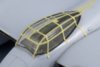
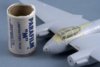
Alan, I use Parafilm almost exclusively. It's semi-transparent so you can easily see the canopy framing underneath, and it leaves no residue as there's no actual adhesive. Works best if the canopy has been Future'd first. I used it on an Airfix Mosquito:


View attachment 238665


On this particular model I'd sanded all of the framing off because it was too heavy, so I used thin strips of masking tape to determine where the frame lines should be (in retrospect I should probably have used thinner strips).


View attachment 238666


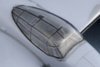
A small piece of Parafilm was then stretched and pressed down firmly over the canopy.


View attachment 238667


Each frame was then cut freehand with a brand new #11 blade in a scalpel, using the taped lines as a guide. The excess Parafilm, along with the tape, was then peeled off.


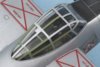
View attachment 238668


The final canopy after airbrushing (much larger than actual size...). The green areas represent internal framing.


Hope this is helpful.
 

Attachments

  • Canopy_04_zpsjcbln0in.jpg
    Canopy_04_zpsjcbln0in.jpg
    3 KB · Views: 0
  • Canopy_05_zpstempexx6.jpg
    Canopy_05_zpstempexx6.jpg
    3 KB · Views: 0
  • Canopy_06_zpsv9bhx21d.jpg
    Canopy_06_zpsv9bhx21d.jpg
    2.8 KB · Views: 0
  • Canopy_08_zps4okezleo.jpg
    Canopy_08_zps4okezleo.jpg
    3.8 KB · Views: 0
Thread owner
\ said:
I mask with Tamiya tape.
1. Dip clear parts in Klear or suitable gloss varnish. Allow 12 hours to dry/cure


2. Apply tape and burnish down to any framing or edge of part.


3. Use a NEW No.11 scalpel to cut tape to edge or framing.


4. Burnish down edges again, I use a cocktail stick cut of as a 45 degree chisel. It won't mark the clear part or tear the tape.


5. Spray interior colour.


6. Spray exterior colour.


7. Remove masking. I build aircraft and usually do this right at the end, after all varnishes, weathering etc.


I don't have trouble with the masking removing the paint when I remove it, but I use enamel paints.


Cheers


Steve
Exactly as Steve said for me except I use regular painters masking tape (since I didn't have Tamiya last time I did a canopy,) and I use acrylic paints... Vallejo, to be exact. Hasn't failed me yet, and I have never had the paint come off with the tape.
 
Thread owner
I use thin pieces of masking tape applied in the same way as the mask systems that are available.
 
Thread owner
Thank you guys for all your helpful comments. I will set off to work and try masking once again.


Cheers
 
Thread owner
For what it's worth, it is also possible to hand paint the framework, then clean it up with a sharpened cocktail stick, easier than you'd think, and as long as you don't leave it too long, pretty flexible.. Mind you, that Parafilm looks like stuff every household should own!
 
Status
Not open for further replies.
Back
Top