In-Box review No1
Zoukei- Mura Henschel Hs129B-2/R11
Zoukei Mura are one of the lesser known mainstream kit manufacturers. Perhaps it is because their kits are not so easy to get hold of (Hannents do not stock them, but John does)
1/32 Henschel Hs 129 B-2/RⅢ Zoukei-Mura SWS17 – Scale Model Shop
Hopefully I will be able to demonstrate here why they deserve more recognition as a first class premium kit manufacturer, ranking alongside Tamiya, worthwhile of you spending your dosh on them, through John or course, and why I think that despite the cost, they offer among the best value kits on the market.
But first a bit of an introduction to them. Consider this first part of the review more a review of Zoukei-Mura as a company rather than the kit itself.
ZM, for short, are a fairly new company and I first became aware of them when Steve did a build of what I believe was ZM's first kit, a Ta152 H-1. These kits were even more difficult to get hold of back then than now, in fact getting their kits was almost as hard as remembering how to spell the name of their company...
That first kit had its shortcomings, as I am sure Steve will confirm (do correct anything I say wrong Steve, I speak from memory). Some of the fit was questionable and they had three colour plastic which was a real gimmick. the parts needed some clean up too. Steve, however did his usual great job. More recently they re-released their Ta152 as a H-0 version and had addressed the shortcomings of the first release, no more multi-coloured plastic, improved fit, cleaner and sharper mouldings and I rank that H-0 as one of my favourite builds ranking close to the Tamiyas.
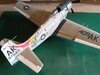
My own first experience of ZM though was their first Skyraider release. This was before they addressed all their shortcomings. This kit was split between three different colour plastics and it was not just the colours that was different. The black parts were a nice hard black plastic that was easy to sand with the parts fitting perfectly, these parts also have nice sharp detail. The silver parts, well the plastic was somewhere between what those old Airfix 1/72 figures were produced in and the old Airfix kit plastic, these parts just did not sand very well and had 'iffy' fit while the detail was soft. The main fuselage and wing structure was in a normal grey polystyrene similar to Revells with Revell-type surface detail but these parts did sand well and fitted well. That said this kit came together really well and I was really pleased with the build.
I also experienced another early ZM kit, their P51. I did not complete this kit because, quite frankly, I messed up. I did not follow the instructions thinking I knew best, I didn't. This kit was a good one, though not up to the standard of later releases. as I said, ZM learned and improved.
Companies that listen, learn and improve deserve support and ZM have certainly done that. Their newer releases from the Raiden onwards are so much better than those early kits. At Telford their stand is a 'must visit', in my view the best stand at the show.
So what makes them so good? The kit reviews will hopefully demonstrate that but first a few tips and comments that I have learned from the builds I have done and the reviews I have read.
- Many people describe these as 'over engineered' the main reason being the high level of internal detail that cannot be seen.
- Firstly ZM's approach is to show how the actual aircraft was constructed and engineered. I love this, I love what you learn about the real thing from this approach, and I speak as someone who likes his builds all 'buttoned up', without panels hanging open all over. In the Far East it seems that a 'all hatches open' approach is a popular way to model. The point is that ZM means that you have this as an option and, indeed, some ZM kits, like the Toryu provide transparent fuselage halves so, if you wish, you can show much of this detail. This is what I would call 'grown up modelling' offing choice and options.
- One example of their attention to detail that initially I found odd, but now regard as their 'signature' to show off what they can do, is how they mould in the pistons into an engine bloc in their appropriate 'offset' positions. This is detail that can never been seen once the engine sides are joined, but you know its there!
- They look as if they are expensive, the Hs129 from John is £121, but look at what you get for your money. As you will see you get a lot of quality plastic and you will not need to spend out on any aftermarket to get a brilliant result. I spent more than this on the Revell Spitfire Mk II when you add in aftermarket to correct inaccuracies and other needed items such as canopy masks. Do not dismiss a ZM kit just because of the headline price looks expensive. I believe that for a model of this size and quality it is a really good price and I am sure that Tamiya would charge a lot more for a Hs129 in 1/32 scale and Tamiya are probably the only other company capable of producing a kit of this quality not needing aftermarket.
- Some important build tips for ZM:
- Read and follow the instructions and you cannot go wrong.
- The fit tolerances are very tight. Do not force fit anything. Dry fit everything and where the fit is tight ease the fit with a swipe or two of a sanding stick.
- Look two steps ahead and take your time.
- If you go wrong don't blame ZM, ask what did you do wrong. ZM and Tamiya are the only companies that you can say that for.
Finally. ZM kits are not 'assembler' or 'shake and bake'. They do require some modelling experience and skills. In a way they are that sweet spot, the quality, accuracy and detail of Tamiya, but they do need you to pay attention to what you are doing so they can appeal the Tamiya aficionados like me and those who love a challenge.
So. What about this kit - the Hs129B-2/R11?
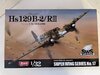
The excellent box art on a very large box.
It is in the style of a lid with an inner closed box providing a good amount of protection.
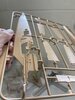
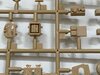
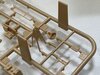
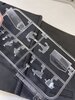
Open the inner box and you are faced with a lot of plastic.
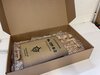
You can see all the sprues are individually wrapped providing a lot of protection to the parts. It is the instruction book that is the first thing to shout out that you have something out of the ordinary. As you can see it is in the form of an aircraft maintenance manual, yellowed with age! It is worth showing this in a lot more detail than I usually do.
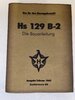
Open the manual and the first page has a lot of information. As you can see it maintains the illusion of being a German manual but the 'meat' is in Japanese and English. It includes photos of the model parts.
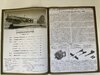
The second page and a lot more information about the model and the instructions. There is a lot to read and it is well worth reading unlike most instructions!
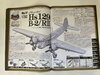
Allowing for the fact that it is in Japanese and English script, it does not take as ;long to read as first impressions.
Below is the start of the first 'chapter' covering the engine build. Note on the left Vallejo colour call-outs and top right an exploded view of all the engine parts, don't worry. the following pages take you through the engine build up gradually. Below the exploded view are pictures of the built up engine so you can see what you need to end up with.
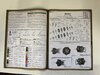
Every 'chapter' for each stage of the build follows this format. So lets look at that engine build up.
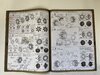
It looks a busy 'double page' but look closely and you can see how they make sure that the placement of every part is as clear as it can be. It actually makes a complex construction easy because of this approach, no ambiguity. The build-up continues below. Note how ZM provide a stand for the engine. You can display it (them) off the model if you want, removed for high-level maintenance in a diorama perhaps. The engines really are a separate model, if you want them to be. Seeing this might help you realise the potential of what you can do with a kit engineered in this way,.
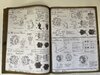
A close-up look at the fuselage chapter. The top of the first page, exploded view.
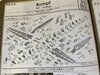
The photos of this stage built up at the bottom of the page.
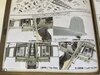
Some of the following pages.
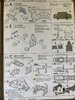
Note how they highlight in red important notes along with tips and suggestions. You have gotta love it.
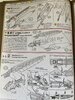
Now, lets take a look at the i.p. and, be impressed. Note the two styles and methods of producing a good i.p. These are not two options for different aircraft but three options, no less, for producing the i.p.!
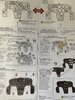
A close up of the third option.
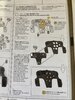
Now these ZM instructions really prove how they care about how you to get a great result and care about helping you do it. They follow that through with the plastic itself. It is all in the detail.
They only provide one scheme for this aircraft though, but will be producing more versions with more schemes.
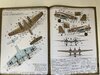
Again more meticulous instructions.
So far so good. A long post this and I have not finished yet, but its time for lunch, so I will carry on later today below and talk more about the plastic and show what you get....