

You are using an out of date browser. It may not display this or other websites correctly.
You should upgrade or use an alternative browser.
You should upgrade or use an alternative browser.
Eduard Fw190 A3
- Thread starter matto21
- Start date
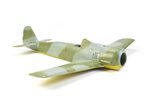
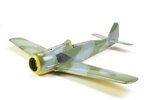

Looking good.


Andy the Sheep
SMF Supporters
1/3
A nice build, Matt (Matto in my language means "mad", so Matt sounds a lot better to me:tongue-out3 and an original idea about the painting scheme.
Andrea
and an original idea about the painting scheme.Andrea
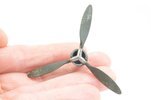
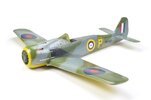


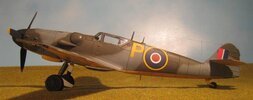
Looks great! Does the P mean the driver has only just passed his test? :smiling:
Pete
I'm not 100%, but I think the P means Prototype. Although I'm sure someone more knowledgeable than me will know more.

Well Pete i think it stands for prisnor as it is a captured aircraft from the lufwaffer lolLooks great! Does the P mean the driver has only just passed his test? :smiling:
Pete
chrisb
I googled, and found it's the code for a number of flying training schools:
No idea if it was the same when this aircraft was around.
Pete
No idea if it was the same when this aircraft was around.
Pete
Searching for MP499 produced some photos from the Imperial War Museum, with this caption: "Captured Focke Wulf Fw 190A-3, MP499, taxying at the Royal Aircraft Establishment, Farnborough, Hampshire, with the RAE's chief test pilot, Wing Commander H J "Willie" Wilson at the controls. Although formally transferred to the Air Fighting Development Unit in July 1942, MP499, was retained by the RAE, undergoing extensive evaluation by flying and technical staff, including a programme of trials with contemporary Allied fighters."
Pete
Pete
You're right Matto - I found this:I'm not 100%, but I think the P means Prototype. Although I'm sure someone more knowledgeable than me will know more.
"Air Ministry Order (AMO) 513/41 dated 10.7.41 specified prototypes to have yellow undersides.
From 1942 (AMO 664/42 dated 2.7.42) specified yellow undersides and the letter ‘P’ in yellow encircled by a yellow ½” ring of equal diameter to fuselage roundel. Air Publication 2656A Vol 1, Sect 6, Chap 2 (October 1944) goes into more detail of the dimensions of the markings."
I don't know why a captured enemy aircraft would be marked as a prototype though.
I found some more history: "This was the first Fw 190 to fall into Allied hands. Disorientated following air combat, Oberleutnant Armin Faber, a mostly deskbound staff officer of III/JG 2, mistook the Bristol Channel for the English Channel and landed at RAF Pembrey, Wales on 23 June 1942."
Pete
The 'P' was for prototype.
It was part of the markings, along with the yellow undersides etc. applied to British prototype aircraft and captured enemy aircraft which were to be flown and tested in British airspace.
Hopefully this would prevent either British fighters or anti-aircraft artillery from shooting them down!
Some received even more exotic markings, like the Bf 109 G-14, which got 'Special Marking', a.k.a. invasion stripes to afford a little more protection.
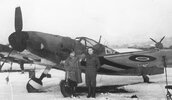
No serial number given and it seems painting a circle around the P was not considered essential.
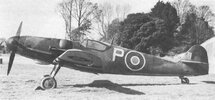
I made a model of this aircraft some years ago!
It was part of the markings, along with the yellow undersides etc. applied to British prototype aircraft and captured enemy aircraft which were to be flown and tested in British airspace.
Hopefully this would prevent either British fighters or anti-aircraft artillery from shooting them down!
Some received even more exotic markings, like the Bf 109 G-14, which got 'Special Marking', a.k.a. invasion stripes to afford a little more protection.
No serial number given and it seems painting a circle around the P was not considered essential.
I made a model of this aircraft some years ago!
G
Guest
Guest
Probably so it doesn’t need to be assigned a British military or civilian registration code, yet can legally be flown. Similar to sticking dealer plates on a car that isn’t insured, has no MOT, etc. when taking it for a test drive.I don't know why a captured enemy aircraft would be marked as a prototype though.
Legal Notice
scalemodelling.co.uk is a privately operated online discussion forum. All content posted by members reflects their own views and opinions and does not necessarily represent those of the forum owners or administrators. While reasonable efforts are made to moderate content, no responsibility is accepted for user-generated material. By using this site, you agree to comply with UK law and the forum rules.