Howdy guys and gals,
Ok, I just want to make a few observations then I will provide a tip I found online for making rust on models.
First, WWI cloth covered planes rarely rusted, second, Aluminum skinned aircraft do "oxidize", but not in the same way Iron rust. Aluminum oxidized with a more whitish powdery looking "rust" and will cause the metal to "dull" over all. Copper and brass and similar metals oxidize "green", soft metals such as lead, oxidize black (hence the historic use of lead in pencils).
This tip is for the making of "Iron oxide" for use on models, in this case train cars, but could be adapted for use on military vehicles. The article was "barrowed" from:
http://www.nscale.net/Article161.html by Paul Orvosh, Jr. (PJ) of Jacksonville, FL. USA.
Putting rust weathering on models can be accomplished in many ways. Paints, chalks and pastels are the most common methods. This article will discuss making and using real rust for model weathering.
- Materials & Methods
- Steel wool
- Glass container
- White vinegar
- Water
- 70% IPA
- Jet dry
- Prototype photos
- Fine paint brushes
- Toothpicks
- India ink
- Polly scale acrylics #505366 US Red Earth
- Tube oil paint – burnt sienna
- Testors dull cote (spraycan)
Making rust
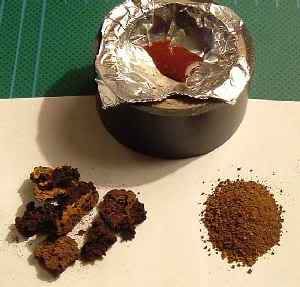
For the chemists out there rust is made by the oxidation of iron. Iron + Oxygen = Iron oxide (2Fe + 3O2 = Fe2O3). The easiest way to make rust is to scrape it off of something that Mother Nature has already taken care of like a railroad spike. I made rust with steel wool and white vinegar in an open glass container. The vinegar helps etch the steel and oxygen in the air and water in the vinegar naturally oxidizes it. I allowed the rust to form over a 3-week period while stirring occasionally. At this point the water was completely evaporated and all the steel wool had fallen apart and formed rust. Larger pieces were separated and the rest was crushed to form rust powder. Thanks to Joekc6nlx for suggesting peroxide and/or chlorine bleach which act as oxidizers and could aid is speeding up the formation of rust.
Model
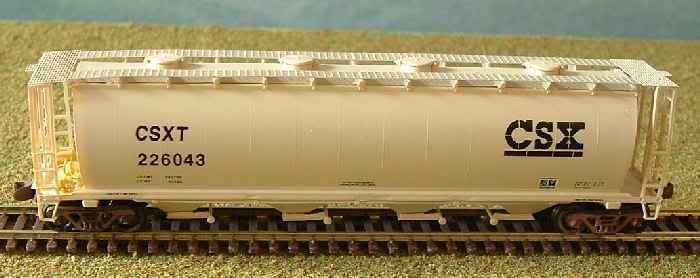
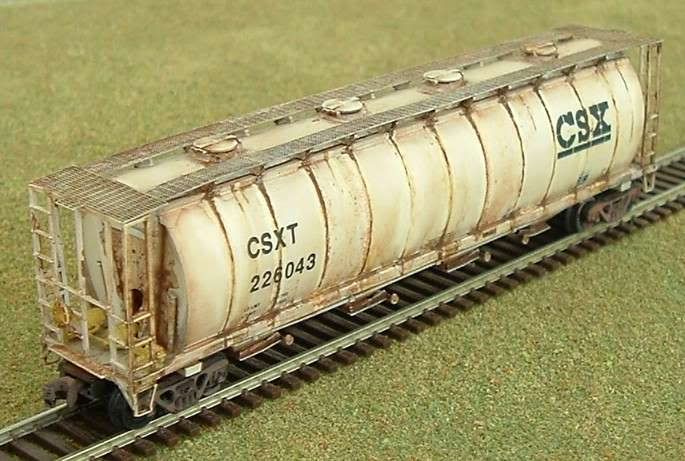
Other than the truck faces, which had been painted with model master flat enamel rust, an un-weathered IM 4 bay cylindrical hopper was used for this article.
Prototypes
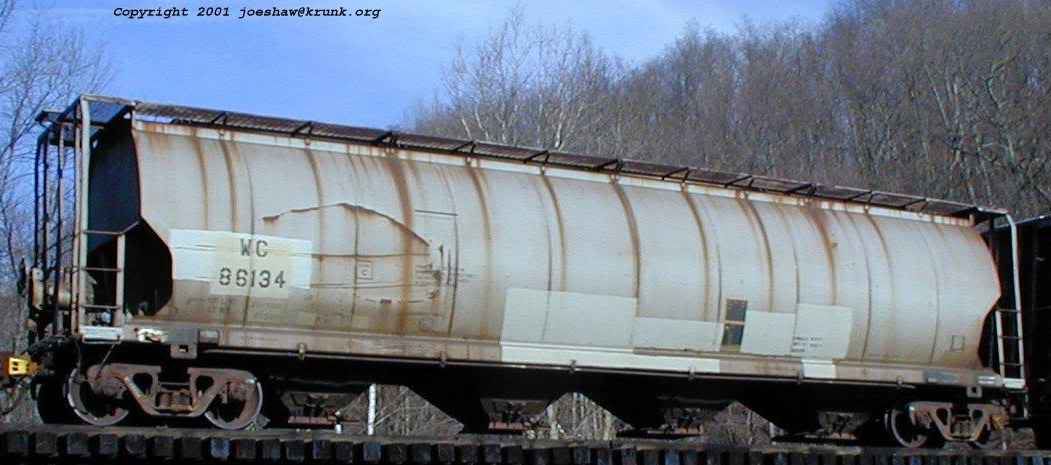
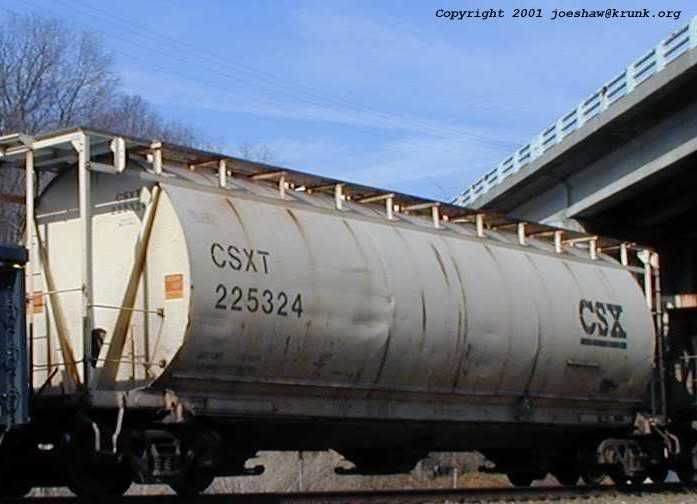
Rust can be found just about anywhere there is exposed steel. Here are some examples of the prototype effects that I was trying to achieve on cylindrical hoppers. Note that the rust mainly forms on the upper roofwalk supports and bleeds downwards. Additionally there are other smaller rust bleeds from areas on the roof. There is also rust on the panel weld lines but it is not nearly as prominent. Note the big gash in the WC hopper and the rust that formed on this exposed metal. This would be a good feature to try and achieve also.
This CSXT hopper shows very similar effects.
Many thanks for the prototype photos from
www.krunk.org courtesy of Joe Shaw. Krunk.org is an excellent and well organized website dedicated primarily to SW Virginia and West Virginia railroading. I spent about 12 years in Roanoke, Christiansburg and Blacksburg so many of the locations are familiar to me.
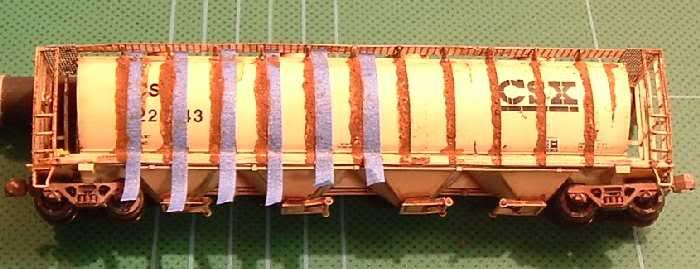
Applying rust to the model I first applied thin India ink and red earth acrylic washes to the hopper. It turns out this was a mistake, the washes should have been applied last. Powdered rust was made into a slurry by mixing with some water/IPA and a small drop of Jet Dry. I applied the slurry very thick with a small paintbrush and used tape to make sure the bleed lines would be straight.
The rust bleed lines were scraped carefully with a small eraser and sharpened toothpick. Thanks to 70runner for suggesting the use of an eraser. Dull cote was applied and worked very well to fix the rust in place. Further washes were done with both acrylic paint and oil paint.
Conclusion Well first the pros. For the tinkerer or experimenter, this is a fun project to take on. Rust is a unique media to work with. I would say it is somewhere in between chalks and paint. Very fine rust powder can be applied just like chalk and the painted on rust slurry can be removed easily before it has been fixed. Now the cons. Be careful where you wash your hands after working with rust. Rust slurry will stain just about every surface it comes into contact with especially porcelain sinks. Overall, paint and chalk/pastels are easier to work with and produce better results. Dependent on the skill level of the modeler. Other weathering uses for rust could include the stippled effect that is often seen on railcars or the rust areas seen on locomotives around areas where the paint has worn away from the intense heat produced by dynamic brake resistors.
I hope this helps someone, I will add a few more since there are numerous methods for creating rust for modeling.
have a good day,
Greg


 where theres a will!