Theme editor

Scale Model Shop

Modelling the O-2A Cessna Skymaster, Italeri 1/48

rtfoe

Well-known member
Joined
Apr 29, 2018
Messages
9,251
Reaction score
542
Points
113
Location
Shah Alam, Malaysia
1/3
Thread owner
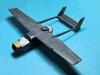
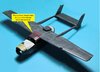
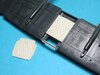
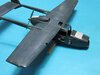
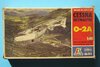
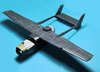
Hi, you've seen what it looks like made up so now you see what I went through getting it done. I have already mentioned how I liked these weird FAC planes of the Vietnam era so I was lucky to land an old Testors reboxed Italeri kit of the O-2A Skymaster. The box had seen better days and just as it was starting to disintegrate I decided to put it together. Lets start with the box...
VT3.jpg

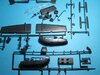
Now the customary sprue shots. The sprue trees were missing and parts were swimming in the open plastic bag. I was fearing there would be missing parts.
VT4.jpg

Everything was there but the destruction sheet and one clear part. I wasn't too worried as the parts count was very small so finding where they should go and fit wasn't a problem. The missing clear part was a problem because it was for a curved area down the side of the fuselage. I'll come to that later.
VT5.jpg

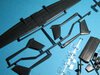
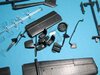
One look and I knew the twin boom connection to the wing would need lots of filler and sanding. Rivets peppered the whole surface of the kit. I decided at this point to engrave the raised panel lines and sand down the rivets to be less prominent.
VT6.jpg

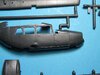
Apart from the brittle plastic, it was ready to build. Surgery starts next...

Cheers,
Richard
 
Thread owner
Hi,
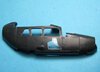
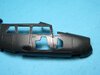
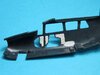
Now the first part to take care of are the right side observation windows that are missing on the kits right fuselage and passenger door.

VT7.jpg

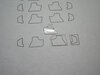
I found some images of the military version and used a profile shot, enlarged it to scale measurements and traced out the windows...

VT8.jpgVT9.jpg

VT10.jpg

I was contemplating to cut a squared out clear acetate and mask the window shape but decided on using the one available kit part and cutting another to shape and fit in situ. Basically the decision was because there was too little room for this.

VT11.jpg

The cutting had to be made painstakingly slow with scraping and sanding in between placing the clear part to see if it fits. I only wanted a touch of glue and no filler for the fit.

VT17.jpg

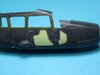
The process for the other window was the opposite where I cut the hole first and heat formed a clear perspex for the curve and cut to fit.

VT27.jpg

Masking with a broad Tamiya tape to protect from accidents I used a fresh new blade to remove tape a fraction from the edge of the glued outline.

VT50.jpg

That's the observation window taken care off. The interior was the next headache.

Cheers,
Richard
 
Nice work, fitting windows like those can’t be an easy job …
 
Hi Richard
Jakko's right. A very difficult thing to scratch. Looking neat and nicely done.
Jim
 
Thread owner
Thanks Jakko, Jim and Scottie for stopping by and commenting.

I didn't have pictures showing the process but one of the things I had to do was pre-drill a number of holes along the cut area before slicing the part out. This prevents any cracking and splitting around the edge.

Before the interior I had to straighten the warped rear undercarriage legs..

VT12.jpg

I made restraints with thick brass wire and dipped the part into boiling water for a few minutes and then under cool tap water...

VT14.jpg

The result turned out ok...the curvature downward would level with the weight of the aircraft.

VT16.jpg

Cheers,
Richard
 
I didn't have pictures showing the process but one of the things I had to do was pre-drill a number of holes along the cut area before slicing the part out. This prevents any cracking and splitting around the edge.
Though I’ve not done this on an aircraft kit, I usually use a fretsaw to cut major holes in models, especially if they have irregular shapes. Far easier than the method usually recommended by modelling books etc. of drilling holes all around the circumference and connecting them with a knife.
 
Thread owner
I have a jewelers saw similar to a fretsaw but I felt using my drill bit to travel from hole to hole a little more convenient as I didn't have an area or clamp ideal to hold the the part steady. It was quite therapeutic in a way and didn't have to change tools.

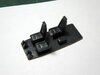
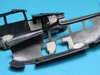
The interior configuration comes like this with 4 seats that are to be glued with two in the front and two at the back with square stumps to raise them from the floor. To fit the radio equipment and for the pilot to see across through the observation windows some shuffling was done.

VT13.jpg

I remove two of the rear stumps and moved the front passenger seat back and covered the holes with putty.

VT15.jpg

After the putty hardened I sanded it down and glued the instrument dashboard plus added a bit more to the floor board in the rear.

VT18.jpg

I roughly cut a thin piece of card for a firewall between the cockpit and rear engine. I had also filled the rear of the seats with putty.

VT19.jpg

Cheers,
Richard
 
Hi Richard
The alterations are well thought out and you do them well. Not as hard as mules and arabs but need skill anyway.
Jim
 
Thread owner
Thanks Jim, they're just two different set of skills...one for nature and the other for still life.

Here's an example of simple gizmology done with a bit of help from some blurred reference pictures of the stack of radio equipment in the back of the cockpit.

VT20.jpg

I made this whole assembly with plastic strips, blocks, rod and wire.

VT21.jpg

I wasn't sure how much would be seen through the windows so I couldn't cut corners but still maintained as much detail. The radio stack was positioned just in front of the bulkhead of the engine compartment. The seats weren't stuck yet, later I temporarily closed the fuselage and added weights to counter all this added stuff at the back.

VT22.jpg

Cheers,
Richard
 
Thread owner
Hi,
To get an idea of the amount of weight I needed up front to get the nose down, I dry assembled most of the main body sub assemblies together including the interior with the radio stack and bulkhead.
At this point you can see I had already scribbed the panel lines which is visible by the dust in the grooves. The twin booms assembled and puttied.

VT23.jpg

It was a tail sitter alright and needed a hefty amount of lead to keep the nose down...

VT24.jpg

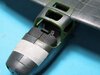
The only compartment that allowed the weights since the whole cockpit would be visible was the space between the instrument panel and the nose propeller tip. I used rolled up lead strips, pressed them into the contours of the space and covered the bottom of the instrument panel with plastic strip as it can be seen through the observation windows from the side.

VT28.jpg

My only worry was whether the front nose undercarriage could take the weight. Notice on the side wall at the edge of the floor board there's a deep indentation...well it was a sink mark for the wing support attachment points. I filled that up with two part putty and smoothed that down with a wet finger.

Cheers,
Richard
 
My, my........you have been busy Richard. With the rivets smoothed down she ought to fly 10 knots faster.
Looking forward to the next update. :thumb2:
Rick H.
 
Thread owner
Rick...with a gloss coat add another 2 knots. :tears-of-joy:

Richard
 
Thread owner
As the picture says below...

VT25.jpg

...and it's done however I didn't dare enlarge the aperture to the edge as the wing spar hull mounts didn't allow it.

VT26.jpg

I made quilt ceiling covers from two part putty...the imprint made with the back of a blade...same was done for the firewall.

VT29.jpg

Testing the balance with a wooden dowel showed there was more than enough weight for the nose.

VT30.jpg

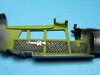
I created quilting for the inside of the cockpit doors and fuselage as well. Reference showed some were just flat tarpaulin fastened with press buttons.

VT31.jpgVT32.jpg

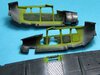
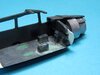
The cockpit was painted in insignia green and quilts olive drab with white added into the mix for dry brushing the highlights.

VT33.jpg

I made the sight ledge and extra instrumentation with plastic strip and rod.

VT34.jpg

Cheers,
Richard
 
Hi Richard, Nice mods to the upper structure for the observers windows.......not quite a "bubble" canopy but you are getting close ;). Keep it coming sir. Rick H.
 
Thread owner
Thanks Guys... talking about additions I cut a piece of clear plastic for the reflector sight and placed it on the gunsight ledge.,,

VT39.jpg

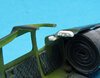
... also another addition was a scratched M-16 carbine. I couldn't find one in 1/48 scale. It's quite out of shape but once painted looked ok.

VT42.jpg

I'd be lucky if it gets seen through the windows when the fuselage is put together.

VT45.jpg

Rest of the cockpit interior was painted up, washed and highlights drybrushed...

VT35.jpg

...more addition to the floor board in front of the radio stack. Wires would be connected between these two stations. I don't know what the stuff on the floor is for, could be batteries or surveillance or camera equipment attached to the belly of the aircraft.

VT40.jpg

Next up will the customary home made seat belts...

Cheers,
Richard
 
Hi Richard, You've covered a lot of territory there and it is all looking very promising........if this is one of those "DON'T SHOOT" birds, there is at least something to shoot back with, if needs be :rolling: Rick H.
 
Great work Rich.

One thing that has struck me with your interior is that perhaps I could be more bold with drybrushing. Contrast is key and you ‘highlighted’ that for me :tears-of-joy:
 
Thread owner
Thanks Rick and Chris,
The O-2 has some punch with mini gun pods and rockets for ground attack but it won't be able to survive in a dogfight unless it hugs the ground.
Dry brushing helps bring out instrument panel details and if you select the right areas it helps pop things up a little.

Cheers,
Richard
 
Back
Top