

You are using an out of date browser. It may not display this or other websites correctly.
You should upgrade or use an alternative browser.
You should upgrade or use an alternative browser.
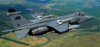
Revell jaguar gr1 "desert storm" 1/72
- Thread starter peterairfix
- Start date
- Status
- Not open for further replies.

Yes mate they did View attachment 84908\ said:Nice model. I like the sand colourI don't understand so much about planes.... forget my question, but the weapons really go upper the wings?
I never see it before

View attachment 197931
Attachments
G
Guest
Guest
Wow Peter that looks great x
x
Nice build Peter, I prefer this scheme to the standard grey/green.
Allan, it's the Italeri kit re-boxed, which might be easier to find.\ said:That looks great pete the jaguar is a favourite of mine
G
Guest
Guest
Er! What is a wing fence Joe. Probably showing a great ignorance ?\ said:Nice job Peter, and great use of the old base.Polux, yes; you will see this configuration on some older British Cold War jets, the Lightning being another one that springs to mind. It frees up the limited under-wing space and pylons for other ordnance/fuel tanks and also acts as a wing fence.

Laurie

Wing fences help to control boundary layer of airflow over the wing. You see them on swept wing aeroplanes mostly. I believe the Germans pioneered them prior to Word War Two.\ said:Er! What is a wing fence Joe. Probably showing a great ignorance ?
Basically airflow over the top of a wing has a spanwise flow from the root to the tips (it doesn't just flow straight back). This can create complications when angle of attack (the angle of the wing chord to the relative airflow) is increased. When a critical angle is reached the airflow is disrupted enough to become turbulent and break away from the wing surface. The subsequent loss of lift causes the aeroplane to sink, and normally a nose-down pitching moment is experienced in an aeroplane with a non-swept wing. This is a stall. The tips usually stall first which means the pilot no longer has effective (or any) aileron control. This is rectified by using washout (the tips are set at a lower angle of attack than the roots, so they stall later than the main wing). Most aeroplanes have a certain amount of washout at the tips. Wing fences can be used to inhibit the spanwise flow, also lessening the effect on the tips.
On a swept wing aeroplane the stall pitching moment is normally nose up (the tips are well behind the Centre of Gravity), further worsening the stall condition and creating a deep stall, very difficult to recover from! Wing fences inhibit spanwise flow, helping to ensure either the wing roots stall first and also helping to prevent the loss of boundary layer over the wing by keeping the flow contained.
Other methods of preventing spanwise flow and re-energising boundary layer include:
Vortex generators (little bits sticking up, usually but not always at the leading edges)
Leading edge slots (leading edge slats lower and create a slot through which the incoming airflow is accelerated),
View attachment 84972
Blown wings (engine bleed air is used to blow over the wing surface, the Buccaneer had this system). A few others, but you get the general idea I hope.
View attachment 197995
Attachments

G
Guest
Guest
I think so Joe. Thanks for that and the time taken to explain it all. Just shows I was ignorant.
Laurie
Laurie
Not at all Laurie, most wouldn't have bothered to ask or wouldn't care anyway. Next time you take a commercial flight get a wing seat and watch the various sections of wing at work and the way they move about, it really is quite an amazing spectacle.
Joe you just brought back a disturbing memory of my first time on an aircraft ! A BOAC 111 and I had a window seat over the wing , ten minuets into the flight we came out of cloud only for me to see the wing doing a jitterbug , scared the life out of me I thought the wing was going to come off lol\ said:Not at all Laurie, most wouldn't have bothered to ask or wouldn't care anyway. Next time you take a commercial flight get a wing seat and watch the various sections of wing at work and the way they move about, it really is quite an amazing spectacle.

G
Guest
Guest
Yes I had noticed how they flexe Joe. Interesting to watch their movment more so in taxiing across to the runway. Having been in the architectural scene always noted, but few do, how a staircase or a floor concrete or wood will also move.
Had boats earlier and was surprised to find out how the hulls move around and of course that is the inherent strength to move and not resist.
Apologies Peter for taking over your article.
Laurie
Had boats earlier and was surprised to find out how the hulls move around and of course that is the inherent strength to move and not resist.
Apologies Peter for taking over your article.
Laurie

1/3
No apologies need some quite interesting facts coming out there.\ said:Yes I had noticed how they flexe Joe. Interesting to watch their movment more so in taxiing across to the runway. Having been in the architectural scene always noted, but few do, how a staircase or a floor concrete or wood will also move.Had boats earlier and was surprised to find out how the hulls move around and of course that is the inherent strength to move and not resist.
Apologies Peter for taking over your article.
Laurie
Peter t
- Status
- Not open for further replies.
Legal Notice
scalemodelling.co.uk is a privately operated online discussion forum. All content posted by members reflects their own views and opinions and does not necessarily represent those of the forum owners or administrators. While reasonable efforts are made to moderate content, no responsibility is accepted for user-generated material. By using this site, you agree to comply with UK law and the forum rules.