Theme editor

Scale Model Shop

Revells 1/12 mustang gt 500

  • Thread starter Thread starter Guest
  • Start date Start date
Status
Not open for further replies.
hi ken just to let you know it's Ruth's birthday on the ninth of this month nice converting from hard top soft top yes what colour is it going:D
 
Ken, not sure if I'm right to recommend this but it worked for me..........I was curious the other day and nicked my wife's nail polish remover and tried a bit out on a scrap bonnet that I had with a screwed up paint job on it, I wiped some of the said remover on it and hey presto the paint came off, had to keep reapplying it as the acetone evaporated so quick but at £1.50 a bottle from sainsburys it's a good stripper that didn't affect the plastic.


Worth a go mate.
 
Thread owner
I should think acetone a derivative of cellulose would be very dodgy on plastic, I await the numerous replies telling me I'm wrong before I try it, thanks for the quick response though mate.
 
\ said:
I should think acetone a derivative of cellulose would be very dodgy on plastic, I await the numerous replies telling me I'm wrong before I try it, thanks for the quick response though mate.
It didn't attack the plastic for me mate, I even left the plastic submerged in it for a couple days in a lidded container and it was fine.


You're right though to wait, I wouldn't want to be responsible for you wrecking a model.:confused:
 
Thread owner
Thanks mate I appreciate the idea but as you say, and plastic is a funny thing, so many different types and ways of producing it, I am toying with the idea of a barrier coat of some kind.
 
Correct me if im wrong but if you have a resin plastic kit nail remover is ok. But if like the majority of plastic kits its polystyrene its gonna melt it real bad!
 
Thread owner
Hey Ken, barrier coats are a pain in the proverbial.


I used one type on our 51 chevy and it too reacted with the base colour, so stripped it, etch primed it, and then used a different brand of sealer barrier coat. That one worked fine with the base colour, and we managed to get the truck body finished.


If youre using cellulose spray from halfords, then dont bother with the barrier coat. Just buy a can of grey etch primer, give it a light coat, and then leave it to cure for 24 hrs. Even though it is touch dry in an hour, it needs time to cure out properly.


Then you can go ahead and paint straight over that, might need a few extra coats of white to get a decent gleam over the grey, but it should work fine.


A quick tip to get better coverage with any halfords paint is to obviously have a warm area to work in, but leave the can in some hot water for five minutes, then shake it for a good few, and you get a way better finish with it.
 
\ said:
hi all this is fighting me all the way, I bought some barrier coat and sprayed it with that then gave it a coat of gloss white and its reacted with the barrier coat, you cant really see from the pics but there are little wrinkles in the paint so Im hoping sanding back where the wrinkles are down to bare plastic and re spraying will solve it.
View attachment 137106 View attachment 137107 View attachment 137108 View attachment 137109
I hope you weren't using acrylics Ken, you know me, I'm a enamel man all the way. Oooooops I need to be more careful! :confused: :)
 
Ken, is the barrier coat an acrylic based paint, I was under the impression that acrylics react with enamel due to the oil and water syndrome.


I know from recent events that acrylics and enamels don't mix. Nudge nudge, wink wink! ;) ;) :)
 
Thread owner
Actually cellulose reacts with enamels which it was painted with and the gloss Halford white is cellulose which is why I used the barrier coat as that is supposed to stop the reaction (that's why I used cellulose thinners for my rust techniques, I take advantage of the reaction) either the barrier coat was not thick enough to stop the reaction or, more likely in my impatience it wasn't fully cured before I sprayed the white. Oh poo start again.
 
Thread owner
From experience, when the paint reacts, and you get the wrinkles, just sanding out the wrinkles will cause you ongoing problems Ken.


Youre going to end up having to layer the barrier coat on quite a bit to be rid of the problem.


What i would do is strip it all back off and start again, leave the pastic a few days to settle down, and then use the etch primer. Its a better barrier for what youre doing. The barrier coat paint, which is sometimes clear, sometimes tan coloured is for fast layering in a bodyshop. If a repair has cut through previous paint, they will bang a barrier coat on, cook it, and then begin paint. Problem is, barrier coats normally need baking, or youre going to need to leave it for a good few days to cure out
 
\ said:
Actually cellulose reacts with enamels which it was painted with and the gloss Halford white is cellulose which is why I used the barrier coat as that is supposed to stop the reaction (that's why I used cellulose thinners for my rust techniques, I take advantage of the reaction) either the barrier coat was not thick enough to stop the reaction or, more likely in my impatience it wasn't fully cured before I sprayed the white. Oh poo start again.
I thought there somewhere in mind that something reacts with something , I just couldn't remember what, thanks for clearing it up for me. My sympathy goes to you mate, I know the size of the shell is large and having to knock back paint is a pain what with all the nooks and crannies etc, I'm in the process of trying to save my cocked up Ferrari F430 bodyshell, it's a mess at the moment and is slowing driving towards the bin !
 
Thread owner
I don't know mate you may be right about the acrylics reacting with cellulose as well , it's strong stuff, I don't know about acrylics, don't give up on your ferrari, I know they're complex curves on them, you will get there, just work on one area at a time.
 
\ said:
I thought there somewhere in mind that something reacts with something , I just couldn't remember what, thanks for clearing it up for me. My sympathy goes to you mate, I know the size of the shell is large and having to knock back paint is a pain what with all the nooks and crannies etc, I'm in the process of trying to save my cocked up Ferrari F430 bodyshell, it's a mess at the moment and is slowing driving towards the bin !
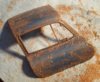
Cellulose only reacts with enamel if you are spraying cellulose ontop of dry enamel. Enamel can be used with cellulose but only if the cellulose is dry first. I used cellulose on this door and enamel on top for the rusty effect door.

View attachment 238016

View attachment 238017
 

Attachments

  • 20151107_192640.jpg
    20151107_192640.jpg
    2.6 KB · Views: 0
  • 20151107_162607-1.jpg
    20151107_162607-1.jpg
    3 KB · Views: 0
Status
Not open for further replies.
Back
Top