Theme editor

Scale Model Shop

Rubber band tracks

Status
Not open for further replies.

stillp

SMF Supporters
Joined
Nov 17, 2016
Messages
8,323
Reaction score
312
Points
83
Location
Rugby
1/3
Thread owner
Another thing I haven't done for about half a century is fit rubber band tracks! I'm near completion of a Tamiya Chieftain Mk 5, and wondering if I should join the tracks off the tanks and then try to fit them, or fit them and try to join them after. Either way seems like a struggle, if I fit them first then I won't have much access to melt the pins that hold them together.

Pete
 
I've done it only once but melt the pins and seal first and stretch to fit on the wheels seems the only logical solution here.
Fit then paint after. You can pop them into a bowl of hot water to make them more pliable prior to fitting on the wheels.
 
Thread owner
Thanks. Should I CA the join or just rely on the melted pins?

Pete
 
I just used a soldering iron to melt mine, provided they protrude enough they'll melt over and it'll be enough to prevent it from pulling through.
You should be able to heat the tip of a small flat blade screwdriver to do the same thing if you don't have a soldering iron.

I'll edit to add though, using ca as well shouldn't hurt but I wouldn't trust ca on its own on those vinyl bits.
 
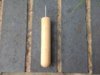
My simple tool for rubber banded tracks. Broom stick and a nail held over a tea light. I normally fit the rubber tracks to the tank and staple them. After melting the pins the staple can be removed if you so require. But they normally just "disappear"with the weathering. Hope this helps cheers John View attachment 285838
 

Attachments

  • IMG_9085.JPG
    IMG_9085.JPG
    2.2 KB · Views: 0
Thread owner
Thanks chaps! I have plenty of soldering irons, but isn't a soldering iron a bit too hot? I might combine both the suggestions, and use a soldering iron to heat a nail!

Pete
 
It only requires a brief wipe with the tip of the iron, if left on there it could melt through certainly.
 
one trick i use when fitting is not to fit the drive sprocket to the hull. it will give you move room to fit the track, once you have the track in fit the sprocket which will put the track under tension
 
Thread owner
one trick i use when fitting is not to fit the drive sprocket to the hull. it will give you move room to fit the track, once you have the track in fit the sprocket which will put the track under tension
I wish you'd told me that earlier!

Pete
 
Modern "rubber band" tracks can/should be glued with normal cement imho, which is much better than using hard CA glue and simpler than melting them together, but if you're using older ones it's melting. Melting works just as fine on modern ones too.

If you've left the drive sprockets off then you can glue the tracks beforehand, but if you've glued all the wheels then I suggest that you join the tracks after putting them on.
Especially the older rubber band tracks, and the narrow ones, are prone to snap if you're unlucky whilst prying them on... Happened to me twice and after that I've started joining them after putting them on.
 
Thread owner
Thanks all. Jens, these don't react to normal cement at all. I used superglue as well as melting the pins. Next time I think I'll use a more flexible adhesive, perhaps a contact adhesive. I joined them before fitting, and dislodged a small part during the struggle to fit them, but not too hard to repair.

They're on now. Is there any primer that will stick to these?

Pete
 
Jens, these don't react to normal cement at all. I used superglue as well as melting the pins.
You've got some older tracks then because they are impossible to glue with cement, or any other solvent I know of.
A stapler gun and super glue does the trick for me on those older tracks.
 
Pete I use pinflair gel which is a silicon based glue to fasten the old style Tamiya tracks. Never had a problem with them not sticking.
 
Status
Not open for further replies.
Back
Top