Theme editor

Scale Model Shop

What is the best sequence for brush painting?

pjgtech

SMF Supporters
Joined
Dec 28, 2023
Messages
1,557
Reaction score
1,362
Points
113
Age
61
Location
Kent, UK
Location
Swale Kent UK
1/3
Thread owner
Hi peeps, general brush painting question.....

I've watched a fair few YouTube vids and read a fair bit on painting now, but its mostly biased towards air brushing.
I think I have the basic brush painting sequence, but would like your opinions/thoughts, thanx.

NB: for whats its worth I will be mostly building military vehicles, with maybe the odd civilian vehicle (motorcar/motorbike), and maybe the odd motor boat, etc,

From what I've gathered the painting process should be as follows:

1. Prepare model or part to be painted, remove from sprue, assemble/sub assemble, glue, clean up, sand, fill, etc.
2. Add prime coat. Prepares surface for painting and shows up any minor defects, gaps, etc.
3. If necessary fill any gaps, etc.
4. Add initial top coat, can be more than one coat, several thin coats better than one thick coat.
5. Add gloss varnish/lacquer coat. (Easier to apply transfers on gloss coat and protects paint and allows washes to flow better).
6. Apply transfers.
Q: should there be another gloss coat applied after transfers but before weathering?
7. Add weathering effects, washes, pigments, etc.
8. Add final flat varnish/lacquer coat to leave a non glossy finish and protect weathering.

Have I missed anything?

Cheers folks.....
 
Last edited:
I am no expert on brush painting Peter but you pretty much have the sequnce right. You will need to apply a varnish over your decals once applied particularly if you are going to weather the model. From my experience the type of varnish will be dependant on what materials you will be using to weather the model. Washes will flow better if applied to a gloss varnish and easier to clean up. However if you are then going to use some pastels you will find these difficult to apply on a gloss varnish and will need a matt or satin varnish to help drag the pastel material onto the model. An example of this. If I was weathering a Lancaster wing using handbrush only then once painted I would varnish with gloss, apply the decals, varnish again with gloss to protect the decals through the weathering process, apply wash into panel lines etc then apply a matt varnish and then add the exhaust staining by use of pastels. Some people would then seal in the pastel work with another top coat of varnish but I have often left mine as is.
 
Last edited:
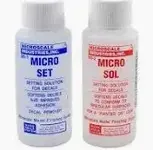
Peter. Are you aware of the decal solutions that we use to apply decals. I use Micro Sol and Micro set. They are invaluble when applying decals. They give you the oppoortunity to move the decal around more freely when applying and then help the decal adhear to the model and really sink into the detail like panel lines. They really help take the pain out of applying decals.


shopping.webp
 
Thread owner
Peter. Are you aware of the decal solutions that we use to apply decals. I use Micro Sol and Micro set. They are invaluble when applying decals. They give you the oppoortunity to move the decal around more freely when applying and then help the decal adhear to the model and really sink into the detail like panel lines. They really help take the pain out of applying decals.

Yes I am thanx, I already have micro sol. I saw a good YT vid the other day where a guy was recommending cheaper products for model making.
He claimed that distilled malt vinegar (or white vinegar) is a cheaper alternative to decal solutions, (needs thinning with water apparently). NB: I've not tried it myself.
What is the difference between micro sol and micro set? I assume the sol is applied before and during the transfer application, and I assume the set solution is applied afterwards to "set" or protect the transfer?
 
Last edited:
Thread owner
Wrong way round Peter.
Pete

Oh, ok, good job you told me that!
I have not used mine yet, only bought it the other day. Yesterday when I put transfers on my Willys Jeep build, I just used the old fashioned warm water and tweezers technique..... Lol.
So use the micro set when applying the transfers, presumably put some on the model and soak the transfer in the solution?
Then when the transfer is dry (cotton bud etc) apply the set sol solution to protect it?
Cheers, so I need to get some set solution as well.
 
I wash everything first in warm soapy water, all sorts of grease and residue that can affect the painting process.
 
So use the micro set when applying the transfers, presumably put some on the model and soak the transfer in the solution?
Then when the transfer is dry (cotton bud etc) apply the set sol solution to protect it?
Not quite, apply the set to the model, dip the decal in water, wait until it slides off the backing then lay it on the microset. I usually brush some more microset on a minute or so later. WHen the decal is dry, if it hasn't settled into the detail of the model, brush Microsol onto it then don't touch it again until it's dry.
Pete
 
In addition to the above....if you find that the decal is not quite in the right position and wont move just get some micro set on a paint brush, hold it at the edge of the decal and capillary action will draw it under the decal allowing you to move it again. Keep in mind that you need to act reasonably quickly because the solution will soften the decal so get it in place ASAP then as Pete says leave well alone until dry. And dont panic if you see the decal bubbling up, just leave it alone and it will straighten out as it dries.
 
Back
Top