'Elliptical' wings had well known arodynamic advantages, beyond the scope of a brief answer. It was a planform that featured on many aircraft of the period. The P-47 used such a wing as did several other airframes, notably in Russia. It was also seen on Seversky and Dewoitine monoplanes in France. It had been seen on British and Italian aircraft before 1930. The properties of ellipsoidal wings had been studied by Prandtl, Kutta and Lanchester, among others. Elliptically shaped wings had been drawn and modelled by Joukowsky C.1900 and Junkers (Hugo) in 1910. In France, Alphonse Penaud had built an elliptical flying wing in 1870!
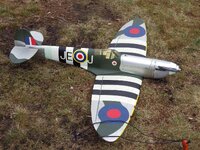
The Spitfire wing has very complicated geometry. It is composed of two differing elliptical sections of equal span, with differing root chords. It is a deliberately distorted or swept forwards ellipse. The forward sweep enhanced th elliptical flow patterns and span loadings, minimising the deleterious drag effects of the twist (washout) designed into the wing. It was informed by the glider design and delta wing studies that Shenstone had done, in Germany, with Alexander Lippisch.
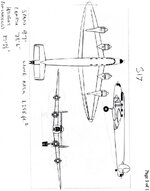
It was not really like any other ellipsoidal wing and as Shenstone himself pointed out, quite different even in planform to that of the He 70.
So what influence did the He 70 have? It had no influence on the Spitfire wing. Shenstone had designed an elliptical wing (for a flying boat) in 1929, it was not a new or unique idea then and certainly not in 1933/4 as the Spitfire concept developed. Rolls-Royce acquired an He 70 as an engine test bed and some have argued that Supermarine were influenced by this, even wind tunnel testing it (impossible in the UK at the time). The problem is that in November 1935, when the first Spitfire wing had been completed in metal, the prototype being completed a few months later, the Rolls-Royce He 70 was in bits, awaiting its engines, in Rostock, Germany.
Shenstone had seen the He 70 at the 1933 (not 1934 as often reported) Paris Air Show. He was impressed, though not by the wing which would have been entirely unsuitable for a high performance monoplane fighter. He was very impressed with the smoothness of the skin, though he noted that it was achieved by layers of filling and paint which added significant weight. I'll leave the final word to Shenstone himself.
"The ellipse was well known and had been seen before on other aircraft before Heinkel used it.
Our wing was much thinner than that of the Heinkel and had quite a different section. In any case, it would have been asking for trouble to have copied a wing shape from an aircraft designed for an entirely different purpose."
And.
"...the He 70's shape only faintly resembles that of the Spitfire."
On smoothness.
"The Heinkel 70 did have an influence on the Spitfire, but in a rather different way, I was impressed by the smoothness of its skin."