Theme editor

Scale Model Shop

Poles?

Status
Not open for further replies.

scottie3158

Active member
SMF Supporters
Joined
Apr 27, 2018
Messages
14,686
Reaction score
1,134
Points
113
Location
Holbeach
1/3
Thread owner
Hi all, As you may be aware I am in the process of building a LRDG chevy. The vehicle carried 4 long poles which were carried on the right hand side. Are these poles for a radio mast or just lengths for camouflage purposes or did they have another function I cant find any clear reference pictures. I'm hoping one of you minds of information can help.

cheers
Scottie
 
Thread owner
Hi Scottie.
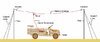
those are antenna poles.
View attachment 327033
Taken from lrdg.hegewisch.net.
Jon.

Thanks John,
I knew someone would know. next question would the poles screw together or would they be just one pole high to form a square. the reason I am asking is do I need to add the screw details to the poles.
 
Hi Scottie this may help.

View attachment 327042
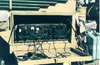
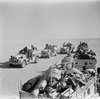
Radio operator, Corporal Arthur George Biddle RCS, of 'R1' Patrol using the No 11 Wireless set mounted on a 30 cwt Chevrolet 1533 X2. The rod aerial is just above his head. The four wooden support poles for the Windom dipole antenna are carried on brackets on the wooden 'greedy boards'. The canvas sand mat can be seen rolled up on the right hand vehicle.

In the LRP, most of the radio operators were New Zealanders, but the LRDG radio operators were all from the Royal Corps of Signals. These men were skilled in communications and were able to maintain and repair their equipment without any outside help. On only three occasions did a broken radio prevent a patrol communicating with its headquarters. All LRDG patrols included one vehicle equipped with a Wireless Set No. 11 and a non-military Philips model 635 receiver. The No. 11 Set had been designed for use in tanks, and had transmitter and receiver circuits;the Royal Signals expected to use the No. 11 set to transmit and receive between 3 miles (4.8 km) and 20 miles (32 km) with the use of 6 feet (1.8 m) or 9 feet (2.7 m) antennas.The LRDG used Morse code for all transmissions, and were able to transmit over great distances using either a dipole antenna system attached to a 6.3 feet (1.9 m) rod antenna mounted on the truck, which was adequate up to 500 miles (800 km),or for greater distances, a Windom dipole system slung between two 17 feet (5.2 m) tall poles.The disadvantage of using the Windom system was that it took time to erect and work out the correct antenna length, so it could only be used in a relatively safe area.To power the No. 11 set extra batteries had to be carried by the radio vehicles. The Philips receiver was used to monitor Greenwich Mean Time(GMT) time checks, which was vital for desert navigation.
While on the move the lead vehicles of the patrol commanders and sergeants flew a small flag. Because the LRP was organised on divisional cavalry lines the leaders carried green flags for 'A' (HQ) Troop, black for 'B' Troop, yellow for 'C' Troop and red for 'D'.When the LRDG was organised into 11 vehicle patrols this was simplified to a green flag displaying the patrol letter in white; the later half-patrols used a plain green flag on occasion. When it became necessary to change course from an intended route, or in the event of enemy action, patrol movements were controlled by a simple semaphore flag system using blue and white signal flags, or hand signals, depending on how widely dispersed the trucks were.

Pete.
 
Thread owner
Hi Scottie this may help.

View attachment 327042
Radio operator, Corporal Arthur George Biddle RCS, of 'R1' Patrol using the No 11 Wireless set mounted on a 30 cwt Chevrolet 1533 X2. The rod aerial is just above his head. The four wooden support poles for the Windom dipole antenna are carried on brackets on the wooden 'greedy boards'. The canvas sand mat can be seen rolled up on the right hand vehicle.

In the LRP, most of the radio operators were New Zealanders, but the LRDG radio operators were all from the Royal Corps of Signals. These men were skilled in communications and were able to maintain and repair their equipment without any outside help. On only three occasions did a broken radio prevent a patrol communicating with its headquarters. All LRDG patrols included one vehicle equipped with a Wireless Set No. 11 and a non-military Philips model 635 receiver. The No. 11 Set had been designed for use in tanks, and had transmitter and receiver circuits;the Royal Signals expected to use the No. 11 set to transmit and receive between 3 miles (4.8 km) and 20 miles (32 km) with the use of 6 feet (1.8 m) or 9 feet (2.7 m) antennas.The LRDG used Morse code for all transmissions, and were able to transmit over great distances using either a dipole antenna system attached to a 6.3 feet (1.9 m) rod antenna mounted on the truck, which was adequate up to 500 miles (800 km),or for greater distances, a Windom dipole system slung between two 17 feet (5.2 m) tall poles.The disadvantage of using the Windom system was that it took time to erect and work out the correct antenna length, so it could only be used in a relatively safe area.To power the No. 11 set extra batteries had to be carried by the radio vehicles. The Philips receiver was used to monitor Greenwich Mean Time(GMT) time checks, which was vital for desert navigation.
While on the move the lead vehicles of the patrol commanders and sergeants flew a small flag. Because the LRP was organised on divisional cavalry lines the leaders carried green flags for 'A' (HQ) Troop, black for 'B' Troop, yellow for 'C' Troop and red for 'D'.When the LRDG was organised into 11 vehicle patrols this was simplified to a green flag displaying the patrol letter in white; the later half-patrols used a plain green flag on occasion. When it became necessary to change course from an intended route, or in the event of enemy action, patrol movements were controlled by a simple semaphore flag system using blue and white signal flags, or hand signals, depending on how widely dispersed the trucks were.

Pete.

Pete,
Many thanks indeed. I remember the Royal Signals setting these things up on exercise and in the barracks at 7 Sigs.
 
Thread owner
.

That photo was one of the Rabbles annual outing to Margate in 2016. Steve you were of course was going in the opposite way to us'

Great help there Paul, just shows how good this forum is. :thumb2:
John .
Your right John, someone always has an answer.
 
Status
Not open for further replies.
Back
Top