
Theme editor

Scale Model Shop

"Not fit for purpose"

Gern

Active member
Joined
May 17, 2009
Messages
9,320
Reaction score
235
Points
63
1/3
Thread owner
There was mention of those electronic devices for scaring cats away (and politicians) being not fit for purpose. They're not the only things. Take calculators for example. Any sort of calculator - whether it's a purpose built one, or included on your mobile phone or PC/Tablet/Laptop etc.

Some of you guys will be used to using this type:
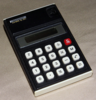
1626645512206.png

While others may be familiar with this type:
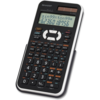
1626645614129.png

If you have both available, type this calculation (exactly as it appears)

2 + 2 ÷ 2 =

Happy days! The top one gives the answer 2, the bottom one gives the answer 3.

Which one is right? Either one - depending on what calculation you wanted to do. You have to know in advance which answer is correct. Some help that is to someone who struggles with mathematics - and I've taught LOTS of students who do.

Try both sorts of calculator on your PC - you'll have the same problem with the same machine giving two different answers to the same question.

Some of you may have 'phones that switch from landscape to portrait depending on which way up you hold them. Try doing this exercise on one of those. I think newer versions will give the answer 3, but older ones give different answers depending on which way you hold them!

It gets better folks. If you're fortunate enough to own a Casio calculator as supplied to students by schools and colleges, try doing any division calculation which does not give an integer (whole number) answer. For example:

Type in 4 ÷ 2 and it will give the answer 2; but type in 5 ÷ 2 and it will give the answer 5/2. Which is of course totally accurate, but at the same time totally useless. (You need to press another button to convert your answer to 2.5 which is much more useful).

And these machines have been designed specifically to help us with mathematics, so why do you already have to be competent at maths to use them?!
 
The calculation is not a viable equation (in my opinion).

2+2÷2

should be written either way

(2+2)÷2= 2 .......... or (2÷2)+2 =3

placed in the calculator in this form will give the right answer

ie into computer adding machine 2+2 (then =) followed by ÷ 2 (then=)

But then the brain is quicker. ;)

Laurie
 
Thread owner
The calculation is not a viable equation (in my opinion).

2+2÷2

should be written either way

(2+2)÷2= 2 .......... or (2÷2)+2 =3

placed in the calculator in this form will give the right answer

ie into computer adding machine 2+2 (then =) followed by ÷ 2 (then=)

But then the brain is quicker. ;)

Laurie

Technically 2+2÷2 = 2 is incorrect as the 'BODMAS' Rule for sequencing has been ignored. Sadly, you can't use an old fashioned calculator to work out the correct answer. There are no bracket functions so you - ie the person doing the calculation - have to change the order. And you'll only do that if you have enough mathematical knowledge to realise you have to do it.

Consider these examples.

(i) You want to buy an identity bracelet (you will remember those although some of our younger audience may have no idea what I'm on about!) for your significant other. You have been to your local jewellers who has told you that the bracelet will cost £50 plus an extra £2 for each letter you want engraved. If you want the name David engraved, how much will it cost?

A sequential calculator might give £50 + £2 x 5 = £260

A scientific calculator might give £50 + £2 x 5 = £60

Easy numbers so it's easy to see which is correct.

(ii) You play in your local darts league and your team has just won the league cup. Your team has received £200 prize money. In addition, you have sold raffle tickets throughout the season and raised an additional £300. You want to share out the money equally between the ten players in the team. How much do they get?

A sequential calculator might give £200 + £300 ÷ 10 = £50

A scientific calculator might give £200 + £300 ÷ 10 = £230

Again, easy numbers so you can see the correct answer. My point is that you won't always know which is correct unless you have the mathematical skills to know if the equation you've used is correct. Consider this:

(iii) As your team has just won the league, you want to get a picture of the team members framed and put up in your local pub. The picture itself would cost £6.89 and the material for the frame costs £3.47 per metre. If the total length of material for the frame is 1.8 metres, how much will it cost?

A sequential calculator might give £6.89 + £3.47 x 1.8 = £18.65

A scientific calculator might give £6.89 + £3.47 x 1.8 = £13.14

Now which one is correct? Would you just pay the shopkeeper £18.65 if you watched him put the numbers into his calculator without checking yourself?

PS Having seen some of the rubbish questions being set in maths exams today, it wouldn't surprise me to see something like this. However, if it did, I would be writing to the examination board (again!) to query which answer they were expecting.

PPS One of the most ludicrous questions I came across involved asking students to estimate the height of a pile of stacking chairs. A supplementary question asked the students why the chairs should not be stacked too high and to give an estimate of a suitable maximum height. Me personally? I'd consider maybe a maximum of 2 metres as practical and reasonable. Any higher and the stack could topple over. The answer given by the examining board was: "Accept any answer up to 10 metres high". Sheesh!!!
 
My phone, in landscape or portrait, gives the answer to the first question as 3. As did my brain, which was tattooed with BODMAS/BEDMAS.

I would say that 10 metres is too high for a stack of chairs. Especially in an earthquake zone. I would only stack a few at a time so they can be handled safely without straining backs or knees. :nerd:

Throw in a discount for the first metre of the picture frame to make things spicy.
 
MY BRAIN HURTS LOL i gave up after the first qustion lol an the bloomin calulator always conks out when im on the final run buyin the shoppin an then its just hope jen an i have enough dosh to cover the till bill as we only shop once a month so really no point in takein the bloomin thing but jen is addmant that we dont overspend so is back to takein the bloomin callulator OH MY BRAIN IS IN A TIZZY LOL PS i think we be better off with a bead countin rack lol
chris
 
Good stuff Dave.

As with most of us on here I'm old enough to have had mental arithmetic or pen & paper as my main calculating tool as a kid. Once we were using a calculator we could envisage which of the answers would most likely be correct thanks to a physical relationship with numbers.

My biggest bug-bear as a result of modern education is the total lack understanding around Metres Squared and Square Metres. Even people in their 40's don't seem to grasp the wild difference between the two. My kids (22 & 20) just stare blankly at me when I try & explain why it's important.

Actually, that's my second biggest bug-bear. Don't get me started about "windchill factor"....

Well, you can,but it'll be messy.
 
Hi Dave
i understand all of your points here, and think the issue lies with the rigid application of the BODMAS concept. To me, maths is a language, and to work through a string calculation carrying out certain operands before others is absolutely counter intuitive. BODMAS seems to exist to allow lazy question compilation. It has no real basis in logic. In your first example the answer given by the syntax as written is, and only can, be two. To me, if I am supposed to get three as an answer I have to read the “sentence” backwards! If the question is to generate an unambiguous answer it must be compiled more accurately, as Laurie indicates.
 
If you really want to do your head in - Reverse Polish Notation was a system used on scientific calculators by Hewlett Packard & even Sinclair! I'm not going to try to explain it - google it!
Dave
 
If you really want to do your head in - Reverse Polish Notation was a system used on scientific calculators by Hewlett Packard & even Sinclair! I'm not going to try to explain it - google it!
Dave
But can you still spell BOOBS on it?
 
As I always said to pupils when I was teaching "A fool with a tool is still a fool". When children used a calculator I always got them to ask themselves two questions. Firstly, roughly what answer do you expect and secondly is the answer on the calculator sensible.
Jim
 
If you really want to do your head in - Reverse Polish Notation was a system used on scientific calculators by Hewlett Packard & even Sinclair! I'm not going to try to explain it - google it!
Dave
Now that’s just someone playing because they can Dave, a bit like mathematical Esperanto. My old A level maths teacher was a Cambridge Don, and he used to start every pure maths lesson with a toast he picked up while in college….
Pure mathematics…..long may it be of no use to anybody :smiling2:
 
Interesting put in my computer calculator it comes up with the correct answer.

In the end simplicity is the answer. Only mathmatical (obsessed) scientists would be able to unscramble this with out thinking.

For us ordinary dense mortals it needs a simple path to follow. Just as I was taught at school.

Keep it simple idiot.

Laurie
 
Try both sorts of calculator on your PC - you'll have the same problem with the same machine giving two different answers to the same question.
You want a calculator with RPN mode. In that, you would do 2 + 2 ÷ 2 with the desired answer being 2 as 2 2 + 2 ÷ — that is: here’s the number 2, here’s another 2, now add them; here’s another 2, now divide the previous outcome by that. Whereas for the outcome of 3, you would need to do: 2 2 ÷ 2 +. There is no need to remember which operation goes first: whichever you put first, goes first.

Really, it’s one of those things that I wish were taught in primary schools rather than the confused mess of the order in which to apply operators, that needs mnemonics in order for people to remember them.
 
I'm getting a nose bleed! ;)

All my 'Workings out' were done on a bit of scrap timber or a bit of paper. I used my brain......

The only real calculation I ever needed was if I could finish a roof in time before the British Legion Bar opened.....:thumb2:
 
And these days the sat nav has done for geography what the pocket calculator did for maths........

And my pet peeve..... people who can't follow a written manual but instead need to watch a video of another person doing the job.... :rolling:

Nick
 
And another one.

The keyboard both main & the left numeral patch do not have a divide button. Amazing

A serious of buttons to press to get one to get the divide symbol. Such is modern life.
 
I was brought up on traditional Maths - Log Tables,Slide Rules. I learnt to use MathCad, when I was 45 - after that I forgot how to do mental arithmetic! I used a calculator to do simple addiction & substraction! When I retired I rediscovered mental arithmetic & guesstimation - I didn't have access to fancy math programmes! I'm afraid I strongly believe that Kids shouldn't use calculatulators, or computers until they're 10 - then go straight to hi tech maths!
Dave
 
I- then go straight to hi tech maths!
Dave
Wow that depends on the person & their intelligence.

Plus the aptitude for maths which varies so much in those who are intelligent.
My eldest daughter highest intelligence among the 14 in the family. But she
struggled intensely with maths. Only her own determination to get to grips
got her thro. It did not come easily.

My psychic. Why learn to drive an F1 racing are if you are only going to drive
an ordinary road car.
 
I was brought up on traditional Maths - Log Tables,Slide Rules. I learnt to use MathCad, when I was 45 - after that I forgot how to do mental arithmetic! I used a calculator to do simple addiction & substraction! When I retired I rediscovered mental arithmetic & guesstimation - I didn't have access to fancy math programmes! I'm afraid I strongly believe that Kids shouldn't use calculatulators, or computers until they're 10 - then go straight to hi tech maths!
Dave
I agree here, and it certainly how my daughter was taught. She’s 22 now, by the way, so it wasn’t that long ago. Calculators were not allowed until after she moved up from Junior school.
I was very much taught this way, but slide rules and log tables were part of the O level curriculum, not junior school. Calculators didn’t really make an appearance until I was about sixteen….before that they were simply too expensive for the average kid. I remember my first Casio desk top calculator. It was well named. If you’d put a leg on each corner it would have made a decent sized desk LOL.
The most important thing a kid can learn pre-senior school (or at any age) is to include all of their working for an answer. What is important is how they derive that answer, not if the answer is actually correct.
 
I agree here, and it certainly how my daughter was taught. She’s 22 now, by the way, so it wasn’t that long ago. Calculators were not allowed until after she moved up from Junior school.
I was very much taught this way, but slide rules and log tables were part of the O level curriculum, not junior school. Calculators didn’t really make an appearance until I was about sixteen….before that they were simply too expensive for the average kid. I remember my first Casio desk top calculator. It was well named. If you’d put a leg on each corner it would have made a decent sized desk LOL.
The most important thing a kid can learn pre-senior school (or at any age) is to include all of their working for an answer. What is important is how they derive that answer, not if the answer is actually correct.

We had one teacher, who I will never forget, she taught us in what was the senior school.

Slide rules & bead the only calculators.

But she taught us to use our brains. I still use it ;). How to quickly multiply divide add subcontract
using simple methods. Not 6*7. but large numbers & complicated. Add things subtract numbers then add.
So simple in a great number of cases quicker than an adding machine.

Almost working in reverse to the normal method. She had the whole class practicing & the results were amazing.

Laurie
 
Back
Top