
- Joined
- Apr 27, 2018
- Messages
- 15,228
1/3
Hello you fine bunch of people, I've come to pick your brains. What do you guys use to represent the non slip patches on modern armour.


That was my first thought as well but with the backing paper it sits to proud.Never done it - but how about very fine emery paper, cut to shape & contact glued in place?
Dave

Hi Ron I will give that a try thank you.Paul.
If required, mark out the area with a pencil.
Carefully brush same with diluted PVA.
Sprinkle silver sand (or any fine grit) through a sieve over area. Go easy, just cover the area lightly.
Invert piece.
Tap same.
Turn piece right way up.
Allow to dry and then paint.
Works every time and dead easy.
Cheers for that Ron.Paul, I've just remembered. Budgie grit from a pet supplies is also a very fine grade and can be bought in smaller amounts than the sand I mentioned. You will have to sieve it though, to removed the oyster shells that are usually present in the mix. This grit is finer than silver sand and might be more to scale.
Thanks Jakko.AFV Club sells a set of adhesive material with the right texture. I’ve not used it myself but I have seen it in action on someone else’s model, and it looks rather good:
(Model by Walter Jonkers)
I will have to have a look I do have some fine foundry sand I will see if its fine enough.Paul, you might just have something suitable in your 'Diorama' ground cover stash?

Hi Paul.I will have to have a look I do have some fine foundry sand I will see if its fine enough.
Thanks mate I will bear that in mind.Hi Paul.
Rustoleum rattle cans have textured sprays.Bit of a faff maybe with areas to be masked but quite effective mate.
Rich
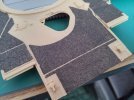
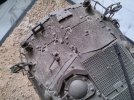
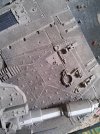
Thanks mate I have found some really fine sand and will give that a try first.Not telling you.....:tongue-out2:
Oh! alright then.
Before you start apply masking tape or fluid to the parts you are going to work on so that the paste does not spoil the other surrounding area.
I use two methods...
1, I use the non slip paste from Mig Anti Slip but on my 1/35 I use the 1/72/48 A.MIG-2034. and a small cut down paint brush to apply it in a dabbing motion. I put a blob onto so scrap plastic and dip the brush into it and then apply it to the model.
This is for the non slip I use on my US vehicles.
2, For my IDF vehicles I use the same paste but for 1/35 A.MIG-2035, is it slightly coarser and with that I also use a fine sand or the dust from a sand blasting machine that I 'liberated' some years ago. This gives the 'marbled' effect, but applied in the same way except that I sprinkle the 'dust' on before the paste dries. Give it a couple of minutes to settle and then turn the model over and give it a few taps to remove the loose 'dust'.
And once happy with the area then move onto another area giving the one you have just applied time to dry.
VMS have brought out their version which comes with a glue which you brush on and then sprinkle the 'sand' over the still wet area. They do some videos on how to apply their products as they also have one that you can spray on through your airbrush - I have yet to use them but have given them a try except for the spray one.
Then once dry and all masking removed you can prime and paint as normal.
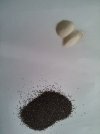
The 'dust'
At the top is the 'sand' (egg timer size) and at the bottom the dust from the sand blaster after putting it through a sieve.
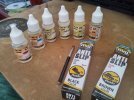
And the products I use/will be using...
With the cut down brush.
Any questions just ask,
Mike.
scalemodelling.co.uk is a privately operated online discussion forum. All content posted by members reflects their own views and opinions and does not necessarily represent those of the forum owners or administrators. While reasonable efforts are made to moderate content, no responsibility is accepted for user-generated material. By using this site, you agree to comply with UK law and the forum rules.

