Theme editor

Scale Model Shop

Tamiya 1/35 M4A3 Sherman

Tamiya really did leave a lot of it out didn't they. I hope my Easy Eight kit is a bit more accurate.
That’s a much better kit, mostly because it has nothing in common with the 1980s one you’re building :) It has the exhaust deflector in full, and though it’s moulded a bit thick, it actually hinges up into the hull if you want to build it that way. The only real snag with the kit is that the bogies are a rather loose fit, unlike what I expected from Tamiya. See here for my take on it, though I didn’t quite build is straight from the box.

I have a bit more respect for the old Sherman now. I may even have to buy a book or two, as I can definitely see me building more.

You'll be pleased to know that C9 and C10 are still on the Sprues - I don't think the destructions called them up.
I looked in the instructions for your kit and the old one before writing that post, and noticed your kit doesn’t mention them at all, but I thought I’d point it out in case you’ve seen photos like these:

View attachment 508799View attachment 508800

… and thought, “Those armour plates look nice, I’ll stick them on!” :)

The first photo, BTW, is of a “small-hatch” M4, with the steeper hull front, and those did get the extra armour plates (as you can tell). The second is a “large-hatch” M4A2, which looks almost indistinguishable from your M4A3 from this angle. The only reason you can tell at all that it’s an M4A2 from this particular photo is the fact that it has the extra armour plates :)
 
Thread owner
So they just thought ''Balls to the A3 crews, they don't deserve the extra armour''? :thinking: sounds a bit unfair!

Sherman's are waaaay more complicated than Spitfires, but interesting stuff - thanks for the info Jakko, it's fascinating. I'll have a read of your Easy Eight build.
 
Another thought...dry ammo storage vs wet. Thought dry had plates as a short term fix before wet storage was available.
 
Thread owner
Another thought...dry ammo storage vs wet. Thought dry had plates as a short term fix before wet storage was available.

This sounds like another layer of fun! Wet storage? I assume for cooling/Fire suppression reasons?
 
So they just thought ''Balls to the A3 crews, they don't deserve the extra armour''? :thinking: sounds a bit unfair!
Paul (@minitnkr) has got the right reason: small-hatch Shermans had most of the ammunition in the sponsons above the tracks, but that proved to be rather vulnerable to enemy fire. When the Americans redesigned the hull front because it was too complex (anywhere between five and nine or so plates to assemble, with welds between them that weaken the glacis plate) and because the small hatches made crew escape difficult, they not only made the new hull front from a single, thicker steel plate, placed at a less acute angle so they could have larger hatches in the hull roof, they also moved nearly all of the ammunition stowage to the hull floor. Those new racks got double walls filled with water (and antifreeze, in cold weather), so that if they were penetrated, the water would put out any fires. That lead to the name “wet stowage” for these tanks, as Paul mentions.

To improve protection for the older tanks, a “quick-fix” modification was developed, which included welding 25 mm armour plate onto the outside of the tank over the ammo racks, as well as 6 mm plate around the racks on the inside. It also entailed other modifications intended to increase crew survivability, but it was soon said to be “neither quick nor a fix” because of the amount of work involved and the questionable combat value of the modifications :smiling3:

However, there are two types of large-hatch Sherman that were built with dry stowage. One was the earliest production of M4A2s with the new hull front, and other type is M4s with a cast hull front:¹ because the new ammo racks weren’t ready yet, these both got the old type (and the rest of the old interior, because almost all of that got rearranged) and the extra armour plates welded to them in the factory.


¹ These had a welded hull, but the glacis was basically taken from the cast M4A1 hull. They’re hard to tell apart from the front, but it can be done if you know the details to look for.
 
Yes, so the ammo wouldn't 'cook off' as easy. Early Shermans were called Ronsons ( popular cigarette lighter of the time) by the Brits as they caught fire so easily when hit.
 
Thread owner
Paul (@minitnkr) has got the right reason: small-hatch Shermans had most of the ammunition in the sponsons above the tracks, but that proved to be rather vulnerable to enemy fire. When the Americans redesigned the hull front because it was too complex (anywhere between five and nine or so plates to assemble, with welds between them that weaken the glacis plate) and because the small hatches made crew escape difficult, they not only made the new hull front from a single, thicker steel plate, placed at a less acute angle so they could have larger hatches in the hull roof, they also moved nearly all of the ammunition stowage to the hull floor. Those new racks got double walls filled with water (and antifreeze, in cold weather), so that if they were penetrated, the water would put out any fires. That lead to the name “wet stowage” for these tanks, as Paul mentions.

To improve protection for the older tanks, a “quick-fix” modification was developed, which included welding 25 mm armour plate onto the outside of the tank over the ammo racks, as well as 6 mm plate around the racks on the inside. It also entailed other modifications intended to increase crew survivability, but it was soon said to be “neither quick nor a fix” because of the amount of work involved and the questionable combat value of the modifications :smiling3:

However, there are two types of large-hatch Sherman that were built with dry stowage. One was the earliest production of M4A2s with the new hull front, and other type is M4s with a cast hull front:¹ because the new ammo racks weren’t ready yet, these both got the old type (and the rest of the old interior, because almost all of that got rearranged) and the extra armour plates welded to them in the factory.


¹ These had a welded hull, but the glacis was basically taken from the cast M4A1 hull. They’re hard to tell apart from the front, but it can be done if you know the details to look for.

Ah now that makes much more sense. Having a wet stowage sounds a much better idea. Thanks for the explanation Jakko!

I have to say that these discussions about the different marks has been really interesting, and certainly makes me realise how little I know about armour in general. Is there a good book on the Sherman? (Or US armour in general?)
 
Thread owner
Yes, so the ammo wouldn't 'cook off' as easy. Early Shermans were called Ronsons ( popular cigarette lighter of the time) by the Brits as they caught fire so easily when hit.

Yes I've read about that - terrible really wasn't it. I read a book recently about a British Tank Troop commander from D-Day to VE Day that talked about the Shermans habit of 'Brewing up'. It was a really good book, but the name escapes me at the mo!
 
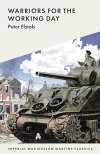
Was it this book Arnie?
IMG_2060.jpeg
Fine book if it was.
Always thought the Ronson nickname followed the Ronson advert….”Lights first time, every time”…….but apparently that’s a myth because Ronson never used that slogan. The Gerrys called them Tommy cookers I believe.
 
Just out of interest to any older F1 enthusiasts. Are you aware Murray Walker commanded a Sherman in WW2 when he was serving in the Royal Scots Greys. (My dad’s old lot - but unlike Murray, never got off the beaches).
That’s me - knowledge of Sherman’s ends!! :rolling:
 
Early Shermans were called Ronsons ( popular cigarette lighter of the time) by the Brits as they caught fire so easily when hit.
Sorry for breaking the news, but no, they were not :) Shermans didn’t burn any more easily than other tanks of their generation, but the wet stowage did reduce the number of fires drastically — though consensus seems to be that this was mostly due to where the ammunition was stowed (on the hull floor) than to the water-filled double walls of the bins. Now to find that data again … Ah, yes, Steven Zaloga’s Armored Thunderbolt, page 238:

It’s interesting to note that in Sicily and Italy [where much of the fighting was with dry-stowage Shermans], 81 percent of U.S. tanks that were penetrated by gunfire burned, while in the ETO [European Theater of Operations, that is, France and Germany] only 53 percent burned—an indication of the value of the wet stowage program.

Is there a good book on the Sherman? (Or US armour in general?)
Yes. But the really good ones are expensive and/or hard to find, and probably really only of interest if you’re fairly deeply into Shermans :) For a good, and cheap, introduction to Shermans, try Squadron/Signal’s Sherman in action:

View attachment 508929

It’s is pretty old (1978, off the top of my head) but it’s still a good overview with tons of good photographs illustrating the various types of Sherman in action.

But you can also find a lot of good information online. Probably the two best sites are The Sherman Tank Site for a general introduction, overview, etc. and the Sherman Minutia Website for all those little details that modellers care about :)
 
Thread owner
Was it this book Arnie?

Fine book if it was.
Always thought the Ronson nickname followed the Ronson advert….”Lights first time, every time”…….but apparently that’s a myth because Ronson never used that slogan. The Gerrys called them Tommy cookers I believe.

Hi Tim,

No it was this one - again a very good read. I'll check the Ken Tout one out.

61fIfnyGAtL._AC_UF894,1000_QL80_.jpg
 
Thread owner
Sorry for breaking the news, but no, they were not :smiling3: Shermans didn’t burn any more easily than other tanks of their generation, but the wet stowage did reduce the number of fires drastically — though consensus seems to be that this was mostly due to where the ammunition was stowed (on the hull floor) than to the water-filled double walls of the bins. Now to find that data again … Ah, yes, Steven Zaloga’s Armored Thunderbolt, page 238:


Yes. But the really good ones are expensive and/or hard to find, and probably really only of interest if you’re fairly deeply into Shermans :smiling3: For a good, and cheap, introduction to Shermans, try Squadron/Signal’s Sherman in action:

View attachment 508929

It’s is pretty old (1978, off the top of my head) but it’s still a good overview with tons of good photographs illustrating the various types of Sherman in action.

But you can also find a lot of good information online. Probably the two best sites are The Sherman Tank Site for a general introduction, overview, etc. and the Sherman Minutia Website for all those little details that modellers care about :smiling3:

81% to 53%, Wow, that obviously was worth doing. I think it's safe to say that most tank designers of WWII had to learn their trade the hard way. Much like aircraft design, I'm sure what they thought was needed before the war turned out not to be the case quite quickly. I can easily see the case of a designer saying 'yes we'll put the shells there, so the loader can get to them easily'' without really knowing the consequences of that decision. Much like them not fitting the seal-sealing fuel tank into the nose of the Hurricanes as a cost saving measure - who really knew the out come of that one.

Thanks for the tip for the book, I like books :-D, I've got one on order. I'll check out the websites too.
 
If you are after book tips, these two are good as well.
IMG_2065.jpeg
IMG_2064.jpeg
Ostensibly listed as novels they are actually the novelised war experiences of the respective authors. Churchill personal histories are quite rare I think, but both give a completely different view and are well worth reading.
 
Thread owner
If you are after book tips, these two are good as well.


Ostensibly listed as novels they are actually the novelised war experiences of the respective authors. Churchill personal histories are quite rare I think, but both give a completely different view and are well worth reading.

Thanks for the tip Tim, I'll check those out as well - you guys are bad for my wallet :smiling:

This is another good one about Churchills...

81CzIzmSlYL._AC_UF894,1000_QL80_.jpg
 
Thread owner
Might have to look for that one myself.

It's worth a look - it was a while ago that I read it but it was very interesting. It IS an actual diary, which weren't generally allowed, so there was an interesting insight to the everyday. What amazed me though was the guy wasn't young, IIRC he was in his 40's with a wife and kids - you really feel for him. Left his job and family, went to war, came home and got on with life... amazing people.

Actually I might have to get another copy myself.
 
Arnold,
My apologies very late to the party you are in safe hands with the advice you are getting. Your off to a great start and I will follow along if I may.
 
Back
Top