Theme editor

Scale Model Shop

Another First - 1/35 CH2 TES.

Question for the armour buffs out there!
The tow cable, RyeFields supply a 'thread' which to me is too flexible. Do any of you guys have any tips for adding some stiffness to a wannabe cable???
OR
Do you substitute it for perhaps wire?
Cheers in advance
Doug
Eureka do cable in different sizes and is flexible..
 
Thread owner
Just caught up with your build, and I can see you are taking it a bit at a time. As an old etch master, take a bow, you have done yourself proud.
Six of my latest builds are all etch bar armour builds, and they have all had their little quirks, but went together in the end.
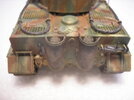
Here I hope is a little inspiration for you. This was the Challenger that came after the initial bar armour and just befor the TES (Megadon) one.
View attachment 483769
View attachment 483770
View attachment 483771
Looking forward to more on your Chally,
Mike.
I do like that, (a lot). The weathering is most effective. Very reminiscent of my time at Bovi. The broken camo was starting to come very common during the end of my time there. I guess it's a purchasable add on? I did see a pic of the 'Megatron' with different soft camo scheme. I did see someone experiment with some fabric to reproduce a similar effect.
I'm not rushing anything as I'm in learning mode and I may have mentioned, SWIMBO has a bank of jobs lined up!!!
main-qimg-e31c5bfce1be81bda455c1f50f9472c9-lq.jpeg
 
The tow cable, RyeFields supply a 'thread' which to me is too flexible. Do any of you guys have any tips for adding some stiffness to a wannabe cable???
You can probably glue it down into a shape that doesn’t look too flexible. The Challenger’s tow cables are stowed horizontally along the sides, which makes this easy enough, IMHO.

My main concern would be whether the thread has enough texture to look like a steel cable when painted. If not, I would probably replace it either by thin nylon cable (with a rope-like pattern) or by thin strands of copper wire from an electrical cable, twisted together using a hand drill.

Do you substitute it for perhaps wire?
Here’s a thread I wrote on this forum some years ago about how I make tow cables from copper wire:
https://www.scale-models.co.uk/threads/tow-cables.31200/
 
You can probably glue it down into a shape that doesn’t look too flexible. The Challenger’s tow cables are stowed horizontally along the sides, which makes this easy enough, IMHO.

My main concern would be whether the thread has enough texture to look like a steel cable when painted. If not, I would probably replace it either by thin nylon cable (with a rope-like pattern) or by thin strands of copper wire from an electrical cable, twisted together using a hand drill.


Here’s a thread I wrote on this forum some years ago about how I make tow cables from copper wire:
https://www.scale-models.co.uk/threads/tow-cables.31200/
HA!! That's EXACTLY the method I was talking about....
... "Great minds" an all that!! ;)
 
maybe one of our 'resin printer' friends on here could knock up a bit of a side line printing those stands you can put a bottle of Tamiya extra thin into to stop them getting knocked over...
 
maybe one of our 'resin printer' friends on here could knock up a bit of a side line printing those stands you can put a bottle of Tamiya extra thin into to stop them getting knocked over...
Blue tack under the bottle does that just as easily Chris. Sticks it to the bench.
 
Glad the potential glue disaster was averted. It's happened to many of us with various levels of "B****y H**l"
A piece of plywood about 3 or 4 inches square with a balsa wood frame glued on to fit the glue bottle works for me.
 
Thread owner
You can probably glue it down into a shape that doesn’t look too flexible. The Challenger’s tow cables are stowed horizontally along the sides, which makes this easy enough, IMHO.

My main concern would be whether the thread has enough texture to look like a steel cable when painted. If not, I would probably replace it either by thin nylon cable (with a rope-like pattern) or by thin strands of copper wire from an electrical cable, twisted together using a hand drill.


Here’s a thread I wrote on this forum some years ago about how I make tow cables from copper wire:
https://www.scale-models.co.uk/threads/tow-cables.31200/
Thanks for the link to your thread. That is defo something I could try myself. I have the technology!! I just need to start thinking out of the box a bit more!!

Regards the glue incident. I'll just be more aware of the wee beastie being a hindrance and do the lid up when she's about!!
IMG_0775.JPG
 
I'll just be more aware of the wee beastie being a hindrance and do the lid up when she's about!!
I often get the same thing from one of three cas we have, you're just about to glue or paint a tiny delicate bit and it decides to plonk it's back end right in the middle of the area you're working on... then give you the 'yeah, and!!!' look
 
Question for the armour buffs out there!
The tow cable, RyeFields supply a 'thread' which to me is too flexible. Do any of you guys have any tips for adding some stiffness to a wannabe cable???
OR
Do you substitute it for perhaps wire?
Cheers in advance
Doug

Sorry for the late response Doug, here's what the twisted wire method should look like when done. Depending on the gage of the strands and the number of strands used, will determine the final diameter of the cable,P1010063.JPG I used 7 strands to achieve this in 1-87 scale so yours may take a considerable amount of strands to get what you're after...good luck.
 
Thanks for the link to your thread. That is defo something I could try myself. I have the technology!!
You wouldn’t even need a drill, really — make loop at one end of the wire and put a stick through it, and you can use that to twist the wires too :)

The main problem is deciding how many wires to use to get the thickness you need. Doing a little test by twisting together some short bits of wire by hand and comparing to the kit part (or known real thickness) is about the only way, I think.
 
Thread owner
You wouldn’t even need a drill, really — make loop at one end of the wire and put a stick through it, and you can use that to twist the wires too :smiling3:

The main problem is deciding how many wires to use to get the thickness you need. Doing a little test by twisting together some short bits of wire by hand and comparing to the kit part (or known real thickness) is about the only way, I think.
I have almost a whole reel of ‘L’ cable for my habit of making up extensions leads!!
Jobs permitting, I’ll have a wee bash tomorrow. Thanks again Jakko and Andy.
This truly is a grand site. :thumb2: :smiling3:
 
I often get the same thing from one of three cas we have, you're just about to glue or paint a tiny delicate bit and it decides to plonk it's back end right in the middle of the area you're working on... then give you the 'yeah, and!!!' look
That’s nothing, you wait until one jumps into the wet palette when you are painting……gotta catch ‘em before they decorate the carpet…..
 
You wouldn’t even need a drill, really — make loop at one end of the wire and put a stick through it, and you can use that to twist the wires too :smiling3:

The main problem is deciding how many wires to use to get the thickness you need. Doing a little test by twisting together some short bits of wire by hand and comparing to the kit part (or known real thickness) is about the only way, I think.
I just put one end in a vice and the other end in a pin vice and twist it by hand….
 
That’s nothing, you wait until one jumps into the wet palette when you are painting……gotta catch ‘em before they decorate the carpet…..
Had a couple of close shaves with the wet pallet mate...
 
Thread owner
Well the learning never ends.
Another days progress with small steps forward. Today was road wheels! What I found was I assembled them incorrectly. Or rather I didn't assemble them before painting which would have been easier. I also found I need some of those spray painting clamps on sticks!!! Would have made life easier. However!! Improvisation!! I cut off the ends of some Q Tips and stuck one end in the wheel, the other in some polystyrene!! Worked a treat!! Tomorrows wee job will be to paint the tyres!! I have two choices, Ammo 'dark tracks' or Vallejo 'tyre black'. Have a couple of suitable coins in the garage to see which wins!!
 
Well the learning never ends.
Another days progress with small steps forward. Today was road wheels! What I found was I assembled them incorrectly. Or rather I didn't assemble them before painting which would have been easier. I also found I need some of those spray painting clamps on sticks!!! Would have made life easier. However!! Improvisation!! I cut off the ends of some Q Tips and stuck one end in the wheel, the other in some polystyrene!! Worked a treat!! Tomorrows wee job will be to paint the tyres!! I have two choices, Ammo 'dark tracks' or Vallejo 'tyre black'. Have a couple of suitable coins in the garage to see which wins!!
Try Vallejo 'Dark Rubber' , differentiated with various mixes of 'Light Rubber' (Vallejo 305 and 306 in the 'Panzer Aces' series), they work really well! Also various greys (eg Schwartzgrau, Dunkelgrau etc) can be really effective!
Steve
 
Thread owner
What I have observed, (assuming the model has reproduced the tracks correctly). The CH1's had oblong rubber road blocks on the tracks, I notice on this variant, the TES, the blocks are smaller and appears to have two blocks were there once was one!!
Next stupid question, just how do you approach the tracks with regards to painting them. They are a right mix of metal links and rubber blocks.
Do you paint the whole tracks in one colour then hand paint the rubber blocks or what!!
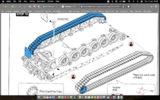
Image of the track links, particularly the rubber blocks!
Screenshot 2023-06-13 at 20.45.00.png
 
I didn't assemble them before painting which would have been easier.
With wheels like on your Challenger, I often leave the back half on the sprue and assemble the front half to it, then spray them like that. Easy to hold because of the sprue, and as the wheels will all be next to each other, it also makes it quick to spray them one after the other.

What I have observed, (assuming the model has reproduced the tracks correctly). The CH1's had oblong rubber road blocks on the tracks, I notice on this variant, the TES, the blocks are smaller and appears to have two blocks were there once was one!!
The track was changed from Challenger 1 to 2, yes. 1 had a track much like Chieftain’s, with one large pad but metal triangular “horns” on the sides because they were single-pin tracks (meaning one pin connects each link to the next one).

Challenger 2 has double-pin tracks, meaning the blocks are linked together by separate connectors along the sides and in the case of wide tracks like here, a third one in the middle. This results in two small rubber pads, because there has to be room for the centre connector.

Next stupid question, just how do you approach the tracks with regards to painting them. They are a right mix of metal links and rubber blocks.
Do you paint the whole tracks in one colour then hand paint the rubber blocks or what!!
I normally spray the tracks with the metal (or rust) colour and then hand-paint the blocks. This is a chore, but much less so than doing it the other way round.
 
Back
Top