Wednesday 18 September
Generally unsettled but with bright spells.
Despite the marginal weather the Luftwaffe started early. At about 09.00 large numbers of
aircraft were plotted by RDF, approaching quickly from the Pas de Calais region. In a reflection of the Luftwaffe’s new tactics these were fighter-bombers from II.(S)/LG 2, which together with JG 54 flew at high altitude towards London. Park scrambled 15 of his squadrons, but due to the speed of the raid, just 6 made contact with the enemy. Some, on seeing only fighters sought to disengage, avoiding fighter vs fighter combat. 5 of Fighter Command’s aircraft, all Spitfires, were shot down and the Luftwaffe lost 2 Bf 109s.
At 11.00 another large raid was plotted approaching the English coast. Park held back, fearing a repeat of this morning’s action, but this time the large number of fighters were covering some bombers (probably twelve He 111s from I./KG 53). Chatham and Rochester were bombed unopposed. No 46 Squadron lost three of its aircraft to Galland’s JG 26, but No 19 Squadron shot down two of the bombers as they withdrew and No 41 Squadron caught two of the Bf 109s.
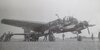
A third raid arrived shortly after teatime. This time Park reacted in force with fourteen squadrons, including the Duxford Wing. He was right to do so because the raid included eighteen Ju 88s of the newly arrived II./KG 77 under Major Max Kless, with London as the target. When the Germans came in over the south of England there was thick overcast at between 5,500 and 7,000 metres. JG 51, assigned to fly close escort, lost the bombers in the clouds. Fighter Command, however, did not. As the bombers approached Gravesend Nos 92 and 302 (Polish) Squadrons made a head-on attack and then, over the Thames Estuary, all five squadrons of the Duxford Wing attacked. Nine aircraft including eight of the bombers were shot down, though the RAF pilots claimed many times that number, for the loss of just one Spitfire.
As a direct result of this debacle, Kesselring summoned his fighter commanders and, in the words of Hannes Trautloft,
“We received a hail of abuse. Kesselring now requires us to fly even closer to the bombers during our close escort missions.”
This is the first time anybody ordered the fighters to do this and it was not Goering. It may be pertinent that Kesselring, able as he undoubtedly was, had been an artillery officer. Unlike Goering, who had himself been a successful fighter pilot, he had little understanding of men like Trautloft.
At the end of the day Fighter Command had lost 12 of its fighters but with just 3 pilots killed. Half of the pilots shot down had returned to their squadrons within 24 hours. The Luftwaffe had lost 15 aircraft with more than 50 airmen killed or taken prisoner.
As usual the Luftwaffe was back tonight. An estimated 200 aircraft were operating over the South East alone. London was again the principal target though Liverpool was again heavily bombed. Bombs were reported to have fallen widely across the country, on towns on the North East Coast, the Midlands and East Anglia.
Tonight, Bomber Command again made a substantial effort. 174 bombers were dispatched, most to bomb the invasion fleets in the Channel ports, others attacked railway targets in Germany. 8 aircraft were lost, 3 Whitleys, 2 Blenheims, 2 Wellingtons and a Hampden.