

You are using an out of date browser. It may not display this or other websites correctly.
You should upgrade or use an alternative browser.
You should upgrade or use an alternative browser.

G
Guest
Guest
I intend to test it by seeing if I can pull the thing apart or notSoldered butt joints are not always the most reliable Mike/Jakko.
 It’s not like the bridge is overly heavy, and AFV Club apparently trusts the plastic parts … though perhaps more than I do
It would not be as easy to solder the ring at the other end to that, than to brass, wouldn’t it?Another option is to find a large headed nail with the correct diameter shank and file the head to the required T shape.
You do need clasps with separate pins in this case, though, because they have to go through eyes and holes on the bridge parts and the blocks. O6 are the pins that go through the holes moulded into O11, and these are not the only ones — they also go at the tops of the poles and through the rings I already replaced by brass ones, for the cables that connect those:O11 could possibly be replaced with model railway screw coupling parts……not sure what size you would need, but they come in both OO and O gauge sizes. You don’t need working ones (threading 16BA bolts through the working Tommy bar parts is sheer lunacy. Trust me, I’ve done it!), just the D ring parts on a dummy coupling.
View attachment 482206
The little rectangular holes at the tops of A-frame poles are for small plastic hooks that the T-end of X31 goes into.

1/3
Hi Jakko
I was thinking of the D rings from these type of couplings
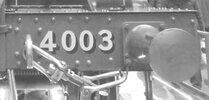
to replace O11. It’s pretty much the same technology. There are several manufacturers of these in the railway scales. They usually come as lost wax castings in brass. As to the nails, you can get decorative tacks in brass that may suit the T requirement. However, you are much closer to this than I am, and may be seeing issues that I’m not.
I was thinking of the D rings from these type of couplings
to replace O11. It’s pretty much the same technology. There are several manufacturers of these in the railway scales. They usually come as lost wax castings in brass. As to the nails, you can get decorative tacks in brass that may suit the T requirement. However, you are much closer to this than I am, and may be seeing issues that I’m not.

Nice updates on the bridge Jakko
G
Guest
Guest
Aha! TBH, I was wondering what kind of couplings you meant, as I was having a hard time figuring out how something like this:I was thinking of the D rings from these type of couplings
View attachment 482217
… relates to part O11
The ones you mean seem a bit long, but I imagine something shorter would be available too by looking around a bit.
At the moment, my thinking is that O11/O6 are probably OK: they’re not likely to be the weakest link in the chain, which looks to me to be the X31 followed by the eyes on parts O10 (of which there are at least six) and their glue joint with the thread that makes up the cable. If I had to guess, it’s probably the eye on X31, as that takes the whole weight of the bridge, while each O10 only takes half.However, you are much closer to this than I am, and may be seeing issues that I’m not.
I think the best thing to do is see if there are any spares, and if so, use one of them to see how much weight it can take. If it will hold the bridge’s weight without deforming or snapping, all should be well.
1/3
I did think that after I posted Jakko…..I thought “he thinks I mean knuckle or automatic couplers LOL”. Hence the picture to explain….. British railway practice was far behind European and U.S. practice in the realm of couplings until relatively recently, and it’s easy to forget that.Aha! TBH, I was wondering what kind of couplings you meant, as I was having a hard time figuring out how something like this:
… relates to part O11 :smiling3:
The ones you mean seem a bit long, but I imagine something shorter would be available too by looking around a bit.
At the moment, my thinking is that O11/O6 are probably OK: they’re not likely to be the weakest link in the chain, which looks to me to be the X31 followed by the eyes on parts O10 (of which there are at least six) and their glue joint with the thread that makes up the cable. If I had to guess, it’s probably the eye on X31, as that takes the whole weight of the bridge, while each O10 only takes half.
I think the best thing to do is see if there are any spares, and if so, use one of them to see how much weight it can take. If it will hold the bridge’s weight without deforming or snapping, all should be well.
G
Guest
Guest
Luckily I’m not quite dense enough to think you really meant those couplings, but it also did not occur to me that you meant the chain-type ones, even though I do know they exist
G
Guest
Guest
Small update on the strength of the clasps, eyes etc. issue: I weighed the bridge, found it’s about 75 grammes, and then went and found something a bit heavier. I had a small plastic jar at hand that has some water in it (and a lid on), and that turned out to weigh about 90 g. Looped some copper wire around it, and then hung it by the wire from one of the clasps in the kit. The clasp holds it fine, both the U-end and the pin that goes through. However, I do think I’ll need to drill a small hollow for the pin to fit into, opposite the hole moulded for it in one side of the clasp.
Next I tried one of the cable eyes, and that also held the weight perfectly well, even though it’s thinner material than the clasps. As I said, each of these will only carry half the weight of the bridge (minus the part carried by the pivots on the tank’s nose, of course), so if a single one can hold over 20% more than the bridge’s full weight, there should be no risk of breaking.
The last thing to try was part X31, which will bear twice the weight of the clasps and cable ends, and that also held perfectly — both the eye on it and the crossbar. I won’t be replacing it with brass, as I don’t think it’s necessary at all (but I’m sure I’ll say something else a few years down the line when fatigue and/or the influence of UV light causes it to break anyway ).
Next I tried one of the cable eyes, and that also held the weight perfectly well, even though it’s thinner material than the clasps. As I said, each of these will only carry half the weight of the bridge (minus the part carried by the pivots on the tank’s nose, of course), so if a single one can hold over 20% more than the bridge’s full weight, there should be no risk of breaking.
The last thing to try was part X31, which will bear twice the weight of the clasps and cable ends, and that also held perfectly — both the eye on it and the crossbar. I won’t be replacing it with brass, as I don’t think it’s necessary at all (but I’m sure I’ll say something else a few years down the line when fatigue and/or the influence of UV light causes it to break anyway
).
G
Guest
Guest
Better safe than sorry TBH, I kind of expect things to hold, as I (mostly) doubt AFV Club would have put parts in the box too weak to hold the bridge — but you never know … Which is why I did the quick experiment, that now has me wondering if it was thorough enough, though. Are the forces working on the various parts as simple as I thought? The bridge will be at an angle of about 45°, but the winch cable will be much flatter than that — what does that mean for the clasps etc.?
TBH, I kind of expect things to hold, as I (mostly) doubt AFV Club would have put parts in the box too weak to hold the bridge — but you never know … Which is why I did the quick experiment, that now has me wondering if it was thorough enough, though. Are the forces working on the various parts as simple as I thought? The bridge will be at an angle of about 45°, but the winch cable will be much flatter than that — what does that mean for the clasps etc.?
G
Guest
Guest
I mentioned before I wanted the inside of the bridge to be SCC 2 brown, but spraying the white had ruined that  My tip if you want to paint the bridge a different colour inside than out too, is to paint the insides first (as I recommended before, I think) and then put some tape on the inside of the zigzags before glueing the parts together. This so you avoid having to do what I did, and laboriously repaint the insides with a brush:
View attachment 482522View attachment 482523
That done, I could refit the booms (and fix one of the hinges, that broke off when I tried doing that) and finally install the cables:
View attachment 482524
That was fairly tricky, but doable. After putting the clasp through the eye at the end of the cable, I found it best to insert a pin but don’t push it through yet. You can then put the clasp into position, push the pin through and apply a tiny bit of liquid cement to both ends, being careful to keep it away from the cable eyes and the hole or ring the clasp locks into.
Close-ups:
View attachment 482526View attachment 482525
I glued the tops of the booms together with X31 in place, but there is no glue anywhere except to glue the pins O6 to clasps O11, and between the tops of the booms, X31 is also still loose, but trapped between the booms.
When I tested the whole thing before glueing the booms, it turns out that if you pull on X31 (and prevent the lower end of the bridge from sliding away) far enough that the bridge pivots upwards, X31 keeps the booms together perfectly well without glue. Still, I glued the booms because again, better safe than sorry
Oh, and the tank now has a raincoat on:
View attachment 482527
This so I can sculpt the waterproofing between the hull and the turret without it sticking to the hull.
My tip if you want to paint the bridge a different colour inside than out too, is to paint the insides first (as I recommended before, I think) and then put some tape on the inside of the zigzags before glueing the parts together. This so you avoid having to do what I did, and laboriously repaint the insides with a brush:View attachment 482522View attachment 482523
That done, I could refit the booms (and fix one of the hinges, that broke off when I tried doing that) and finally install the cables:
View attachment 482524
That was fairly tricky, but doable. After putting the clasp through the eye at the end of the cable, I found it best to insert a pin but don’t push it through yet. You can then put the clasp into position, push the pin through and apply a tiny bit of liquid cement to both ends, being careful to keep it away from the cable eyes and the hole or ring the clasp locks into.
Close-ups:
View attachment 482526View attachment 482525
I glued the tops of the booms together with X31 in place, but there is no glue anywhere except to glue the pins O6 to clasps O11, and between the tops of the booms, X31 is also still loose, but trapped between the booms.
When I tested the whole thing before glueing the booms, it turns out that if you pull on X31 (and prevent the lower end of the bridge from sliding away) far enough that the bridge pivots upwards, X31 keeps the booms together perfectly well without glue. Still, I glued the booms because again, better safe than sorry
Oh, and the tank now has a raincoat on:
View attachment 482527
This so I can sculpt the waterproofing between the hull and the turret without it sticking to the hull.
G
Guest
Guest
Morning tea now all over the screen.....:tears-of-joy:Aha! TBH, I was wondering what kind of couplings you meant, as I was having a hard time figuring out how something like this:
… relates to part O11 :smiling3:
The ones you mean seem a bit long, but I imagine something shorter would be available too by looking around a bit.
At the moment, my thinking is that O11/O6 are probably OK: they’re not likely to be the weakest link in the chain, which looks to me to be the X31 followed by the eyes on parts O10 (of which there are at least six) and their glue joint with the thread that makes up the cable. If I had to guess, it’s probably the eye on X31, as that takes the whole weight of the bridge, while each O10 only takes half.
I think the best thing to do is see if there are any spares, and if so, use one of them to see how much weight it can take. If it will hold the bridge’s weight without deforming or snapping, all should be well.
G
Guest
Guest
Good thing the model is protected, then
G
Guest
Guest
This is what the raincoat was for:
View attachment 482728View attachment 482729
A good hour’s worth of work with Magic Sculp produced the waterproofing between hull and turret, and though it will still need more work once it’s hardened, I’d say the part I don’t much like is done now
There is nothing on the rear wall, by the way, because that will be covered by the stowage bin.
View attachment 482728View attachment 482729
A good hour’s worth of work with Magic Sculp produced the waterproofing between hull and turret, and though it will still need more work once it’s hardened, I’d say the part I don’t much like is done now
There is nothing on the rear wall, by the way, because that will be covered by the stowage bin.
G
Guest
Guest
Your attention to "getting it right " is praiseworthy.
G
Guest
Guest
I just don’t like doing half a job
The need to make all this is one of my two complaints about this kit, BTW: why include the deep-wading trunks but not all the other bits that were also installed to make the tank waterproof? (The other complaint is that AFV Club could easily have included parts to make the suspension sit correctly when carrying a bridge.)
The need to make all this is one of my two complaints about this kit, BTW: why include the deep-wading trunks but not all the other bits that were also installed to make the tank waterproof? (The other complaint is that AFV Club could easily have included parts to make the suspension sit correctly when carrying a bridge.)
G
Guest
Guest
The clingfilm worked very well. Now the putty has hardened, I could just take the turret off the hull:
View attachment 482813
And because I forgot to post it earlier, here’s a photo of the real waterproofing for the turret ring, taken from the British Army’s manual:
View attachment 482812
You may notice that the waterproofing for the gun aperture isn’t on yet here, while I did that first for my model. The reason is that on the real tank, the turret ring was waterproofed first, followed by the gun aperture; for my model, I did it the other way round because I initially intended to glue the turret to the hull before adding the waterproofing, and that would make it very hard to sculpt the cloth around the mortar. Only after I had done that part, did I realise that clingfilm would prevent the putty from sticking to the hull …
My advice to anyone else wanting to also model the waterproofing on a Churchill, would be to do it in the order the manual says: hull-to-turret first, then the gun (or mortar). This because I found it a little difficult to get the putty into place at the front of the turret due to the mortar being in the way, which you would avoid by leaving the whole thing off until after you’ve sculpted the cloth between hull and turret.
View attachment 482813
And because I forgot to post it earlier, here’s a photo of the real waterproofing for the turret ring, taken from the British Army’s manual:
View attachment 482812
You may notice that the waterproofing for the gun aperture isn’t on yet here, while I did that first for my model. The reason is that on the real tank, the turret ring was waterproofed first, followed by the gun aperture; for my model, I did it the other way round because I initially intended to glue the turret to the hull before adding the waterproofing, and that would make it very hard to sculpt the cloth around the mortar. Only after I had done that part, did I realise that clingfilm would prevent the putty from sticking to the hull …
My advice to anyone else wanting to also model the waterproofing on a Churchill, would be to do it in the order the manual says: hull-to-turret first, then the gun (or mortar). This because I found it a little difficult to get the putty into place at the front of the turret due to the mortar being in the way, which you would avoid by leaving the whole thing off until after you’ve sculpted the cloth between hull and turret.
G
Guest
Guest
So am I — it could be done better, by a better sculptor than I am
Once the putty had hardened, I scraped and carved it to improve the shape and remove defects, then added most of the kit’s turret details:
View attachment 482983
The kit also supplies the “cage” type of sight that sits in front of the commander’s cupola, but from photos it looks like my subject didn’t have that, so I left it off. I did make a mistake in using the tall aerial base (the one with the ring around it). There were tall and short ones, and photos seem to show the real tank I’m building had the short one. Luckily, the kit supplies both, though it keeps quiet about the short one, so I pulled the wrong one off and fitted the other. I drilled out all of the aerial bases with an 0.4 mm drill, BTW, to later easily install the aerials themselves.
Then I added eight spare track links with strips and punched nuts to retain them:
View attachment 482984View attachment 482985
On the real tank, lengths of steel rod were welded to the turret that went through the holes in the links, then the strip and nuts retained them, so I also added 0.5 mm plastic rod where the rods might be seen.
Once the putty had hardened, I scraped and carved it to improve the shape and remove defects, then added most of the kit’s turret details:
View attachment 482983
The kit also supplies the “cage” type of sight that sits in front of the commander’s cupola, but from photos it looks like my subject didn’t have that, so I left it off. I did make a mistake in using the tall aerial base (the one with the ring around it). There were tall and short ones, and photos seem to show the real tank I’m building had the short one. Luckily, the kit supplies both, though it keeps quiet about the short one, so I pulled the wrong one off and fitted the other. I drilled out all of the aerial bases with an 0.4 mm drill, BTW, to later easily install the aerials themselves.
Then I added eight spare track links with strips and punched nuts to retain them:
View attachment 482984View attachment 482985
On the real tank, lengths of steel rod were welded to the turret that went through the holes in the links, then the strip and nuts retained them, so I also added 0.5 mm plastic rod where the rods might be seen.
Legal Notice
scalemodelling.co.uk is a privately operated online discussion forum. All content posted by members reflects their own views and opinions and does not necessarily represent those of the forum owners or administrators. While reasonable efforts are made to moderate content, no responsibility is accepted for user-generated material. By using this site, you agree to comply with UK law and the forum rules.