1/3
Still catching up with all the stuff I haven't been able to post inn the last year-and-a-half
At the end of WWI, the RAF had something like 22,000 'planes in service and nearly a quarter of a million service personnel. That was drastically cut back almost immediately after the Armistice, only a few months into the existence of the RAF. It was five years before any new types entered squadron service, one being the Avro Aldershot bomber which I recently posted here
The first three new fighters to come in were the Gloster Grebe, Armstrong-Whitworth Siskin, and the Hawker Woodcock. The Woodcock was actually designed to follow the spec. as a dedicated night-fighter, rather than 'that's another role the day fighters can fill'. The next 'proper' dedicated night-fighter was the Blenheim IF. In 1938!
Woodcock's only equipped two squadrons, No.3 and No.17, both operating out of Upavon. They were replaced in service in 1928 by Gloster Gamecocks
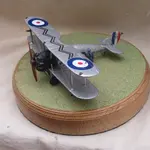
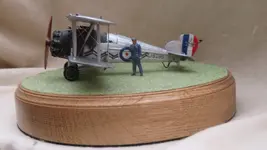
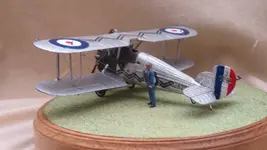
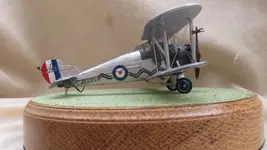
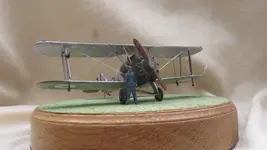
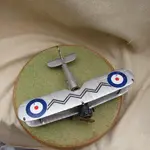
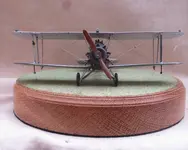
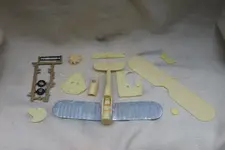
This is a resin kit got off eBay, and a few parts were missing or deformed. The only kits I'm aware of are one from Merlin, and an injection from Aeroclub. This isn't either, but it's correct in dimension and shape. Oddly, the maker went for inscribed rib detail. Which I had to correct.
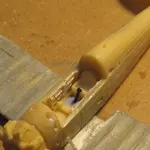
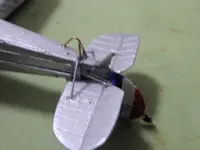
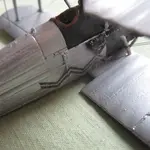
Figure is from Scale-Model-Shop on eBay, who do a range of individual 3D print figures, in multiple scales, some of whom are recognizeable personalities. The externally mounted Brownings are CMK, because the kit doesn't have any. Tail and wing lights are, once again, Airfix Ju.88 bomb cradle pieces
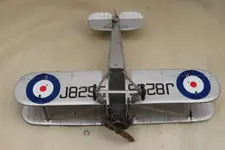
Markings are Xtradecal Roundels, Ventura individual codes, and squadron zig-zags out of the old Airfix Bristol Bulldog. And I had to peel the tissue paper off them very carefully!
This particular aircraft, J8295, was loaned to Charles Lindbergh to return to Paris, after his visit to England following his transatlantic flight
'Ugly little spud.'
'I think he can hear you, Ray.'
At the end of WWI, the RAF had something like 22,000 'planes in service and nearly a quarter of a million service personnel. That was drastically cut back almost immediately after the Armistice, only a few months into the existence of the RAF. It was five years before any new types entered squadron service, one being the Avro Aldershot bomber which I recently posted here
The first three new fighters to come in were the Gloster Grebe, Armstrong-Whitworth Siskin, and the Hawker Woodcock. The Woodcock was actually designed to follow the spec. as a dedicated night-fighter, rather than 'that's another role the day fighters can fill'. The next 'proper' dedicated night-fighter was the Blenheim IF. In 1938!
Woodcock's only equipped two squadrons, No.3 and No.17, both operating out of Upavon. They were replaced in service in 1928 by Gloster Gamecocks
This is a resin kit got off eBay, and a few parts were missing or deformed. The only kits I'm aware of are one from Merlin, and an injection from Aeroclub. This isn't either, but it's correct in dimension and shape. Oddly, the maker went for inscribed rib detail. Which I had to correct.
Figure is from Scale-Model-Shop on eBay, who do a range of individual 3D print figures, in multiple scales, some of whom are recognizeable personalities. The externally mounted Brownings are CMK, because the kit doesn't have any. Tail and wing lights are, once again, Airfix Ju.88 bomb cradle pieces
Markings are Xtradecal Roundels, Ventura individual codes, and squadron zig-zags out of the old Airfix Bristol Bulldog. And I had to peel the tissue paper off them very carefully!
This particular aircraft, J8295, was loaned to Charles Lindbergh to return to Paris, after his visit to England following his transatlantic flight
'Ugly little spud.'
'I think he can hear you, Ray.'
Last edited: