Theme editor

Scale Model Shop

Help with lancaster

  • Thread starter Thread starter Guest
  • Start date Start date
Status
Not open for further replies.
G

Guest

Guest
Thread owner
Hi all I've just painted the black undersides and sides on my lanc, how do I do panel lines and weather black, when my panel line paint is black. (sorry not a plane man, in fact I know nothing about planes).
 
Black is always difficult. I would normally paint in a very dark grey, like Vallejo nato black and then do panel lines in a black oil paint.


Which I hate to say after you have painted it.
 
Thread owner
i remember reading somewhere ages ago that you should never paint a model with full black paint as you will never see it in real life only varied shades of grey. have never used it since but only for mixing or preshading and such like
 
Thread owner
Perhaps I should remask and spray dk grey, it's actually 1/48.
 
Thread owner
\ said:
Perhaps I should remask and spray dk grey, it's actually 1/48.
Best idea I think Ken. With it toned down you will also see more detail. When you look at black it is just a dark mass with detail killed. Think I would try practice on inkjet very smooth paper to the size of the fuselage cut it out roughly and offer it up to the model. Gives an idea of the contrast of the u/s to the top side.


For me I would leave the panel lines as they are. With a lighter grey, deeply thinned, I would try wisps from some of the panel line in the tail direction. And perhaps some on mid panels. For me that accentuates and gives a more authentic look rather than filling in all the panel lines. I tried this on my Merlin Helicopter and Walrus. Not easy, as I found, as you need much practice with an airbrush and even then I had problems. But there you go as every one says practice practice and even more practice. But every practice a winner.


Laurie
 
As you are willing to re-paint I will back up the dark grey. The only aircraft that were true black would have been some of the very early night fighters/bombers. The "paint" used on those was a form of lamp black. Soot mixed with a binder, it was totally mat and rubbed off all the time. Not very practical. Night was a mix the actually contained a lot of blue so that to was not black either...


I am sure that stona can come with all the official info about these.


Back to the model.. Dark grey, panel lines at clean places in darker grey or black, places where dirt would collect lighter.


Ian m
 
Thread owner
Matter of interest on weathering panel lines shading etc.


I study artists impressions of aircraft. David Hockney and others it gives a good impression of an aircraft without all the minute detail but with just enough detail to represent what that aircraft looks like in reality. Cannot think of any where an artist has represented all the panel lines.


Laurie
 
Thread owner
I would use either Nato black or anthracite which actually looks black until you put it next to black.


scott
 
\ said:
Night was a mix the actually contained a lot of blue so that to was not black either....
Ian m
It did contain a blue pigment amongst others. If 100 people looked at a chip,99 would probably say it was black. Once applied on an aeroplane it clearly weathered to give a less than uniform black appearance.


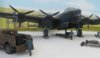
On scale models black just looks, well, too black. Some modification is needed and everyone has their own favourite way. On small scales, like the 1/72 Lancaster I posted above, I like to just add some white. I don't measure exact ratios, but there is a surprising amount of white in that mix, I'd guess maybe 20%.


On larger scales I usually add some red, as here:


View attachment 102789


I know others use NATO black, which is really a very dark green. Methods vary, but the consensus is that pure black doesn't work well on small objects like scale models.


Cheers


Steve

View attachment 215812
 

Attachments

  • SF_web_zpsv7kzz4q5.jpg
    SF_web_zpsv7kzz4q5.jpg
    1.4 KB · Views: 0
Thread owner
Yes I use a green black for a camouflage which has the green/brown top camouflage. These are all warm colours and will be softer in impact than a blue grey.


One thing is that the green black should be modified between 1/72 1/48 and 1/32 scales. On the Wellington 1/48 I put a lot of white in testing all the time until satisfied (sort of).


Laurie


View attachment 102794


View attachment 215817
 
Thread owner
you could use the black as a sort of pre shade,spraying light coats of dark grey around panel lines and allowing for shade,multiple coats in the centres of panels, rather than respraying the whole thing dark grey and then highlighting panel lines and such like
 
\ said:
you could use the black as a sort of pre shade,spraying light coats of dark grey around panel lines and allowing for shade,multiple coats in the centres of panels, rather than respraying the whole thing dark grey and then highlighting panel lines and such like
I agree. It might be a more sensible way of doing it. Use different shades of grey, the idea is to avoid an even black overall colour.


Cheers


Steve
 
Status
Not open for further replies.
Back
Top