Theme editor

Scale Model Shop

Pre Shading

  • Thread starter Thread starter Guest
  • Start date Start date
Status
Not open for further replies.
G

Guest

Guest
Thread owner
Hi guys being new to the world of weathering techniques please could some one explain what the purpose of pre shading is and how does it differ from a priming coat which makes perfect sense. I read about this all the time in the modeling mags but there is never explenations why all theseare used. Its all very confusing to the new guys. Surely a small section in the magazines explaining why and how would be a bonus. Thank you guys
 
Pre shading is just spaying a thin dark coat into panel lines then spraying over in base colour , the base colour is lighter so it stands out showing the panel line and other details:)
 
Hi Alan Pre-shading is a way to highlite the panel lines on aircraft after priming you paint the panel lines in black ( or any other dark colour ) then you put lite coats of the top colour over the kit then when dry it should show the panel lines as a darker top colour so to break up the colours
 
\ said:
Hi Alan Pre-shading is a way to highlite the panel lines on aircraft after priming you paint the panel lines in black ( or any other dark colour ) then you put lite coats of the top colour over the kit then when dry it should show the panel lines as a darker top colour so to break up the colours
Isn't that what I said lol
 
Thread owner
It is basically what it says it is, shading before you apply the base colour. If you apply shading afterwards then you have to mix and blend the base colour into a range of tones to get a realistic shade effect, which can be very complicated and difficult to get consistent. If you put it on first you can get away with using any dark colour, which you would normally apply in the areas where shadow would be. The downside is that you need to be very careful not to apply too much base coat over the top as you can easily completely hide the effect. It is not limited to aircraft, you can basically do it with any model you choose, in particular armour but I have seen it used on u-boats to good effect.


After pre-shading and the base coat you would typically then lighten the base and apply some highlights to the higher areas for the full range of effect.
 
Its horses for courses. I have worked on aircraft for over twenty years and in my opinion pre-shading is not a prototypical appearance on the real thing.
 
Thread owner
\ said:
Its horses for courses. I have worked on aircraft for over twenty years and in my opinion pre-shading is not a prototypical appearance on the real thing.
Agree Rick. As it shades around the perimeter of each panel it then has a very uniform effect. When looking closely at aircraft the shading is very random where it occurs. Neither will you normally see panel lines. You may see a shadow effect or rivets and where a panel is overlapped. Very rare to see panel lines stand out.


I can see that it is a way of artistically making a model look attractive and that is choice. I am pursuing the random shading effect which suits me. I did like the effect that "Scuff" had on his completed aircraft last week where the he had post shaded the panel lines but left blanks and stutters which I though gave it a random more towards an authentic.


All in the mind of the beholder.


Laurie
 

Attachments

  • 040.JPG
    040.JPG
    3.1 KB · Views: 0
  • 002.JPG
    002.JPG
    2.4 KB · Views: 0
Whilst I agree with Rick above, and some over zealous pre-shading can result in a very unrealistic (in my opinion) patch work quilt effect, the technique is really artistic rather than scientific. Both pre-shading and post-shading, either of panel lines and panel centres or a more overall modulation are simply an attempt to make a small model look more life like and less toy like. Large areas of one even colour might be realistic compared to the original but on a model will produce a toy like appearance.


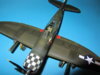
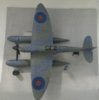
Personally I always post shade but as with many techniques, less is more. In my opinion these should be subtle effects, not detracting from the overall finish. Adrian has shown some nice close ups, but here's a model seen from a typical distance. There is in fact quite a lot of shading in the camouflage finish, but hopefully it doesn't leap out and hit you in the eyes!


View attachment 108841


Have a practice with either technique, it takes a while to get it how you like it and to learn how to control them, I'm still trying :) , but they will make your models appear more realistic.


It's all about trying to make small pieces of plastic look like large pieces of aluminium or whatever.


Cheers


Steve

View attachment 221864
 

Attachments

  • top_zpsi4begx0n.jpg
    top_zpsi4begx0n.jpg
    2.2 KB · Views: 0
Thread owner
Steve has put it far better than I could!


It's all about the scale ..... ;)
 
Thread owner
Sorry to you both, Steve and Patrick, but I do not understand what you are getting at on the scale thing.:confused:


I finish my models to be looked at on the shelf at a distance of about two feet. Except youngest son has his nose near touching the paintwork to view.


Is that what you are both getting at ? IE finish to view on the shelf ? :)


Laurie
 
Thread owner
Well in a way, yes! We're building small versions of large things, so how we represent the scale is vital.


Most model-makers start with washes & drybrushing to add depth and go on to use techniques such as pre/post shading or highlighting colours to add or improve that effect.


I'd say that there are cycles of popularity with some ideas, such as colour modulation, but the basics remain forever.


With the advent of the internet, the question of how to create photographic impact has come to the fore. More people view someone's model via the net than any other way, so getting this aspect ' right ' probably accounts for a lot of modern techniques.


As has been said already though, it's all in the eye of the beholder & not everyone will agree about everything! ;)
 
Thread owner
\ said:
More people view someone's model via the net than any other way, so getting this aspect ' right ' probably accounts for a lot of modern techniques.
Must say I have not thought of it in that way Patrick. As I have said my thought is to make it look OK on the shelf and I suppose if I got that right (with in my capabilities) then all the rest photos etc will follow.


The fact that I found happens in architecture that flair gets stuck in a rut. No different I have found in model making. So easy to just repeat what has been done before as being the only way. Not a bad thing as you get better every time at those techniques. I like to experiment and at times it is jolly frustrating as things go wrong. But you are bound by your own character.


If I am going somewhere I always have to take a different route other wise I feel cheated. That goes for much in my life.


Laurie
 
\ said:
As has been said already though, it's all in the eye of the beholder & not everyone will agree about everything! ;)
Quite right! I know model makers who will swear blind that scale effect is a pure invention and a complete load of cobblers. Others love the heavily shaded patch work quilt effect which I dislike. It is all in the eye of the beholder.


Laurie, all these techniques are just an artistic endeavour to make a scale model appear like the real thing. Which techniques and how they are used is very subjective. What I do know is that if you just paint a model with unmodified or unmodulated colours straight out of the bottle or tinlet it will not fool the eye of the beholder into believing they are looking at the real thing. It is quite literally a 'trompe l'oeil' that we are trying to pull off.


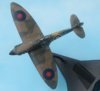
Look at this relatively tiny (compared to a real one) 1/72 scale Spitfire and try to imagine what it would look like if the colours were not lightened for scale and shaded to make them appear more realistic. It would look like a Dinky toy!


View attachment 108883


Cheers


Steve

View attachment 221906
 

Attachments

  • IMG_0997_crop_zpsbgpjhfkp.jpg
    IMG_0997_crop_zpsbgpjhfkp.jpg
    2.4 KB · Views: 0
Thread owner
\ said:
Laurie, all these techniques are just an artistic endeavour to make a scale model appear like the real thing. Which techniques and how they are used is very subjective
Aware of that Steve. Just that the scale thing suddenly appeared in the above texts from no where with out a point of reference. That is did it refer to the scale of the model or the supposed artistic techniques to bring reality look to a scale model.


Laurie
 
Thread owner
When I think about it all I do not even think of the scale look. Read about it even written probably a lot of rubbish. But I realise that it does not enter my thoughts. I am just, to bore as mentioned before, interested in what it looks like on the shelf incorporating all that I see on a real aircraft in a situation that it is operating.


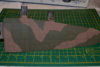
Cannot say that I think this must be a lighter colour for scale. I think does it look right and how does that fit with the chosen setting of the real aircraft. I feel that if you can get that right then it will look right ie incorporate what you see. On the Merlin below I studied many photos to get the actual look and never thought of its scale just the main and minute detail. Neither have i added shading that I have not seen on any real Merlin.It seems to me if you can get that then the model becomes alive in its own right. The artistic bit , I think, comes in how well you handle the technique.


A further thought. If you pose your model on a plain background it is always going to look like a model. If you pose it in a scene you stand a chance. With a background the model is placed in perspective a naturally. A natural 'trompe l'oeil' not a contrived one. Think the photos below show the perspective given by the background.


Just to say the panels are not panel line marking. There are rivet lines on either side of the panels which collected dust. Not as good as I had hoped for as my technique needs more thought despite the hours of practice. Tut.


Those are my thoughts not meant to be argued about but to show my way and thoughts.


Laurie


View attachment 108904

View attachment 108905

View attachment 108906


View attachment 221927

View attachment 221928

View attachment 221929
 
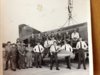
I've worked on aircraft for getting on forty years. And I'm undecided if preshading gives a realistic finish or not.I started in the military.But these days I work on civil airliners.Except for really old stuff I wouldn't pre shade an airliner as I think it would be totally unrealistic.Older military aircraft with Matt paint finishes probably would look realistic though.See the Phantom in the attached pic taken in 1976.the areas around the edges of access panels and skin sections are definitely darker than the rest of the airframe.View attachment 108926

Im the fresh faced youth second from left!.View attachment 221949
 

Attachments

  • image.jpg
    image.jpg
    2.7 KB · Views: 0
We're getting a bit confused between shading or modulating the colour, usually relative to panel lines, and the sort of washes that run into panel lines and other detail to emphasise that. Both are valid techniques in the model builder's effort to fool us into thinking we are looking at something rather larger than we actually are.


Panel lines are often joins of one sort or another between the various skins of an air frame and not just lines of rivets where the skins are attached to frames, stringers or other formers beneath. There are various ways that the panels might be joined but probably due to the need to build quickly most WW2 aircraft had butt joints, lap joints or a combination of both between skins. Some designs formed the edge of the skins to form joggled joints, as in most Messerschmitt fuselages. Whatever the system used these are joins between different skins, what we tend to call panel lines. Everything else, as Laurie said, is just lines of rivets attaching the skins to the underlying structure.


Cheers


Steve
 
Thread owner
\ said:
We're getting a bit confused between shading or modulating the colour, usually relative to panel lines, and the sort of washes
Cannot say that I am confused Steve I am just not wedded to convention. I look at what I want to achieve then go about it with out thinking modulation and shading etc.They may form part of the answer but are subjugated to slave not master. I certainly do not want to get stuck in a conventional way of carrying out things as in jigsaw fashion. I see one of the problems of model making as the sectionalizing of finishing a model.


I just love at the finishing stages after construction to think about how I am going to finish this creature. I take a lot of time and experimentation to achieve this. I have never thought in sections panel lines modulation shading I just try and visualize, with the help of reality, what I want as a finished object then go from there. I will adjust all the time and go back a step if things have not worked out. But never go for this is the next recognised step as that is when the artistic side jumps out of the window and stereo type takes its big seat. My view !


I like silver ware it is of extraordinary beauty and also diverse with the way the silversmith has crafted his piece. Take a silver jug. It can be plain as a pike staff. It can have a decorated handle. A rim with simple decoration the rest simple. Or perhaps totally covered in recessed decoration. Take your pick. What ever you like go for it.


Laurie
 
Status
Not open for further replies.
Back
Top