Theme editor

Scale Model Shop

SE5a CONSTRUCTION BEGINNING TO . . .

Status
Not open for further replies.
Grahame,I think you have made the right decision here,the integrity of the wire fittings really over-rides the cladding,which always proves a right pain in that area,what I would do is to use two laminations of miralyte ply eased into place after first making accurate card templates and possibly glued in situ,where the wires enter the fuselage you could always then make small shrouds to make things nice and neat.

Nice modelling as always,it is a real pleasure to look at these pictures.
 
Thread owner
My original idea had been to use 2 layers of 1/64" ply but I wasn’t convinced that I wouldn’t get some de-lamination at a future date and as this area will be covered in Litho plate it would be difficult to repair, so I opted to use 1 layer of 1/32" ply instead; this is still quite easy to bend, even if it takes a bit (a lot!) longer, so long as the bend isn’t too tight.


Paper templates are used to get the shape before the ply is cut slightly over size. The ply is then covered with boiling water (a good excuse for a cuppa!!) and left to soak for a while, it doesn’t need to be too long. The ply is then tightly bound to a former using masking tape, the former should be slightly smaller than the finished bend, I used a 4" diameter tin for a 2¼" radius bend. Cover the ply completely with the tape and if the former is porous cover that first with cling film then leave it over night. The tape etc. keeps the ply moist; in fact it will probably still be damp in the morning. After removing the ply form the former hold it in its curve either using tape or pins while it finally dries if necessary.


(not sure which photo should go here, I'll keep looking!)


The tank cover doesn’t continue all the way to the side plates. The front cabane struts go through the gap, which has a separate cover plate, so there will be no problem with the final soldering of the cabane assembly.


View attachment 262497


The gun trough needed a lot tighter bend but as it doesn’t really add to the overall strength just 1 layer of 1/64" ply was used.


PS Where would we be without Red Devil light weight filler!!
 

Attachments

  • tank cover 2.jpg
    tank cover 2.jpg
    2.1 KB · Views: 0
For those not familiar with 'Red Devil' filler which Grahame has used to good avantage here,let me explain,where as other fillers are usually made from plaster of paris or earth products made by British Gypsum,these are heavy as can be expected,Red Devil relies on micro balloons to pad it out,these tiny miniscule ballons are filled with air and very light,the balloons are held in suspension with water and gum arabic so once again when dry there is no excess weight,it will knife on or can even be brushed into awkward areas,you can build up complete fillets on wing joints by placing cling film on the join,then knifeing on the paste in layers,once sanded and a coat of clear lacquer it is very substantial.

One health warning with this stuff,the dust is deadly as it flies everywhere being light,so wear a dust mask always otherwise you will be coughing all day long.
 
Thread owner
Time for a little “metal bashing”; I just love litho plate me!


The first job is to work out the positions for the “extras”, I draw these out, in this case onto the paper templates used to cut the ply decking. I don’t bother drawing to scale but add the necessary measurements then I know for sure where everything fits when I’m in the workshop.


View attachment 262498


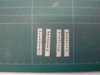
Drilling Litho plate is about as easy as knitting fog, the only satisfactory way to make holes is to use a punch. As each strap has 8 holes and there are 4 straps it is easier to make a simple jig. 2 pieces of ply bolted together then holes drilled through, with the litho clamped in place the drill bit is used as the punch, turned the wrong way round and given a tap with a pin hammer (protecting the business end with another piece of ply).


View attachment 262499


With the holes done it’s a case of adding the “rivets” and then trimming to size


View attachment 262500


The 4 straps ready for final finishing.


View attachment 262501


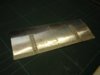
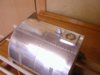
With the straps, bottom strips and rivets added the finished plate is ready for fitting to the fuselage.


View attachment 262502


I don’t worry about the odd dent or scratch, I my opinion they just make the finished model look more realistic.


I well remember spending hours trying to get the aluminium cowling for my Albatros just right then finding out that in fact on the full size each panel was individually “hammered” into shape so every one was slightly different with evidence of the manufacturing process clearly visible.
 

Attachments

  • Litho 5.jpg
    Litho 5.jpg
    1.6 KB · Views: 0
  • Litho 4.jpg
    Litho 4.jpg
    1.8 KB · Views: 0
  • Litho 3.jpg
    Litho 3.jpg
    1.6 KB · Views: 0
  • Litho 2.jpg
    Litho 2.jpg
    1.6 KB · Views: 0
  • Litho 1.jpg
    Litho 1.jpg
    1.3 KB · Views: 0
Nice tin bashing Gahame ! did you know the reason why Lindberghs 'Spirit of St Louis' had a turned metal cowling ? because there were so many dings and scratches in the metal they spun a wire wheel over the whole lot which gave that special effect,so as you say why worry about a few dings ?
 
Hello Grahame,

its always a pleasure to watch your building!

Hope that I can start the Parnall soon.

Regards

Christian
 
Thread owner
Hello Chris

Nice to hear from you again; glad you’re enjoying the SE5a and wish you luck with your Elf, any help and you know where I am.

I do hope you decide to start a build thread here as well as in Germany, remember, “a picture paints a thousand words”, but I’m sure you’ll have no problems; your English is excellent!

Grahame
 
Hello wonwinglo,

yes that is possible, I have been in contact with Grahame some month ago regarding his Parnall.

I`m really glad that I`ve found a forum for real modelling. Here in Germany there is so much of that Depron stuff and ARF kits.

Will let you know when I`m going to start the Parnall!

Christian
 
Thread owner
There must be more “recommended” ways to attach Litho plate than there are ways to skin a cat, they’ve all got their pros and cons, and I’ve tried them all! Purely by accident I’ve found what I consider to be the perfect adhesive for the job.


At work we needed some glue that dried clear for a project the students were working on, as I had some “canopy” glue in the car we tried that and it worked fine but some got onto the table which in turn got covered by a small tin foil container used to mix paint in. When it came to tidying up time the tin foil was stuck fast to the table, the old grey matter started to work overtime.


View attachment 262503


This glue is just the job for Litho plate, it’s like a mixture of PVA and Copydex; it’s thin enough to be spread thinly and evenly over the plate, which can be easily moved to position it accurately but within a short time it has good “grab” to hold everything in place. The icing on the cake is that it’s water based so a quick wipe over with a damp cloth before it’s really set gets rid of any sticky fingerprints etc.
 

Attachments

  • Tank cover 7.jpg
    Tank cover 7.jpg
    2.5 KB · Views: 0
Thread owner
The top panel has 3 distinctive parts; there’s a bulge over the fuel cap, the fuel cap itself and something that looks like a submarine conning tower.


Where the plates will overlap the edge of the under plate needs feathering in, even the thickness of the Litho plate would leave a noticeable step. For filling very thin depths such as this I think the best material is cellulose stopper as sold by automotive paint suppliers.


The bulge is first modelled in balsa and glued to the ply decking and given a coat of silver Solalac for both appearance and fuel proofing.


View attachment 262504


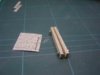
It is quite difficult to work Litho plate from a male mould so I cut an appropriate sized square from an off cut of 1/8th balsa and started to form the bulge from the inside working it into the cut out, when it was approximately the correct depth I transferred it to the actual model to finish it off.


View attachment 262505


A small ring of Litho plate and some rivets completes the top plate itself.
 

Attachments

  • Tank cover 3.jpg
    Tank cover 3.jpg
    2.1 KB · Views: 0
  • Tank cover 6.jpg
    Tank cover 6.jpg
    2.1 KB · Views: 0
Thread owner
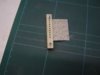
It is impractical to make this part from metal so I’ve used spruce and painted it with silver Solalac, when weathered it’ll look OK. When making small parts such as this it’s useful to keep them attached to the wood until they are as near to finished as possible. Sorry for the blurred photo!


View attachment 262506


The fuel cap is made from brass soldered together.


View attachment 262507


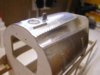
The result when the parts are assembled


View attachment 262508
 

Attachments

  • Tank cover 8.jpg
    Tank cover 8.jpg
    2.3 KB · Views: 0
  • Tank cover 4.jpg
    Tank cover 4.jpg
    1.4 KB · Views: 0
  • Tank cover 5.jpg
    Tank cover 5.jpg
    2.3 KB · Views: 0
Thread owner
The gun trough was no problem; so that’s the tank cover finished and I must say it’s been an enjoyable few days.


View attachment 262511


With the way the weather’s been recently it’s a good job I like building as much as flying, it must be a frustrating hobby for the ARTF brigade!
 

Attachments

  • Tank cover 9.jpg
    Tank cover 9.jpg
    2.7 KB · Views: 0
looks good

would it not be easier to syringe the rivits on with a paste like glue after the plate had been stuck down ?
 
Coming on leaps and bounds now Grahame,it really looks realistic and your detail is outstanding.

The adhesive by the way is made by De Luxe materials,and called 'RC Modellers Craft glue' it is ideal for things like sticking canopies as it will bead easily and above all dry clear around the edges,as you have found out it has very tacky qualities,and is quite versatile.
 
I have to say Grahame I completely agree with your thinking as regards the plate surface. Not only would a perfect finish be difficult to acheive but it would also look considerably less realistic.

I still find it strange that so many people insist on spreaying a large scale model of an old boat hull. They simply didn't have spray gear in those days so the finish was far from perfect as it was applied by vast numbers of shipyard workers with large brushes. When I painted my coaster hull I deliberatley used a small flat brush and painted in all directions. This will be given more coats of slightly varying surface textures in differrent areas to bring the surface to life.

I think your plate work looks superb and a boat hull made with riveted litho like yours would look stunning!!
 
Thread owner
Iain


I’ve only tried the “drops of glue” method for simulating rivets once and I found it extremely tedious. On the other hand the results are fine and there are some occasions when it is the only viable method.


The way I use on Litho plate is very simple, fast and produces perfectly spaced rivets; I use a dressmaker’s copy tool and a straight edge or curved template.


This one has had every other “tooth” removed to widen the spacing.


Mark the position for the rivets on the reverse side of the panel, hold the straight edge or template in place and carefully run along the edge with the tool; a couple of seconds to make a row of perfectly spaced rivets; what could be easier?


Richard


I agree; a hull finished in Litho plate really would look the part. Before I “discovered “ canopy glue, which is water based so not suitable for a boat, I used 5 min. epoxy made runny with cellulose thinners, this works fine you just have to make sure that the inevitable sticky fingerprints are removed before the glue sets!
 
Grahame,

This one is getting better looking as each post progresses, a real work of art and a real pleasure to watch your skills. Yes I do have a dressmakers copy wheel in my toolbox too for the very same reason you have used it. I like the way you have modified yours for correct spacing too.

I Trust we can see this model at a Future World Champs meet..?? The way she is building up now she will surely be a Winner when she is completed, the attention to detail is awesome and worthy of recognition.

I hope the Scale Model Mags have picked up on this one !!!!

Regards......Mark.
 
Thread owner
The fuselage front section is now as complete as I want it; in a perfect world I would be able to work on the cowl and dummy engine, but before I do I want to fit the engine to ensure I don’t make things unnecessarily awkward for myself later, and in this non-perfect world I don’t have a spare Laser 70! The spars and leading edge for the bottom wing stubs aren’t permanent as yet; these will be built after the fuselage rear framework is attached.


With the cabane struts and all the bracing wires soldered in place I think it’s obvious why I decided to complete the tank cover first.
 
Grahame the S.E.5A's distinct shape is appearing,this idea of a front fuselage module is a good one,what you need is a slave scrap Laser 70,this one is going to be a floater with that undercambered wing section,and wing area.
 
Status
Not open for further replies.
Back
Top