Theme editor

Scale Model Shop

Sukhoi Su-27 Flanker B Trumpeter Scale 1:32

Do I thin Vallejo Model Air acrylic paint for airbrushing?
Not normally — it should be mixed thin enough to spray well. You may want to add flow improver, though, which helps prevent the paint drying on the tip of the needle. I had a good deal of that happening until someone mentioned that, and since I’ve started using it, the tip-drying has gone away. The bottle says one drop per ten drops of paint,

The video from Vallejo says, they are ready for using from the bottle but if I want I can add Vallejo Airbrush Thinner.
If I add, how much?
Until it sprays as you want it to :) That, really is always the answer to, “How far do I thin paint for spraying?” Older paint is often thicker than new paint, so it will need more thinning to get to the same consistency, but it also depends on air pressure, airbrush type, desired effect and more. But in general, I just throw in thinner into any paint that needs it, until it looks like it would spray well, then give it a try. If it doesn’t work, I add either some more thinner or more paint until it does.
 
I wouldn't mix makes AJ. I've airbrushed Stynylrez through a 0,2 mm needle, no problems. If it seems to need thinning you can use water.
Pete
 
Thread owner
I wouldn't mix makes AJ. I've airbrushed Stynylrez through a 0,2 mm needle, no problems. If it seems to need thinning you can use water.
Pete
Thank you, Pete!!!

I was thinking and thinking and I figured out that thinning the paint is probably OK as long as you do not need to sand it after.
I might be wrong but it seems to make sense.

Whatever components are in the paint they "hold" together by either evaporating the solvent or water (I am not talking epoxy things that dry by chemical reaction)
The more diluted paint, the less things to hold the paint together or they are more spaced is you can say that.
Imagine thinning and thinning the paint until it is almost water.
My sixth sense it telling me that it will be very easy to take it off by sanding, scratching or just handling.

In other words, diluting the paint is probably OK but only to certain limits, so the dried layer does not come off too easily.

Now, the primer which some will touch a bit with sand paper.
In this case diluting is even worse as we need a good hard surface after it dries.

I will take advice from Pete, I will just use it straight from the bottle.
What is the worst?
My airbrush will get clogged.
I will stop and clean and start where I left, it is a primer so I can do any time.
Of course, by the time I get to primer, it will be a while anyway. :tongue-out3:
 
Thread owner
First time hand brush painting attempt.... pretty ugly. :smiling6:
I think I did not clean the parts well enough as well. Oh well! :disappointed2:
Practice makes perfect, I need a LOT of practice.
 

Attachments

  • IMG_1191.JPG
    IMG_1191.JPG
    5.2 KB · Views: 0
Thread owner
And first glued part into fuselage bottom. :tongue-out3:
It was intense, I was trying to line things up, I had to file some before, but final result I am happy with. :smiling:

IMG_1190.JPG
 
Thread owner
Another lesson last night, do not overspray!!!!!!

Used Stynylrez Acrylic Primer and it has to be airbrushed in a very tiny coat, wait and repeat.

After I over sprayed, I had to wipe it off (I was lucky it came off easily using wet paper towel and wet Q-Tip)

It seems to dry to a relatively hard surface; I will try tonight a light sanding at the edges where I masked.

Very good lesson and learned the hard way but I am happy to learn.
 
Thread owner
And the fun goes on. :tongue-out3:

I do not know if anybody reads these comments/reflections/reports from a total newbie but in case anybody does, I will continue.
Maybe some new to the hobby can learn from my mistakes. :smiling:

Glued in main gear wells. Tried to make all even. Came out NOT TOO bad.

Finished painting by hand the top of the nose gear well, came out pretty god.

Painted by hand the back of the cockpit top and I did not like it.
I have read that Vallejo Air paint are very thin so no need to dilute.
I did not and it was too thick, the finish shows the brush strokes.
Probably, would be better off to thin it and paint 3 times or so.
I will gently sand it and spray it again, so much better finish when you airbrush. Amazing. :cool:

By the way, slightly sanded Stynylrez Acrylic Primer White primer and I totally love it.
I could sand it off so there is not step between primer and plastic, just super clean and smooth transition.
Thank you for advising it!

Now, question for my gurus.
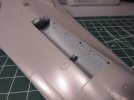
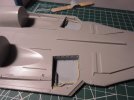
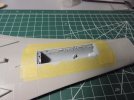
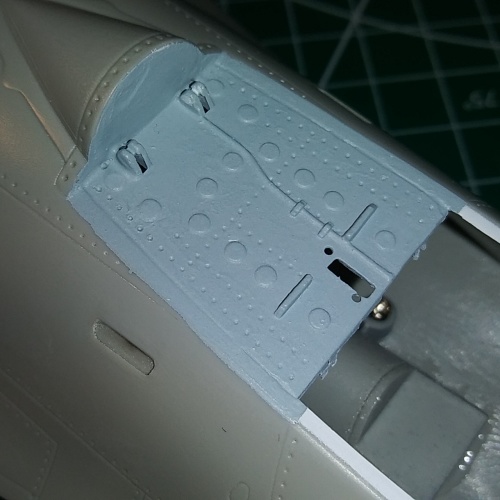
When I glued the upper cockpit part to fuselage, glue went on the visible side of the cockpit (circled red) and dissolved the plastic causing the cavity.
It is already painted.
Can I use Tamiya putty to fill that cavity without sanding the paint off?

Have a great weekend!!!! ;)IMG_1192.JPGIMG_1193.JPGIMG_1194.JPG
 
I do not know if anybody reads these comments/reflections/reports from a total newbie but in case anybody does
People do, I’m fairly sure :)

I have read that Vallejo Air paint are very thin so no need to dilute.
I did not and it was too thick, the finish shows the brush strokes.
My guess is that it showed the brush strokes because it’s so thin. Hand-painting anything bigger than few square millimetres often needs two coats, if not more, because the paint generally won’t cover in one attempt.

It does depend on the paint you use, though. Vallejo Model Air is not great for brush-painting exactly because it’s been pre-thinned for airbrushing, meaning it’s so thin it certainly won’t cover well. On the other hand, Vallejo Model Colour — that is, not the airbrush paint — covers much better when applied with a brush. The same applies to almost any other brand of paint that sells both airbrush-ready and non-airbrush paint. With other manufacturers, who don’t make this distinction, it varies a lot.

In general, though: if you see the paint hasn’t covered as much as you want, just wait for it to dry and add a second coat, which doesn’t need as much paint as the first anyway.

When I glued the upper cockpit part to fuselage, glue went on the visible side of the cockpit (circled red) and dissolved the plastic causing the cavity.
It is already painted.
Can I use Tamiya putty to fill that cavity without sanding the paint off?
Almost certainly. Though you will need to sand down the primer and re-paint at least part of the area, of course.
 
Usually brush strokes are caused by the paint being too thick, so not flowing out when brushed, or by it being over worked after it starts to dry. Once it starts skinning and pulling you need to let it dry. Agree about two to three thin coats though. A couple of coats of properly thinned paint are quicker and easier to apply than one thick coat anyway, and will give a much better finish. VJ model air sometimes needs thinning for brush painting, and always needs thinning for spraying in my experience.
 
Thread owner
People do, I’m fairly sure :smiling3:


My guess is that it showed the brush strokes because it’s so thin. Hand-painting anything bigger than few square millimetres often needs two coats, if not more, because the paint generally won’t cover in one attempt.

It does depend on the paint you use, though. Vallejo Model Air is not great for brush-painting exactly because it’s been pre-thinned for airbrushing, meaning it’s so thin it certainly won’t cover well. On the other hand, Vallejo Model Colour — that is, not the airbrush paint — covers much better when applied with a brush. The same applies to almost any other brand of paint that sells both airbrush-ready and non-airbrush paint. With other manufacturers, who don’t make this distinction, it varies a lot.

In general, though: if you see the paint hasn’t covered as much as you want, just wait for it to dry and add a second coat, which doesn’t need as much paint as the first anyway.


Almost certainly. Though you will need to sand down the primer and re-paint at least part of the area, of course.
Thanks, Jakko! :smiling:

Now I have two different theories, you say that brush strokes are because of paint is too thin and Tim says the opposite. :tongue-out3:
I guess it depends on few factors and the person who paints (read dummy me lol,lol).

Thanks for the hint on Vallejo Air versus Model Color.
Totally makes sense.

I think as my general rule will be, if I can airbrush I will and if not, I will buy the Vallejo Model Color for small parts.

About filling up with Tamiya putty, there is a little problem, this part of the cockpit is brush painted with Vallejo Air, primer is under.
I guess I need to sand off both, correct?
Thank God, there is plain surface there so I can sand as deep as needed but if there were rivets, it would not be that much fun. ;)
 
Thread owner
Usually brush strokes are caused by the paint being too thick, so not flowing out when brushed, or by it being over worked after it starts to dry. Once it starts skinning and pulling you need to let it dry. Agree about two to three thin coats though. A couple of coats of properly thinned paint are quicker and easier to apply than one thick coat anyway, and will give a much better finish. VJ model air sometimes needs thinning for brush painting, and always needs thinning for spraying in my experience.
Thanks, Tim.

I believe that in my case the paint was too thin and I was still working with strokes when it was getting dry.
Another lesson learned. :-)
 
Thread owner
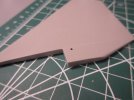
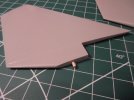
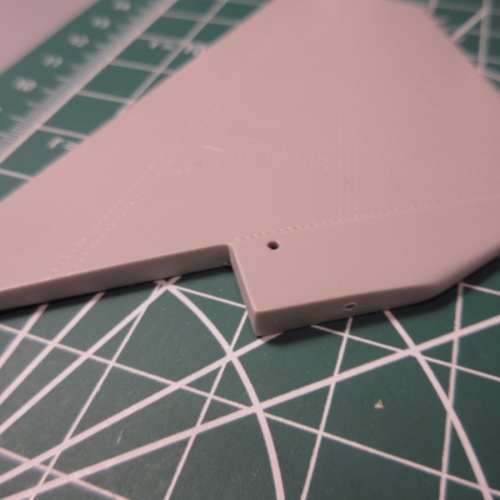
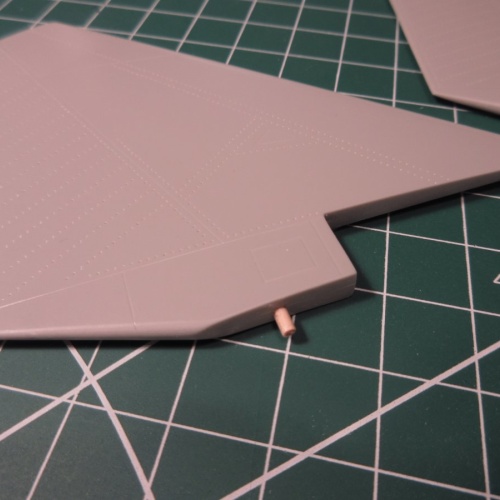
Here is ANOTHER mistake I made. :disappointed2:

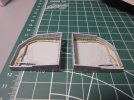
I sanded off the little pins from elevators halves thinking they were left over from the sprue. :flushed:
IMG_1196.JPGIMG_1197.JPG
I drilled the holes and inserted the wooden dowels; I hope it will do the trick. :cold-sweat:
 
Thread owner
Found a nice site for storing images online for free. It works fast and very easy to use.

 
Here is ANOTHER mistake I made. :disappointed2:

I sanded off the little pins from elevators halves thinking they were left over from the sprue. :flushed:
Everybody does that at times :) Sometimes because you’re not paying enough attention, sometimes because the manufacturer hasn’t made it obvious at all which is the actual part and which bits need to be removed.
 
Thread owner
Usually brush strokes are caused by the paint being too thick, so not flowing out when brushed, or by it being over worked after it starts to dry. Once it starts skinning and pulling you need to let it dry. Agree about two to three thin coats though. A couple of coats of properly thinned paint are quicker and easier to apply than one thick coat anyway, and will give a much better finish. VJ model air sometimes needs thinning for brush painting, and always needs thinning for spraying in my experience.
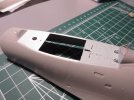
Here is the subject of our discussion. :-)

 
Doesn’t look that bad to me Andrzej. Perhaps a little thick, which has caused the slight dragging that’s visible. It will be fine under the canopy though.
 
Thread owner
Doesn’t look that bad to me Andrzej. Perhaps a little thick, which has caused the slight dragging that’s visible. It will be fine under the canopy though.
Thanks, Tim. :smiling:

Well, you already know canopy was broken and will have cracks, so it does not really matter.

I use this model build to just learn things and experiment. And have fun!!!! It is very important. ;)
 
Once you’ve learned more, you can always come back to the subject and build another one with your improved skills.
 
Back
Top