Theme editor

Scale Model Shop

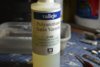
Vallejo Satin Varnish?

Status
Not open for further replies.
I have tried to airbrush it with 50/50 water mix, but it did not spray well, it does however brush very well when used neat, and does not leave brush strokes. Dries quickly, you need to give it a good stir. Derek
 
I always sprayed it without problems...in fact, this afternoon I have done it again :confused:

And I never thin it ;)
 
I wouldn't like to try and brush paint an area as long as five feet but I'm sure you can get a thinner for it
 
All Vallejo products are thinnable with Vallejo thinners.

It is also water based product. Problem is thinning with water its loses stickability as the paint vehicle is diluted the paint losing the ability to flow free as it would with a proper thinner. Thinning will also take it into a matt basis.

As Polux not had any problem in airbrushing Vallejo. Prefer the Acrylic version as it dries quicker. Found the polyurethene takes twice as long. With the Acrylics I manage to double coat in two hours.

Laurie
 
Thread owner
Thanks Laurie, times not an issue as I'm not rushing this build, I still have it in sections so I can spray a few then work on other sections then move onto the next bits as it dries. It states 4 hours between coats so it will be a few days of work :)

Adrian
 
One thing Adrian if you are airbrushing. Make sure of a deep clean immediately after use as it is the best material produced for gumming up airbrushes.

Even Vallejo had not realised this product had this inane ability to make model makers very unhappy. :eek:

Laurie
 
Polyurethane is an oil based product, so I doubt it would be a good idea to mix water with it.

This would curdle the mix & would be a definite no-no through an airbrush, as well as affecting the curing.

Gregg
 
Hi Gregg this is the description below as given in their Q/A download.

It is a water based product, an acrylic resin polyurethene, so there will not be a curdle effect. I always wash the airbrush in water and have not had any problems.

Laurie

10.4. What is the difference between the new polyurethane varnish

–refs.62.062 , 063 & 064- and your acrylic varnish?

The most important advantage of this new polyurethane is its superior strength

and resistance to nicks and scratches, which makes it ideal for surfaces

exposed to wear. The varnish is manufactured with a new resin of 100%

polyurethane which is self-leveling and offers a stronger protection than acrylic

varnishes. Basically it has the same properties as our new Polyurethane

Primers, can be applied with a brush or, for airbrushing, and diluted with our

Airbrush Thinner (Ref.71.061). Utensils can be cleaned with water after use.
 
I use this together with their airbrush thinner and it works very well in the airbrush.

As for it taking longer to dry, I have never really noticed. I tend to leave things alone for a day once varnished.

I have not noticed any degradation of the finish be it gloss, matt or satin.

Ian M
 
Thanks guys, always good to learn something new.

All the polyurethanes I have had experience with were always oil based, which are not compatible with anything water based.

Just proves to myself, that since I had to retire from my trade I have lost touch with paint technology. :( :( :( :(

I retract my post unreservedly!

Gregg
 
\ said:
Thanks guys, always good to learn something new.All the polyurethanes I have had experience with were always oil based, which are not compatible with anything water based.

Just proves to myself, that since I had to retire from my trade I have lost touch with paint technology. :( :( :( :(

I retract my post unreservedly!

Gregg
Had the same problem Gregg.

Working in architecture found that building practice has changed dramatically in 10 years. Some things I would not have even contemplated. Would not wish to revisit. Some cemented in traditional practices have been just tossed out of the window as irrelevant and also incorrect.

Laurie
 
\ said:
Thanks guys, always good to learn something new.All the polyurethanes I have had experience with were always oil based,

Gregg
Gregg as an ex-chemist I'm not entirely sure why Vallejo is using the word 'polyurethane' in what they then seem to describe as an acrylic varnish. I don't see how genuine polyurethanes, as I understand them chemically, can be water soluble either. Times move on but I don't think that the laws of physics change so quickly.

I could be wrong too :)

Steve
 
I know from recent experience that many 'enamels' and 'polyurethane' paints and varnishes used in houses are now water based. I suppose that same technology flows on to model paints and other art forms too. All good but I hope they don't touch my model oil based enamel range.
 
I think over the years the terms Acrylic, Enamel, Polyurethane, Cellulose etc., have all been bastardized (sorry)

When learning about paints and their make ups as an apprentice, it was easy to remember which could be thinned or extended, and what was the correct medium to do this, and which could be applied over which safely

For example, the history of 'ACRYLIC' paints used on (mainly) American domestic vehicles in the late 40's through to 70's, was of interest to us aviation fans.

The acrylic used to manufacture aircraft canopies/windows etc,. was at an abundance immediately post war, and going to waste.

Someone (whose name I now forget) worked out that mixed with certain pigments and other chemicals, this medium could be used as a coating capable of protecting the surface it was applied to, at the same time as having a pleasing appearance, then known as 'ACRYLIC COATING' or 'LACQUER'

The American automotive industry was starting to accelerate post war, and saw this as the perfect medium to coat their huge, gas guzzling motors.

We here in the UK during the 40's, were still using oil based paints (ENAMELS) also known as (COACH PAINT) on our vehicles, gradually moving over to CELLULOSE based products, (who remembers BRUSHING BELCO)

.

Here was where the fun began for us automotive painters, and where we learnt the hard way, the incompatibility of coatings.

You could apply ACRYLIC over CELLULOSE (no reaction) You could apply ENAMEL over CELLULOSE (no reaction) You could apply ENAMEL over ACRYLIC (no reaction)

Apply CELLULOSE over ACRYLIC, ( stand back and watch the fun) not. Immediate reaction, pickling/cracking/crazing or reaction as the CELLULOSE coating dried.

Apply CELLULOSE over ENAMEL, exactly same reaction as CELLULOSE over ACRYLIC.

POLYURETHANE was a term we used for plastic based coatings, that gave a very high gloss (but some would say it looked too plasticky) and was found to be a problem to repair, if the surface was damaged. Second coating was a no no, it would react with itself if not recoated in a certain time period,(cracking/crazing) It also required to be baked to fully cure it, or left for 24 hrs.

We then moved onto 2 COMPONENT (2K) paint systems during the late 70's early 80's. Excellent gloss from the gun with minimal post paint buffing/polishing required.

However these were full of isocyanates and other Cancer/Asthma producing products, that were killing off us painters.

Now we come to modern vehicle Paint Coatings, which because of so called environmental reasoning, have to be 'WATER BASED'

The fact that most of the mediums used prior to applying the (water based colour) and the finish Clear Top Coat, now called 'LACQUER,' are still full of undesirable products seem to have been missed somewhere.

Now getting back to my original point, the messing about with the names for the different paints/mediums.

LACQUER is now a clear medium, ACRYLIC is now a water based medium, ENAMEL seems to be the only one that has retained it's original medium.

However some oil based 'GLOSS' paints will react when over coated with ENAMEL.!!!!!!!!!!!

I haven't included the specialist paints such as POWDER COATING, HAMMERITE, CRACKLE, VREEBLE, COBWEB, and too many more to mention.

Most people just see paint as, well paint!

Gregg
 
The polyurethanes I was familiar with thirty years ago were not water soluble but I've been doing a bit of googling and it seems that water soluble ones have been developed. I don't know how recently this was, the first article I read about it was in a scientific journal (the imaginatively entitled 'Journal of Applied Polymer Science') published in 2004. Amazingly I still understood nearly all of it :)

Another article, dated 1992, in the even more imaginatively named 'European Polymer Journal' confirmed which polyurethanes are water soluble and went into a load of maths relating to solubility which I didn't understand and probably wouldn't have thirty years ago.

After this I was losing the will to live and decided to end my new found scientific career and get back to spraying my Corsair.....with oil based enamels!

Cheers

Steve
 
Status
Not open for further replies.
Back
Top