Ok stupid question......... As I New to German armour. Should I be using FIELD GREY or DARK BLUE GREY ? My pole blitz truck looked good to me in dark blue grey........ I just started painting the wheels on my Hanomag Field Grey and I looks odd.


You are using an out of date browser. It may not display this or other websites correctly.
You should upgrade or use an alternative browser.
You should upgrade or use an alternative browser.
What Grey ?
- Thread starter takeslousyphotos
- Start date
- Status
- Not open for further replies.
G
Guest
Guest
Field grey is the green gray attributed to the green(ish) uniform colour. What you want is called Dunkelgrau RAL 7021. It tends to look blueish some take it too far and use too much blue.
G
Guest
Guest
Oh, by the way, there is no such thing as a stupid question, only a stupid answers. Stupid answers are my speciality 
Thanks Graham. You are a Star. I didn't think it looked right.\ said:Field grey is the green gray attributed to the green(ish) uniform colour. What you want is called Dunkelgrau RAL 7021. It tends to look blueish some take it too far and use too much blue.
field grey is a uniform color ,and has a lite and dark,
I use panzer grray which is a darker blue/grey by vallejo,71-056 or German grey 71-052,
very close to each other and then tint down liter with an off white or even the lite grey primer,
maybe of some help
as its been answered already,
I use panzer grray which is a darker blue/grey by vallejo,71-056 or German grey 71-052,
very close to each other and then tint down liter with an off white or even the lite grey primer,
maybe of some help
as its been answered already,
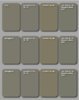
Here's a selection of RLM greys but Dunkelgrau is the standard RLM from what rcords I can retrieve View attachment 242998
View attachment 242999
View attachment 242999
Attachments

G
Guest
Guest
Sorry Robert, but RLM is the acronym for the Luftwaffe Ministry. For vehicles it should be RAL. Dunklegrau RAL 46 (later renumbered RAL 7021) was the base coat.\ said:Here's a selection of RLM greys but Dunkelgrau is the standard RLM from what rcords I can retrieve View attachment 142679 View attachment 142680
In reality it's a very dark grey, almost black. For scale purposes we usually lighten it to the aforementioned bluish grey.
I stand corrected your right I mixed up my RLM and RAL ( humbley going into the corner and sticking dunce cap on!!\ said:Sorry Robert, but RLM is the acronym for the Luftwaffe Ministry. For vehicles it should be RAL. Dunklegrau RAL 46 (later renumbered RAL 7021) was the base coat.
In reality it's a very dark grey, almost black. For scale purposes we usually lighten it to the aforementioned bluish grey.


G
Guest
Guest
They also do a panzer grey, but it's very dark, and I'm going to be lightening it a fair bit with filters. From what I've seen in old photos and footage, they may well have left the factory a uniform colour, but they soon had a diverse patina! One thing I think is true though, that blue is involved!
...... and quite a lot of blue as well apparently.\ said:Well at least you didn't use Mr Grey apparently there's 50 shades of that one.
G
Guest
Guest
If you didn't do armor and stuck to cars life gets easier, you can paint any car any colour you like, no one can say it's wrong, as long as you title it custom, one of the reasons I dont (or rarely )do anything war related is the painting problem, it's not just one colour, if it's Africa it will be different to Europe and of course the age of the model will be a different colour (not so much with armour but ships, as they serve over such a long time scale) ignorance is bliss and I love living in ignorance
G
Guest
Guest
Scale colour is a fascinating subject and you are quite right to point that out. This is where getting the 'correct' colour is in fact 'incorrect'. The difficulty with lightening colours is what to lighten them with. You should not lighten with white or darken with black as you can change the actual colour rather than just lighten it. A very good figure painter tried in vain to get me to fully understand this principle until he simplified it with the example that if you lighten red with white, you don't get light red, you get pink.\ said:Sorry Robert, but RLM is the acronym for the Luftwaffe Ministry. For vehicles it should be RAL. Dunklegrau RAL 46 (later renumbered RAL 7021) was the base coat.
In reality it's a very dark grey, almost black. For scale purposes we usually lighten it to the aforementioned bluish grey.
In figure painting, lightening and darkening is mainly to achieve believable highlights and shadows. So, as an example (don't quote me on this as I am no figure painter) a red can be mixed with a light flesh or yellow shades to create highlights. Although this does change the colour, red and yellow being orange, the highlights are 'glazed' on with very thin, translucent layers until a highlight is achieved.
The problem with lightening a 'correct' colour to achieve a scale effect it is generally better to lighten using a lighter version of the same colour. I believe that the change from the 'correct' Panzer Grey to a very blue grey has been progressive as many photographs in magazines have shown a blue tinge way more than it should, to the point where people trying to emulate these builds have lightened with a blue grey. In reality, it is quite possible that the blue was introduced in the magazine printing process and that they look bluer than they would have done in the flesh. However, it started a trend and many 'blue' German tanks and vehicals later,it became accepted as 'right'.
I would suggest that if you get the 'correct' Panzer Grey' that you lighten it slightly with a normal light grey for 1/35, and lighten a tad more for 1/48 and even more for 1/72-1/76. All greys in certain light will take on a blueish tint without, in fact, being blue grey. It is one of those things that does not happen with other colours, such as sand or green.
I have no doubt people will disagree which is fine as there is no one or even right answer. The main thing to achieve is the look that you want, it's your model after all.
That's interesting Graham..... I was planning to lighten the blue grey with a lighter grey to dry brush some highlights........ and your last paragraph, I reckon is the most important bit....... If anyone ever wants to count the rivets on my models they can if it makes them happy.\ said:Scale colour is a fascinating subject and you are quite right to point that out. This is where getting the 'correct' colour is in fact 'incorrect'. The difficulty with lightening colours is what to lighten them with. You should not lighten with white or darken with black as you can change the actual colour rather than just lighten it. A very good figure painter tried in vain to get me to fully understand this principle until he simplified it with the example that if you lighten red with white, you don't get light red, you get pink.
In figure painting, lightening and darkening is mainly to achieve believable highlights and shadows. So, as an example (don't quote me on this as I am no figure painter) a red can be mixed with a light flesh or yellow shades to create highlights. Although this does change the colour, red and yellow being orange, the highlights are 'glazed' on with very thin, translucent layers until a highlight is achieved.
The problem with lightening a 'correct' colour to achieve a scale effect it is generally better to lighten using a lighter version of the same colour. I believe that the change from the 'correct' Panzer Grey to a very blue grey has been progressive as many photographs in magazines have shown a blue tinge way more than it should, to the point where people trying to emulate these builds have lightened with a blue grey. In reality, it is quite possible that the blue was introduced in the magazine printing process and that they look bluer than they would have done in the flesh. However, it started a trend and many 'blue' German tanks and vehicals later,it became accepted as 'right'.
I would suggest that if you get the 'correct' Panzer Grey' that you lighten it slightly with a normal light grey for 1/35, and lighten a tad more for 1/48 and even more for 1/72-1/76. All greys in certain light will take on a blueish tint without, in fact, being blue grey. It is one of those things that does not happen with other colours, such as sand or green.
I have no doubt people will disagree which is fine as there is no one or even right answer. The main thing to achieve is the look that you want, it's your model after all.

G
Guest
Guest
I read somewhere that the problem with mixing colours to lighten or darken them is that the added colour is not what you think it is. For example, there probably is no practicable pigment that is truly black (although soot comes to mind). The underside of a Lancaster bomber was often painted black but in fact it can look very very slightly dark blue. This might be because the pigment used is actually a very dark blue. This might cause a black which is lightened with white to end up distinctly bluish.
I am not expert in this and the above might be rubbish in detail, but the basic idea is worth thinking about.
I am not expert in this and the above might be rubbish in detail, but the basic idea is worth thinking about.
G
Guest
Guest
To me, that's where the interest & fascination lies. There's more scope when doing armour or aircraft than cars - even though I'm a confirmed petrolhead\ said:If you didn't do armor and stuck to cars life gets easier, you can paint any car any colour you like, no one can say it's wrong, as long as you title it custom, one of the reasons I dont (or rarely )do anything war related is the painting problem, it's not just one colour, if it's Africa it will be different to Europe and of course the age of the model will be a different colour (not so much with armour but ships, as they serve over such a long time scale) ignorance is bliss and I love living in ignorance
The thing is, there's very little decent colour photographic evidence about actual WWII machinery. Much of what is available has been doctored or "enhanced", so it's unreliable.
The quest for colour accuracy seems to be quite impassioned around German RLM shades. Look at the discussions about RLM 74 or 83!
At the end of the day, no-one can say definitively that someone else is wrong.... good times!
G
Guest
Guest
If you are using revell aqua I always use blue-grey I think the colour number is 79. Once you apply washes it comes out just right.
Scott
Scott
- Status
- Not open for further replies.
Legal Notice
scalemodelling.co.uk is a privately operated online discussion forum. All content posted by members reflects their own views and opinions and does not necessarily represent those of the forum owners or administrators. While reasonable efforts are made to moderate content, no responsibility is accepted for user-generated material. By using this site, you agree to comply with UK law and the forum rules.