Theme editor

Scale Model Shop

What's The Point Of Primer?

  • Thread starter Thread starter Guest
  • Start date Start date
Status
Not open for further replies.
G

Guest

Guest
Thread owner
I gave the plastic a quick wipe with meths to clean the grease away then went straight to paint coat...seems to work well? Surely, the more paint laters you put down, no matter how thin, the more fine detail you'll be hiding?


AND part 2 ( :) )


if I MUST prime, then which grey primer is going to be best under Tamiya acrylics.


Thanks!
 
You don't have to prime. I do, but anyone who tells you it is a vital necessity is being at best disingenuous.


Here's why I prime.


First, a primer coat will highlight any problems in the models finish, particularly those pesky seams, before spraying the final coats. Any problems are much easier to fix at this stage.


Second, the plastic primer I use does give a better surface for my paint to adhere to and the paint does stick better. It sticks okay to bare plastic but better to the primer. I've tried the same paint system both primed and unprimed and this is my opinion, I haven't done any sophisticated scientific analysis!


That's it really, the decision whether to prime or not is up to each individual.


I can't help with part two as I use mostly enamel paints.


Cheers


Steve
 
Thread owner
Bit like underpants, some do and some don't :eek:


However, to me anyway, primer serves two main purposes. It allows me to spray a model to check for imperfections which can be corrected before committing to the, generally, more expensive colour. By using three main primers, black, grey or white, I can influence the effect of the final coat as they generally have a bearing on the brightness of the undercoat colour if sprayed thinly.


For example, on a tank model, I may spray the lower hull, below the fenders, using black primer then grey or white for the upper area. This creates a more distinct shadow in the lower area.


Does primer give a better surface for final paint? I really do not think so but, as said before, primer usually comes in bigger bottles and is less costly than colours so for checking for seam problems or gaps, it is invaluable.


Oddly, Vallejo make coloured primer. I have their sand, Russian green, IDF sand grey and a couple of others and they are excellent paints in their own right.


Someone once said, I think it was Phil Flory, that he tends to prime in whatever grey colour he has most of. A lot of his early videos shows him using Tamiya greys as primer/under coats. I see he now uses a new(ish) Badger primer called Stynelrez (not sure of spelling).


So, again as is often the case in this great hobby of ours, do whatever suits you.
 
Thread owner
Steve was a faster typist than me but I totally agree with him lol
 
I must have started first Graham!


I'll just add that whilst layering on thick coats of paint might reduce or fill detail all I do is apply the lightest coat of primer I can, to cover, and then apply one coat of enamels. I have never noticed a loss of detail.


I use Halfords Plastic Primer, which sticks to plastic like sh+t to a blanket. It does need a bit of practice not to apply it too heavily as I spray from the aerosol can. I've tried decanting aerosols for airbrushing with unfortunate results, at least for my clothes, the floor, doors, windows...etc!


I do rub down the primer before applying my final coat of paint. The primer coat should feel smooth before further painting, as should the final coat before varnishing/decalling, at least on aircraft models.


Cheers


Steve
 
I never used to use primer before I joined this forum. But I now use it for the reasons steve gave in his first post. After trying several primers I now use the Alclad primers. They give a nice,smooth,consistent finish every time. The only down side is they are lacquer based. But I spray in a spray booth in my garage. So fumes aren't a problem for me. On my recent 1/48 Lancaster I used a cheap aerosol of car plastic primer from a motor factors because of the size of the model.It worked well.If you go down that route just make sure it's PLASTIC primer!.
 
A classic question on this forum John, Steve and Graham have said it all really and I agree fully. The new badger primer is supposed to be good and I may give it a go at some stage when my current runs out, apparently it sands nicely very quickly by all accounts.


I use vallejos light grey primer, you'll find it's a bit like marmite some people seem to really struggle spraying it, I haven't had any problems touch wood. Again spray as thin as possible but get good coverage, don't thin it and try to spray continuously until done then clean through quickly. This will help keep the primer from drying and clogging so make sure your set up and ready to go first, like any undercoat in any form of decorating it helps show and hide imperfections. It probably isn't a must as the guys have said but it is for me and I'm even contemplating purchasing a third airbrush with a large pattern and less overspray to get a tight thin layer down first time.


If you haven't already checked out Paul Budzik's videos on YouTube then do so, he has some excellent tutorials on priming.


Phil
 
Primers can be good but......... Watch some primers don't work with all paints like Tamiya don't like Vallejo Primers ( I've found)


I mainly use 2 types of Primer Vallejo black and grey.( when using Val type paints )


Sometimes I'll use a Tamiya grey paint as a primer


Sometimes I'll use Revell Aqua grey as a primer


Just bought two rattle cans from poundies ( never used yet )


This shows up any mistakes before going to paint proper


It's a personal choice
 
Thread owner
I don't use a primer just a base coat of Tamiya xf19.


I wash everything with soap and water and then give a rub down with IPA before I paint.
 
I prime as the guys have pointed out, shows up blemishes etc. Also I find it gives a better key to lay the paint down, not essential but for me it works.
 
Thread owner
Hi I use tamiya grey rattle can primer warmed up in a mug of hot water for 5 mins or so it's very expensive and not very popular I think because of this but it goes on well shows up blemishes ie seams and is extremely hard when dry it's also very easy to wet and dry my personal opinion is it makes a better key for tamiya acrylics they tend to not scratch whilst handling a build


Roger
 
Wow, that's a lot of words about something I've never done, I just slap on a couple of coats of base color before washing and weathering. I use very inexpensive craft acrylics, mix my own colors and use only brushes.


Seems to work for me..............Jim:)
 
Thread owner
\ said:
Wow, that's a lot of words about something I've never done, I just slap on a couple of coats of base color before washing and weathering. I use very inexpensive craft acrylics, mix my own colors and use only brushes.
Seems to work for me..............Jim:)
That's because you're a free-thinking maverick Jim!
 
Thread owner
\ said:
Bit like underpants, some do and some don't
I have never ever even contemplated the don't aspect of this item of apparel. Nor have I indulged in such, nor to my knowledge spoken to, sat beside, or had a pint with anyone who is bereft of this absolutely essential item of Western society. So may it continue. The thought itself makes me uncomfortable.
 
Thread owner
Theirs an old saying Perfect Preperation Prevents P*ss Poor Performance ,but at the end of the day the choice is up to the individual,if your model contains say a metal barrel and photo etch then I would always prime.
 
I do 1/72nd aeroplanes and brush paint with enamels


I always use a primer. It shows any blemishes, scratches, uneven-ness around joints, filling & sanding and so on


Then I give the model a very fine sanding & clean up


Primer gives an even base coat over, for example, different coloured plastic and areas of Green Putty etc.


I don't use aerosol primer, I use any convenient pale to medium grey that I have available


Sometimes I simply give a coat of a pale underside colour, all over; then top coats; then a final coat of underside colour
 
Thread owner
I am convinced...one THIN coat of plastic primer it shall be.


(and it wasn't the underpants that persuaded me, but the 'shows the blemishes' point!) :)


Thanks to all. Great Forum!
 
Thread owner
\ said:
I am convinced...one THIN coat of plastic primer it shall be.
(and it wasn't the underpants that persuaded me, but the 'shows the blemishes' point!) :)


Thanks to all. Great Forum!
Well, lack of underpants could show the blemishes....... sorry, I will leave it at that....... :P
 
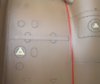
I just started working on some wear and chipping in the wing roots/walkways of my current build and noticed how the various filler points and access panels had taken an earlier wash. The model had a coat of primer, a coat of enamel camouflage paint and two coats of gloss varnish (one before and one after the decals).


This is the upper wing, fuselage to the left, engine nacelle to the right.


View attachment 243315


The detail is quite fine on this modern molding. If the paints and varnished, including primer, had filed the detail it could not have taken the wash like this. I really don't think loss of detail is something that we should worry about when priming, it's certainly not a reason to avoid priming.


Cheers


Steve
 

Attachments

  • IMG_1507_zpsjx2lfmvo.jpg
    IMG_1507_zpsjx2lfmvo.jpg
    1.6 KB · Views: 0
Thread owner
\ said:
I just started working on some wear and chipping in the wing roots/walkways of my current build and noticed how the various filler points and access panels had taken an earlier wash. The model had a coat of primer, a coat of enamel camouflage paint and two coats of gloss varnish (one before and one after the decals).
This is the upper wing, fuselage to the left, engine nacelle to the right.


View attachment 143019


The detail is quite fine on this modern molding. If the paints and varnished, including primer, had filed the detail it could not have taken the wash like this. I really don't think loss of detail is something that we should worry about when priming, it's certainly not a reason to avoid priming.


Cheers


Steve
What scale is your model please?
 
Status
Not open for further replies.
Back
Top