Hi all. Any tips on the best way to go about mixing acrylic paints? What should I use to transfer from the paint pot (I'm thinking some kind of pipette but wouldn't that mean they would be only single use as you couldn't rinse them out?). And then what to mix the paint in (I'm thinking shot glasses?). And how can I ensure I'm getting right the proportions that the instructions state? Sorry for all the questions I'm learning!


You are using an out of date browser. It may not display this or other websites correctly.
You should upgrade or use an alternative browser.
You should upgrade or use an alternative browser.
Mixing acrylic paints
- Thread starter pedb1969
- Start date
G
Guest
Guest
The simplest way is to just pour them from the pot or squeeze them from the bottle.
To accurately measure out ratios, you have a number of relatively easy options, I think. One is to take a small container that already has gradations printed on it, so you can just put (say) 3 ml of one colour and add 1 ml of another. Alternatively, you can mark those yourself on the outside of the cup with a thin permanent marker, provided the cup you use has straight (or nearly straight) sides: for a 3:1 ratio, make a mark 3 mm up from the bottom and another 1 mm above that, so 4 mm from the bottom — or 6 mm and 8 mm, of course.
What you can also do is use a pipette to draw (say) 3 ml of water and put that into the cup you use, and with the cup on a level surface make a mark on the outside at the level of the water. Then add 1 ml more water and make another mark. Throw out the water, rinse the cup, and put paint in to those same lines. Unlike measuring along the outside with a ruler to make marks, this will work with any shape of container.
To accurately measure out ratios, you have a number of relatively easy options, I think. One is to take a small container that already has gradations printed on it, so you can just put (say) 3 ml of one colour and add 1 ml of another. Alternatively, you can mark those yourself on the outside of the cup with a thin permanent marker, provided the cup you use has straight (or nearly straight) sides: for a 3:1 ratio, make a mark 3 mm up from the bottom and another 1 mm above that, so 4 mm from the bottom — or 6 mm and 8 mm, of course.
What you can also do is use a pipette to draw (say) 3 ml of water and put that into the cup you use, and with the cup on a level surface make a mark on the outside at the level of the water. Then add 1 ml more water and make another mark. Throw out the water, rinse the cup, and put paint in to those same lines. Unlike measuring along the outside with a ruler to make marks, this will work with any shape of container.

I use small, clear plastic shot glasses for mixing. Some paints are in dropper bottles (Vallejo for example) so just count the drops to get the mixing ratio. I also use plastic pipettes. Very cheap and I just throw them away after use.

I collect the screw tops of wine bottles and use them (after a wash) for mixing. As for correct ratio, I stop mixing when the colour is correct -ish.

I use plastic milk bottle caps for mixing in.
Depending on what type of paint you have, either squeeze it from the dropper bottle as Jakko suggests, or pipettes are an option, you can count the drops for the correct ratio, or do it by eye as Colin says.
I have a jam jar full of cleaner, sucking that in & out of the pipette several times after use to clean them out so I can reuse them many times.
Depending on what type of paint you have, either squeeze it from the dropper bottle as Jakko suggests, or pipettes are an option, you can count the drops for the correct ratio, or do it by eye as Colin says.
I have a jam jar full of cleaner, sucking that in & out of the pipette several times after use to clean them out so I can reuse them many times.
G
Guest
Guest
Hello Peter,
To transfer the paint ready for mixing, you can either squeeze the paint directly from the pot aka Vallejo. or you can use wither a plastic eye dropper with the rubber end or use a pippette. When using either of these I have a pot of old IPA come thinners for acrylics and immediately wash out the dropper/pippette by sucking up the IPA/thinners in a flushing motion and then once clean wash out the IPA in another pot of clean water with some washing up liquid in it.
Sounds a bit long winded, but when you prepare to mix your paint these items are prepared at the same time.
For mixing I use clear pill cups bought from Amazon at around 100 for £8, and again these can be cleaned and re-used untill brittle, then thrown away.
To transfer the paint ready for mixing, you can either squeeze the paint directly from the pot aka Vallejo. or you can use wither a plastic eye dropper with the rubber end or use a pippette. When using either of these I have a pot of old IPA come thinners for acrylics and immediately wash out the dropper/pippette by sucking up the IPA/thinners in a flushing motion and then once clean wash out the IPA in another pot of clean water with some washing up liquid in it.
Sounds a bit long winded, but when you prepare to mix your paint these items are prepared at the same time.
For mixing I use clear pill cups bought from Amazon at around 100 for £8, and again these can be cleaned and re-used untill brittle, then thrown away.
G
Guest
Guest
Good idea. You probably want scales that go to at least a tenth of a gram, though, if not a hundredth.Measure by weight.

That's right Jakko, I use one with 3 decimal places or 0.000g which makes it very precise.Good idea. You probably want scales that go to at least a tenth of a gram, though, if not a hundredth.

Sorry can I ask wether your mixing a specific colour(very rare that its not available off the shelf) or just thinning a quantity of paint. Weighing the paint out please come on guys ,if your paints in jars I measure straight in to the airbrush cup using a mr hobby paint spoon adding thinner from a pippet ie six spoons paint six drops thinner=50/50 same drops from mig/Vallejo bottles if you run short no probs you replicate ratio you just swish it about with a clean brush job done no decanting cross contamination simples anyway thats how a full time modeling slob does it.

Some varied suggestions so far :thumb2:
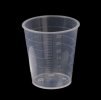
For mixing large quantities, I use these medicines dispensers marked with 5ml increments.
I use Tamiya paints for airbrushing so I can just pour them in.
View attachment 514674
Quite often I’ll mix small amount directly into the airbrush with a soft brush.
The brush paint that I use comes in dropper bottles so I’ll use a plastic milk bottle lid as already mentioned and just squeeze out what I need.
For mixing large quantities, I use these medicines dispensers marked with 5ml increments.
I use Tamiya paints for airbrushing so I can just pour them in.
View attachment 514674
Quite often I’ll mix small amount directly into the airbrush with a soft brush.
The brush paint that I use comes in dropper bottles so I’ll use a plastic milk bottle lid as already mentioned and just squeeze out what I need.
Attachments
G
Guest
Guest
In that case you may want to avoid breathing on it, as it’ll probably register that too. (Once upon a time, I studied chemistry. In the lab, we had a couple of mechanical balances that measured thousandths of a gram, too, and they had little glass cabinets around the scale to avoid draughts, breaths, etc. affecting them. We weren’t allowed to use the one that did tenthousandths of a gram yet, though.)I use one with 3 decimal places or 0.000g which makes it very precise.

I use a plastic pippet to put the thinners straight in the a/b then same with paint till it looks the right consistency, suck it up and squirt it back out a few times to mix it then at a tenner for 500 pippets off Ebay I bin it!
Thanks for all the replies, I feel like I've opened up a can of worms! For background I've just come back to the hobby for the first time since childhood when all I did was airfix kits and humbrol enamel paints! There is a bewildering variety of options these days. So far I've done an airfix spitfire starter set and an airfix hurricane with mixed results, and an alitalia harrier that I'm secretly quite pleased with! So far I've just used enamel paints and brushes and don't feel inclined to go down the airbrush route. I'm just starting the revell Lancaster and the instructions indicate mixing a number of their standard colours, hence the query. I'm going to use acrylic paints for this.
G
Guest
Guest
Probably a better way to do it would be to buy paints in the correct colours, instead of trying to mix them. Exactly because there’s such a bewildering variety of options these days, you can find decent matches for most real-life colours from ranges you like. Oh, and of course, you don’t have to stick to any one range — you could use Revell black for the underside of the Lancaster, for example, but Italeri for the dark green and Vallejo for the dark earth (or whatever else you like).
Fair comment David.Sorry can I ask wether your mixing a specific colour(very rare that its not available off the shelf) or just thinning a quantity of paint. Weighing the paint out please come on guys ,if your paints in jars I measure straight in to the airbrush cup using a mr hobby paint spoon adding thinner from a pippet ie six spoons paint six drops thinner=50/50 same drops from mig/Vallejo bottles if you run short no probs you replicate ratio you just swish it about with a clean brush job done no decanting cross contamination simples anyway thats how a full time modeling slob does it.
Thanks Gary ,why complicate things all the time if there's a easy way out im first through the door ,same with airbrushes everybody's got this strange obsession with stripping /taking apart after every use ,I take care to flush through with a decent cleaner(mr hobby tool cleaner) I'll pull the needle out the back and wipe but thats it how many times have you read on here the woe's of wishing they'd never taken the thing apart if it ain't broke dont fix it,I'll leave it there I could rant on but best not upset the natives :tongue-out3:Fair comment David.
Thanks that's the best advice! I want the colours to be as near to the real thing as possible, but the reality is the real thing was undoubtedly a mishmash anyway so is it really that important.Probably a better way to do it would be to buy paints in the correct colours, instead of trying to mix them. Exactly because there’s such a bewildering variety of options these days, you can find decent matches for most real-life colours from ranges you like. Oh, and of course, you don’t have to stick to any one range — you could use Revell black for the underside of the Lancaster, for example, but Italeri for the dark green and Vallejo for the dark earth (or whatever

1/3
The short answer is no it isn’t…….paint colours up until computers started to be used in the mid 1980s, were matched by eye so could easily show variation. Add in atmospheric conditions, wear, fading, dust, and the strength and colour of reflected daylight (which differs according to the time of year and time of day) and near enough should be good enough. Basically, if it looks right to you it is right, and nobody can say otherwise. Something I’ve posted before, but you wouldn’t have seen…Thanks that's the best advice! I want the colours to be as near to the real thing as possible, but the reality is the real thing was undoubtedly a mishmash anyway so is it really that important.
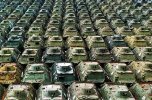
All supposedly the same colour…..except possibly the Sandy coloured one bottom left.
That is fascinating thank you! I now feel much more confident about the whole process. Thanks everyone who has posted for your adviceThe short answer is no it isn’t…….paint colours up until computers started to be used in the mid 1980s, were matched by eye so could easily show variation. Add in atmospheric conditions, wear, fading, dust, and the strength and colour of reflected daylight (which differs according to the time of year and time of day) and near enough should be good enough. Basically, if it looks right to you it is right, and nobody can say otherwise. Something I’ve posted before, but you wouldn’t have seen…
All supposedly the same colour…..except possibly the Sandy coloured one bottom left.
Legal Notice
scalemodelling.co.uk is a privately operated online discussion forum. All content posted by members reflects their own views and opinions and does not necessarily represent those of the forum owners or administrators. While reasonable efforts are made to moderate content, no responsibility is accepted for user-generated material. By using this site, you agree to comply with UK law and the forum rules.