

You are using an out of date browser. It may not display this or other websites correctly.
You should upgrade or use an alternative browser.
You should upgrade or use an alternative browser.
Corsair F4U-1A
- Thread starter michaelm
- Start date
- Status
- Not open for further replies.

Got the blues on and fitted the u/c and u/c doors. Think it looks about right but I'm going to put it down for a day then look at it again before I klear coat. Maybe a little work on the u/c doors needed.
View attachment 48178
View attachment 48179
View attachment 48180
View attachment 48181
View attachment 161204
View attachment 161205
View attachment 161206
View attachment 161207
View attachment 48178
View attachment 48179
View attachment 48180
View attachment 48181
View attachment 161204
View attachment 161205
View attachment 161206
View attachment 161207
Attachments




Well I think I'll call this finished. I've done it quite well chipped as I have seen many pics of this aircraft pretty beaten up looking.
Thanks for all your help and encouragement, M
View attachment 48349
View attachment 48350
View attachment 48351
View attachment 48352
View attachment 48353
View attachment 161375
View attachment 161376
View attachment 161377
View attachment 161378
View attachment 161379
Thanks for all your help and encouragement, M
View attachment 48349
View attachment 48350
View attachment 48351
View attachment 48352
View attachment 48353
View attachment 161375
View attachment 161376
View attachment 161377
View attachment 161378
View attachment 161379
Attachments
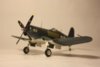
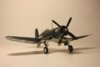

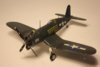

G
Guest
Guest
thats turned out really nice mate,i love it,just enough weathering
mobear
mobear
G
Guest
Guest
I agrre with mobear...
Great work
Roman
Great work
Roman
G
Guest
Guest
Great work Michael, lovely clean paintwork & just the right amount of weathering.
Cheers
Patrick
Cheers
Patrick

G
Guest
Guest
Yep i agree ... nice and subtle ... i like that!!
G
Guest
Guest
Lovely looking plane Michael. The weathering looks great.
Tony
Tony

1/3
Great looking plane Mike. Well done.
Steve
Steve

G
Guest
Guest
Wow that came out great Michael! Just the right amount of chipping without being overdone for the subject too! Very nicely done Sir!!!

Very true Michael, but on start up, a rotary engine that size - really does sound quite nice.\ said:Nice result. I'm off to youtube to listen to a Corsair on start up.

There is a difference between a radial engine and a rotary engine. Where the cylinder bank is fixed (as was typical of round engines from the decade prior to the Second World War onwards), the crankshaft turns inside fixed cylinder banks. Where the engine cylinders rotate around the crankshaft, the engine is known as a rotary engine; these were quite common on aircraft from the First World War and into the 1920s. The main advantage of a radial engine is you can have numerous banks of cylinders around a larger crank, producing more power. If you tried to increase the number of cylinder banks on a rotating engine, you would have uncontrollable swing in full power/low speed scenarios. Imagine the size of the rudder/fin/fuselage arm to control a 2,000hp Twin P&W Wasp!\ said:Very true Michael, but on start up, a rotary engine that size - really does sound quite nice.
- Status
- Not open for further replies.
Legal Notice
scalemodelling.co.uk is a privately operated online discussion forum. All content posted by members reflects their own views and opinions and does not necessarily represent those of the forum owners or administrators. While reasonable efforts are made to moderate content, no responsibility is accepted for user-generated material. By using this site, you agree to comply with UK law and the forum rules.