Theme editor

Scale Model Shop

Info needed.... M.2 (Ma Deuce) .50 Cal Machine gun

Thread owner
Thanks for that Rick, I'm assuming an engagement doesn't last very long so with the slow firing rate of the 50cal, I will see a barrel change happening in a firefight. Metal ought to heat up and cool relatively fast so by the next engagement it would be back to zero temperature.
Would firing in short bursts lengthen the heating up? I think it should.

Cheers,
Richard
From my experience of seeing the British GPMG being fired, they tend to fire in short bursts to maintain accuracy and 'control' the barrel heating effect of the rounds...

That said I've even seen my old battalion's' GPMG' gunners giving it the juice and firing belt after belt of 7.62 through it...

(many years ago whilst on a section commanders course at ITC Brecon, we had to climb up a hill (D-range for those familiar with Brecon) on our bellies whilst the GPMG fired rounds over our heads...effectively chewing up the ground ahead of us...scary stuff at the time...)
 
Thanks for that Rick, I'm assuming an engagement doesn't last very long so with the slow firing rate of the 50cal, I will see a barrel change happening in a firefight. Metal ought to heat up and cool relatively fast so by the next engagement it would be back to zero temperature.
Would firing in short bursts lengthen the heating up? I think it should.

Cheers,
Richard
Gunners are always taught to fire bursts of three to five rounds Richard, not only does this slow down the heat gain in the barrel but reduces muzzle climb (caused by the effect of rifling imparting spin to the projectile and subsequent yaw - bullets do not exit in an orderly queue but rather in a 'cone') and thus improves overall accuracy. When tripod mounted for the sustained fire (SF) role the belts just fire through continuously and accuracy is compromised for the benefits of weight of fire on the beaten zone - SF concentrations are usually done at night-time (O Joy!!) so that the tracer is more visible and the cherry glow of overheating barrels is very noticeable! The target area is ranged and guns laid previously. As an aside, there was an attempt to increase the life of GPMG (7.62mm General Purpose Machine Gun) barrels by the introduction of a Stellite liner back in the late 70's/ early 80's, whilst effective in the short term barrel life was actually reduced due to erosion between the liner and barrel caused by gas wash!
Steve
 
From my experience of seeing the British GPMG being fired, they tend to fire in short bursts to maintain accuracy and 'control' the barrel heating effect of the rounds...

That said I've even seen my old battalion's' GPMG' gunners giving it the juice and firing belt after belt of 7.62 through it...

(many years ago whilst on a section commanders course at ITC Brecon, we had to climb up a hill (D-range for those familiar with Brecon) on our bellies whilst the GPMG fired rounds over our heads...effectively chewing up the ground ahead of us...scary stuff at the time...)

Ah Chris - Ranges, Junior Brecon, Senior Brecon and that memorable single day when the sun came out for 30 minutes - such memories! :flushed:
Steve
 
Thread owner
Ah Chris - Ranges, Junior Brecon, Senior Brecon and that memorable single day when the sun came out for 30 minutes - such memories! :flushed:
Steve
I remember it well buddy, especially the scientific fact that the minute you crossed the cattle grid the area's own sub climate would kick in and the heavens would open..

little old me.....on one of those rare days the sun came out...
scan0010.jpg
 
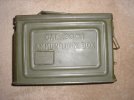
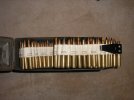
.50 cal. ammo was loaded in a metalic self disintegrating belt of 120 rds. ea. with one belt per box during WW2.
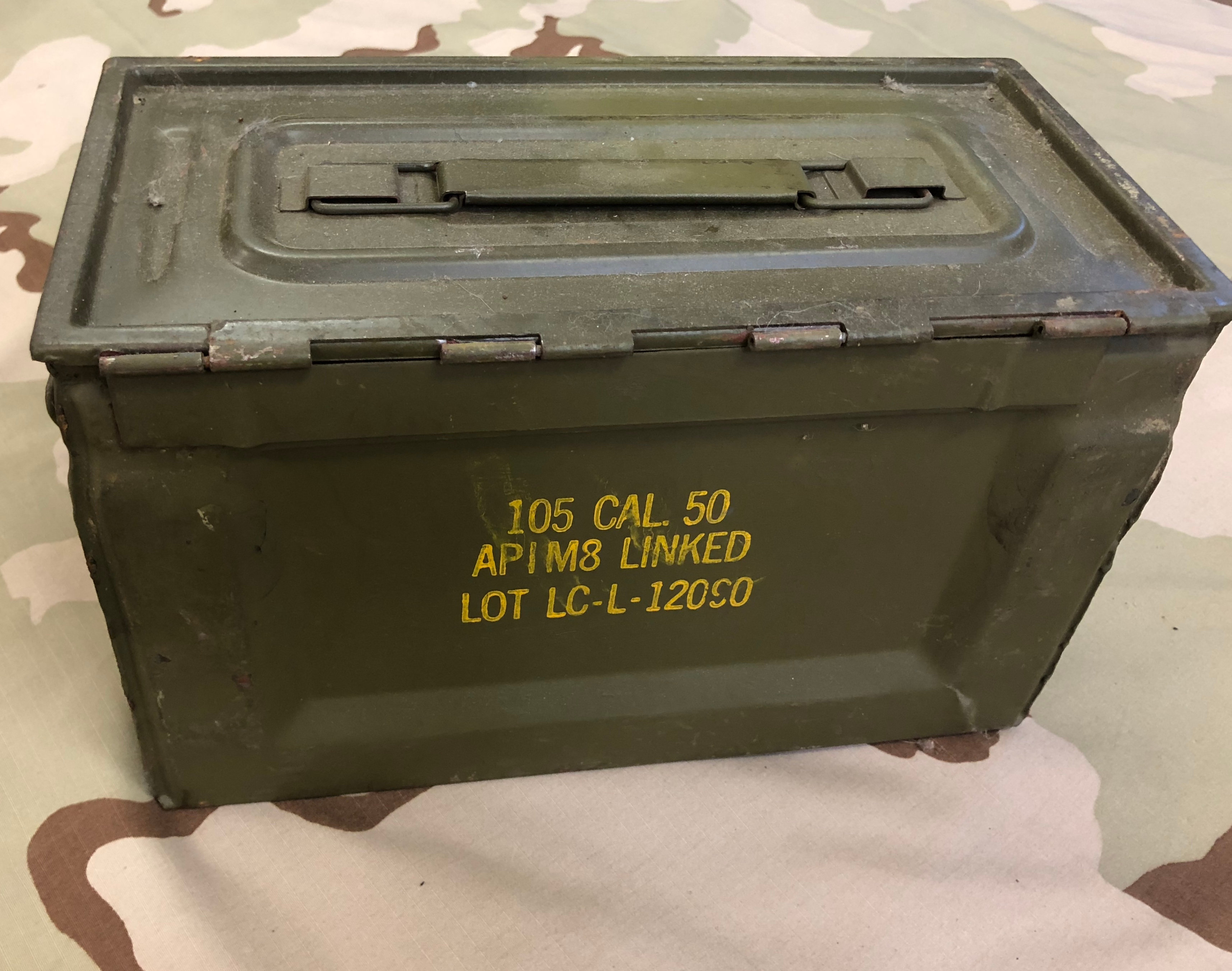
120 rounds? The steel ammo boxes from the Second World War typically say they held 105 rounds:

1be47e_be66c62c76b44d74b12bfb5922a6558f~mv2_d_3432_2705_s_4_2.jpg


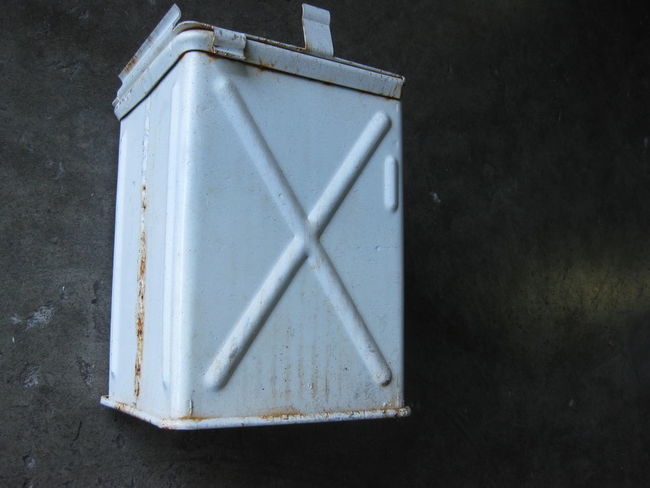
There were also 50-round boxes for use on vehicles:

IMG_0198_1_.JPG


but I don’t know if these were supplied filled or if they came with the vehicle and the crews were to fill them themselves. I suspect the latter.

Wooden boxes, though, seem to have been supplied with all kinds of lengths. I found pictures of 120, 240 and 265 at least.

Modern NATO boxes usually hold 100 belted rounds:

20078-DEFAULT-l.jpg


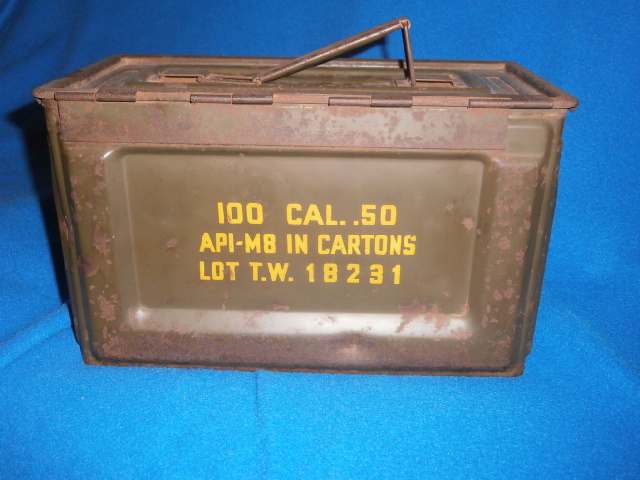
Also beware that the boxes with belted ammo are also used for all sorts of other purposes, like:

post-154044-0-04444000-1430168979.jpg


That’s the same box as in the first picture, but now only 100 rounds instead of 105. What gives? That this isn’t belted but in cartons.

Or:

Fat+50+Cal+5.56+mm+Ammo+Box_L.jpg


In other words: it pays to read carefully what’s printed on a box, and this carries over into modelling: be sure to use the right decals for your ammo boxes if they can be read in close-up :) (Though if someone mentions it, you can always claim somebody reused an ammo can, of course …)
 
The "Tombstone" cans, typically used in M16s & Naval use, carried 200 rounds of 50 cal. in WWII.
 
120 rounds? The steel ammo boxes from the Second World War typically say they held 105 rounds:

1be47e_be66c62c76b44d74b12bfb5922a6558f~mv2_d_3432_2705_s_4_2.jpg


There were also 50-round boxes for use on vehicles:

IMG_0198_1_.JPG


but I don’t know if these were supplied filled or if they came with the vehicle and the crews were to fill them themselves. I suspect the latter.

Wooden boxes, though, seem to have been supplied with all kinds of lengths. I found pictures of 120, 240 and 265 at least.

Modern NATO boxes usually hold 100 belted rounds:

20078-DEFAULT-l.jpg


Also beware that the boxes with belted ammo are also used for all sorts of other purposes, like:

post-154044-0-04444000-1430168979.jpg


That’s the same box as in the first picture, but now only 100 rounds instead of 105. What gives? That this isn’t belted but in cartons.

Or:

Fat+50+Cal+5.56+mm+Ammo+Box_L.jpg


In other words: it pays to read carefully what’s printed on a box, and this carries over into modelling: be sure to use the right decals for your ammo boxes if they can be read in close-up :smiling3: (Though if someone mentions it, you can always claim somebody reused an ammo can, of course …)
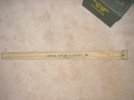
Jakko, I based my response to Richards question on Bruce Canfield's book US Infantry Weapons of WW2. You are correct that the information "stenciled" on the outside of the can denotes it contents. That being said the number of rounds is determined by who is making up the contents. Hence the conflicting numbers.....
 
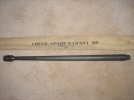
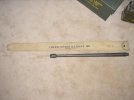
During WW2 there was an item of web gear to contain one replacement barrel for the .50 cal. I do not know how many were carried or by who, but I have one of these canvas carriers in my WW2 collection.......I could dig it out and post a pic. if you like. I don't have a barrel for it but I do have a .30 cal. replacement barrel in the collection. In answer to you question as to how many rounds to a belt/box. .50 cal. ammo was loaded in a metalic self disintegrating belt of 120 rds. ea. with one belt per box during WW2. I have a belt (fabric) of 250 rds. of .30 cal. "fruit salad", consisting of one rd. of Ball, one rd. of AP, and one rd. of Incendiary, Tracer ('ats right JR) continuously. The weight of a can of .30 cal. is quite heavy (over 10 lbs. I'm guessing) can't imagine what a can of .50 weighs.
Yes please Rick.:smiling:
 
:tears-of-joy::smiling6: I guess filling a can of belt ammo isn't as intricate as folding a parachute. If it fits...okay...nobody will be counting the number of bullets fired in the heat of battle.

Cheers,
Richard
 
:tears-of-joy::smiling6: I guess filling a can of belt ammo isn't as intricate as folding a parachute. If it fits...okay...nobody will be counting the number of bullets fired in the heat of battle.

Cheers,
Richard
Very true Richard, however a badly laid belt in a tin can cause stoppages and all the s..t that could entail!
Steve
 
Isn’t that spare barrel for an M1919A6 rather than an A4?
Actually it is for the .50 cal. M2.......In response to Richard's question in this thread (Thursday) I mentioned a spare barrel cover for transporting/storing extra barrels for the M2.......JR asked to see it (yesterday) and so I posted it up. The .30 M1919 barrel was in it so I took a Pic. of it as well. Here's a shot of both.....as you can see there is quite a bit of difference in the length of the cover and the .30 Cal. barrel........sorry if I confused you. P1012343.JPG
 
That wasn’t what I was asking about, though :) I observed that the barrel looks like the one for an M1919A6 to me, because of the thinner front end than that for the M1919A4, not that it was for any type of .50-calibre gun :)
 
Isn’t that spare barrel for an M1919A6 rather than an A4?

That wasn’t what I was asking about, though :smiling3: I observed that the barrel looks like the one for an M1919A6 to me, because of the thinner front end than that for the M1919A4, not that it was for any type of .50-calibre gun :smiling3:
Sorry Jakko, I missed understood your question.........thought you was referring to the cover. I guess I should not have included it in the discussion, as it was not part of the original subject matter. ;)
 
If I may add something, another sign of barrel overheating is the "cook-off". It happens when a bullet is ignited by the high temperature of the barrel and not by the pin striking the priming capsule. In that case things becomes rather hot for the machine gunners too as the brass case, not correctly contained into the barrel, could break under the pressure of the ignited powder and hurt the gunners.
Moreover, it's one of the most amazing infantry weapons to fire and at 800 m. can still pierce the turret of a BRDM...but nowadays I'd not recommend it for foot infantry use as it's too heavy and full of sharp hedges and pointy things for an easy handling unless joined to its tripod (which also works as transport cradle, with one man for each leg lifting it).
 
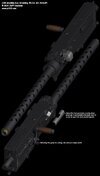
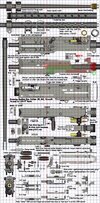
coming late but I have found this to be great info on 50 cals _Browning_50_Cal_M2_Aircraft_Perspective.jpgBrowning_50_cal_M2_  2.jpg
 
Back
Top