Theme editor

Scale Model Shop

Masking Fluid.

  • Thread starter Thread starter Guest
  • Start date Start date
G

Guest

Guest
Thread owner
Got Mr Hobby Masking Sol R Found that to thick to get a decent edge.

Also have Windsor NewtonArt Masking Fluid, nice, but it is a sort of cream colour difficult to gauge an edge.

Advice for those who have experienced some & got others better.

Laurie
 
I haven’t used either of those, but did use Humbrol Maskol a few times. On straight edges I used to let it set, then cut a straight edge and remove the unwanted bit before spraying, not always successfully…..filling in areas I used to put a blob in the area and push it around with a cocktail stick before it dried. Never got on well using a brush….
 
Thread owner
I haven’t used either of those, but did use Humbrol Maskol a few times. On straight edges I used to let it set, then cut a straight edge and remove the unwanted bit before spraying, not always successfully…..filling in areas I used to put a blob in the area and push it around with a cocktail stick before it dried. Never got on well using a brush….

Thanks Tim.

May help you. Got recently. Set of 3 sizes . They work well despite the fluids. Get a good line & wash out well.

Frisk Artcoe Masking Fluid Brushes
 
Have you tried wickering thin masking fluid onto Bofa set rolling pens and drawing the lines with the use of a ruler? I would try thinned white glue.

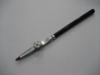
It's been years since I have used rolling pens after switching to graphic ink pens. If you don't know what a rolling pen is, it's sharp calipers with a tightening screw to adjust the thickness of the ink flow needed which draftsmen used to draw plans.

Cheers,
Richard
 
Made for the job…….Thanks Laurie, I’ll keep that in mind, but it’s not something I need to do at present….
 
This is what it looks like. I still have my Bofa set. Don't know if they still sell it.

1632848203734.png

Cheers,
Richard
 
Have you tried wickering thin masking fluid onto Bofa set rolling pens and drawing the lines with the use of a ruler? I would try thinned white glue.

It's been years since I have used rolling pens after switching to graphic ink pens. If you don't know what a rolling pen is, it's sharp calipers with a tightening screw to adjust the thickness of the ink flow needed which draftsmen used to draw plans.

Cheers,
Richard
We call them bow or ruling pens over here Richard….amazing how many names some things can have. I used to use them for doing lining on steam locomotives back in the dark ages….horrible things but better if you used a sharpening stone to improve the ends. I still have several in a drawer somewhere. I found they worked best with Humbrol paint when properly thinned….
 
We call them bow or ruling pens over here Richard….amazing how many names some things can have. I used to use them for doing lining on steam locomotives back in the dark ages….horrible things but better if you used a sharpening stone to improve the ends. I still have several in a drawer somewhere. I found they worked best with Humbrol paint when properly thinned….
Tim, I think I misspelt it. Ruling pen is the correct term. If used correctly gives a constant thickness to the line drawn.

Cheers,
Richard
 
We used to construct lettering with it using indian ink in art school and got quite proficient at it.

Cheers,
Richard
 
Tim, I think I misspelt it. Ruling pen is the correct term. If used correctly gives a constant thickness to the line drawn.

Cheers,
Richard
Probably predictive autocorrect Richard. I spend a lot of time correcting it!
 
I used some Wilders' Red Quick Mask - that just about shows up when dry. The one I use most is Jackson's Masking Fluid. The trick to applying it by brush is to wet the brush with water before dipping & painting. Stop & clean the brush regularly, re wetting the brush after. This prevents the mask from drying on the brush. I have a couple of kid's nylon bristle brushes that I use ( you can pick them up very cheaply ), just in case I forget & allow them to dry ( yes, I do that regularly ) I reckon I got mine off ebay, something like 20 for £2
Dave
 
Thread owner
Have you tried wickering thin masking fluid onto Bofa set rolling pens and drawing the lines with the use of a ruler? I would try thinned white glue.

It's been years since I have used rolling pens after switching to graphic ink pens. If you don't know what a rolling pen is, it's sharp calipers with a tightening screw to adjust the thickness of the ink flow needed which draftsmen used to draw plans.

Cheers,
Richard

Richard who worked 50 years in architecture the first 10 using Ink Lining Pens (your rolling pen) with indian ink on tracing paper & Whatman Paper.
Razor blade at the ready to scratch off mistakes & accidental big blobs.

Forgotten Richard have a couple great reminder. Thanks must experiment.

Laurie
 
Thread owner
I used some Wilders' Red Quick Mask - that just about shows up when dry. The one I use most is Jackson's Masking Fluid. The trick to applying it by brush is to wet the brush with water before dipping & painting. Stop & clean the brush regularly, re wetting the brush after. This prevents the mask from drying on the brush. I have a couple of kid's nylon bristle brushes that I use ( you can pick them up very cheaply ), just in case I forget & allow them to dry ( yes, I do that regularly ) I reckon I got mine off ebay, something like 20 for £2
Dave
Thanks Dave will have a look. great info.

Laurie
 
When I went to work as a design draughtsman in 1989, the drawing office still had about 25 drawing boards, and about 15 CAD terminals. Old drawings, which were not on the CAD system were manually altered. There was still all the old tackle being used, beam compasses, electric erasers etc, and all the draughtsmen had their own fancy drawing sets. One or two used lining pens, but the majority used Rotring pens ( later Pentel ). I spent the first year redrawing selected manual paper drawings onto the CAD system, and as the older guys retired, - mostly early, as they ween't prepared to move to CAD, the drawing boards did as well. All the old gear was sold off ( I seem to remember the professional drawing boards going for £25 ). Within 10 years we went from paper drawings to full 3-D CAD operation - at that time we were doing things on 3-D that even IBM weren't teaching ( the other firm that were doing advanced 3D stuff was Black & Decker ). Sadly the technology advanced so quickly, we couldn't afford to keep up to date...............
Dave
 
Vallejo do a green masking fluid. I find it quite easy to place where needed
 
Thread owner
When I went to work as a design draughtsman in 1989, the drawing office still had about 25 drawing boards, and about 15 CAD terminals. Old drawings, which were not on the CAD system were manually altered. There was still all the old tackle being used, beam compasses, electric erasers etc, and all the draughtsmen had their own fancy drawing sets. One or two used lining pens, but the majority used Rotring pens ( later Pentel ). I spent the first year redrawing selected manual paper drawings onto the CAD system, and as the older guys retired, - mostly early, as they ween't prepared to move to CAD, the drawing boards did as well. All the old gear was sold off ( I seem to remember the professional drawing boards going for £25 ). Within 10 years we went from paper drawings to full 3-D CAD operation - at that time we were doing things on 3-D that even IBM weren't teaching ( the other firm that were doing advanced 3D stuff was Black & Decker ). Sadly the technology advanced so quickly, we couldn't afford to keep up to date...............
Dave

Those were the days Dave.

Started with a pencil.

Architects office first day. Practice sharpening a pencil with knife. Had to be point sharp.

Second day drawing lines. The pencil had to be rotated as you drew the line.
Kept the point round & sharp. No digging into the tracing paper as if you made
a mistake the rubbed out line would still show on the deyline (spelling) print.

Also had to make tea three times a day for 6 people. But blimey had the devil of
the time of my life. All six of us had just fun in our hearts. So very funny. The
ridiculous & stupid antics we got up to. But we still designed buildings.

Laurie
 
Thread owner
Vallejo do a green masking fluid. I find it quite easy to place where needed

Thanks Alan. Did have some at one time. Problem I have found they all thicken up then I throw it away.

Laurie
 
With your fingers Alexander :tears-of-joy: (PS love that you have not shortened your name)

I am pleased it is not one of those sellotape to the head pens.

Do you just dip the pen into the masking fluid?

Edit: Just found a load of Youtube guides :),
Don't dip the pen
 
Back
Top