

You are using an out of date browser. It may not display this or other websites correctly.
You should upgrade or use an alternative browser.
You should upgrade or use an alternative browser.
Not a Moment to Lose… Battle of the Bulge, Ardennes, December 1944
- Thread starter TIM FORSTER
- Start date

OK, so where was I..? Sorry for the long absence.
We are a year or so on and this is still not finished - but there has been some progress!
By way of recap...
I started over 2 years ago with this:
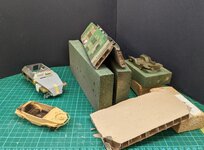
Then a few months later I reached this:
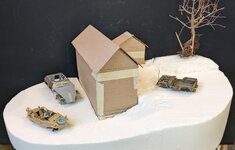
Then I got to this:
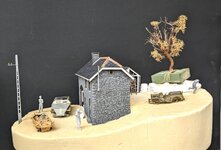
And then this:
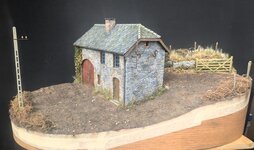
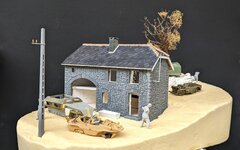
And now I am here:
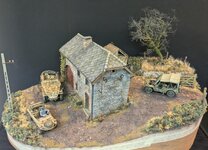
More to follow...
We are a year or so on and this is still not finished - but there has been some progress!
By way of recap...
I started over 2 years ago with this:
Then a few months later I reached this:
Then I got to this:
And then this:
And now I am here:
More to follow...

Shaping up beautifully. Love the gardening, sets off the structures just right. Vehicles show action, can't wait for the rest of the figs.


- Joined
- Apr 27, 2018
- Messages
- 15,228
1/3
Very nice workmanship.


1/3
Blimey mate, that's developing well (and good to see you again!)
Steve
Steve

1/3
Lovely work Tim. Do you have any photos of the in between work that you did from the plane cardboard structure in the first two pictures to the incredible looking house that you have created. Just brilliant.
Thanks for all the kind words folks...
There is a detailed description of all my work above, but with all the old images reduced to thumbnails it's a bit hard to follow. So rather than just repeat myself - and with apologies to those who have seen it all before - I will do a few edited 'highlights'.
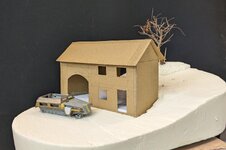
The base was made using a off-cut of insulation board - the sort you can find for free on most building sites.
The farmhouse is a style which was quite typical for the Ardennes region at the time. Mine is a composite of various real buildings which I found on Google Maps by using Streetview and looking for interesting old buildings. Once I found one I liked the look of, I would choose the right angle and take a screenshot.
For example, this one in the town of Warch:
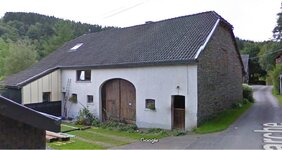
The front has been rendered, but the gable end shows the bare stone which is how it probably looked at the time of the Ardennes Offensive. I also decided to drop the gable end because this is another distinctive part of the look of these Belgian farmhouses.
Once the Approximate size and shape of my building was worked out I replaced my rough-cut version with a thick card template (as seen at the top). This was then used to cut out the high density XPS foam board that I used for the walls.
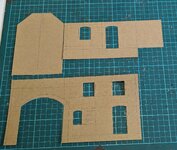
Once they were cut to shape I scribed the stones and bricks using a knife, then widened the gaps using a toothpick.
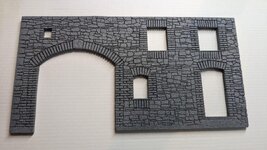
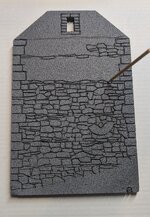
This enables you to make any shape and style of building and - most importantly - one that looks unique. Eventually, I ended up with the finished structure like this:
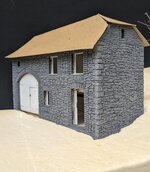
The walls would actually be thicker in real life, but although I had thicker XPS board, it is much harder to cut accurately - especially around doors and windows. This can be disguised when putting in the window and dor frames anyway. The visible seam line at the corner will be covered by a drain pipe...
The roof tiles were made from thin card cut to shape using a guillotine and laid one-by-one using UHU. This is slow work, but worthwhile in the end.
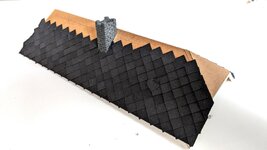
And so, in the end, I ended up with this before any filling or painting:
More to follow...
There is a detailed description of all my work above, but with all the old images reduced to thumbnails it's a bit hard to follow. So rather than just repeat myself - and with apologies to those who have seen it all before - I will do a few edited 'highlights'.
The base was made using a off-cut of insulation board - the sort you can find for free on most building sites.
The farmhouse is a style which was quite typical for the Ardennes region at the time. Mine is a composite of various real buildings which I found on Google Maps by using Streetview and looking for interesting old buildings. Once I found one I liked the look of, I would choose the right angle and take a screenshot.
For example, this one in the town of Warch:
The front has been rendered, but the gable end shows the bare stone which is how it probably looked at the time of the Ardennes Offensive. I also decided to drop the gable end because this is another distinctive part of the look of these Belgian farmhouses.
Once the Approximate size and shape of my building was worked out I replaced my rough-cut version with a thick card template (as seen at the top). This was then used to cut out the high density XPS foam board that I used for the walls.
Once they were cut to shape I scribed the stones and bricks using a knife, then widened the gaps using a toothpick.
This enables you to make any shape and style of building and - most importantly - one that looks unique. Eventually, I ended up with the finished structure like this:
The walls would actually be thicker in real life, but although I had thicker XPS board, it is much harder to cut accurately - especially around doors and windows. This can be disguised when putting in the window and dor frames anyway. The visible seam line at the corner will be covered by a drain pipe...
The roof tiles were made from thin card cut to shape using a guillotine and laid one-by-one using UHU. This is slow work, but worthwhile in the end.
And so, in the end, I ended up with this before any filling or painting:
More to follow...

1/3
Thanks for taking the time to post these Tim. Lovely work.


Thanks for all the nice things you have said...
On with the quick recap on the farmhouse...
After a coat of diluted PVA glue to seal the foam board I then gave everything a spray of dark grey and added some white for highlights.
Next I painted the individual stones and bricks.
The stones were done in two stages: roughly half of them in various shades of yellows / browns / reds and the remainder in greys. These were all done using Vallejo acrylics, because you don't want to let any enamel or other oil-based paints get to the foam...
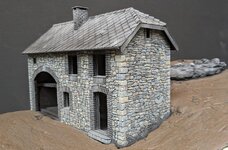
Here it is after I had finished the stone work.
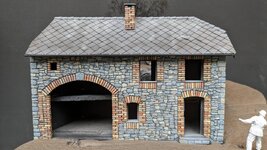
And here after I had done the bricks.
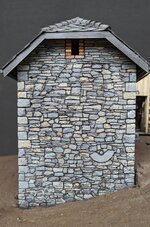
At this stage is all looks a little cartoon-like, but that will soon change.
In the image above you can see that I added a broken mill-stone in the wall (a common site in Derbyshire here in the UK). You can also see how easy it as to add texture to the surface of the XPS foam - or dislodged stones and bricks - simply by pushing into it with anything that works.
All of the 'woodwork' - doors, windows, gable ends, etc - was aded using plastic sheet of various thicknesses with wood grain scribed in using a razor saw and details added from various sources.
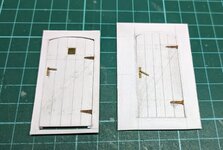
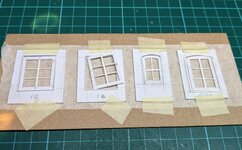
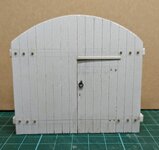
The next stage is the most transformative part of the process - adding mortar between the stones and bricks. Here the magical ingredient is this:
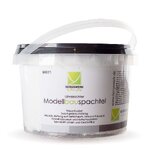
It's a water-based foam-like putty that can be applied with a brush before the excess is wiped away with a cotton bud soaked in water. I didn't take any decent photos of this step in progress, but the image below shows the effect almost immediately after the putty has dried:
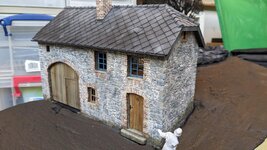
And here you can see the effect after I had begun to apply some washes to tone down the whiteness of the putty...
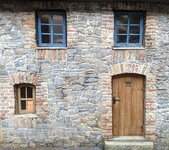
On with the quick recap on the farmhouse...
After a coat of diluted PVA glue to seal the foam board I then gave everything a spray of dark grey and added some white for highlights.
Next I painted the individual stones and bricks.
The stones were done in two stages: roughly half of them in various shades of yellows / browns / reds and the remainder in greys. These were all done using Vallejo acrylics, because you don't want to let any enamel or other oil-based paints get to the foam...
Here it is after I had finished the stone work.
And here after I had done the bricks.
At this stage is all looks a little cartoon-like, but that will soon change.
In the image above you can see that I added a broken mill-stone in the wall (a common site in Derbyshire here in the UK). You can also see how easy it as to add texture to the surface of the XPS foam - or dislodged stones and bricks - simply by pushing into it with anything that works.
All of the 'woodwork' - doors, windows, gable ends, etc - was aded using plastic sheet of various thicknesses with wood grain scribed in using a razor saw and details added from various sources.
The next stage is the most transformative part of the process - adding mortar between the stones and bricks. Here the magical ingredient is this:
It's a water-based foam-like putty that can be applied with a brush before the excess is wiped away with a cotton bud soaked in water. I didn't take any decent photos of this step in progress, but the image below shows the effect almost immediately after the putty has dried:
And here you can see the effect after I had begun to apply some washes to tone down the whiteness of the putty...
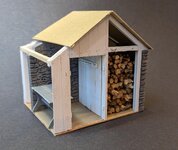
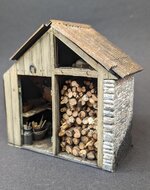
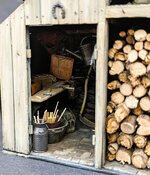
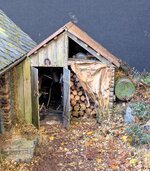

Nice to see this again Tim and great that you're back. Was starting to think that the dio guys were melting away. The continuation of this build is gonna look good, can't wait to find out what animal is also fleeing the Germans. 
Cheers,
Wabble
Cheers,
Wabble
Nice to see this again Tim and great that you're back. Was starting to think that the dio guys were melting away. The continuation of this build is gonna look good, can't wait to find out what animal is also fleeing the Germans.
Cheers,
Wabble
Thanks Richard,
And you have a good memory! All will be revealed in due course...
Adding further details...
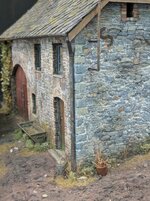
The plant pots were a fun detail to add - and cheap (£2 for a pack from Red Zebra!).
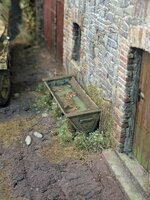
The wooden trough was based on images I found on-line. And yes, they really did make them of wood - although lined with clay. It was scratchbuilt from plastic card.
I added the water from two-part clear resin with some half-submerged leaves, although I will be adding some ice.
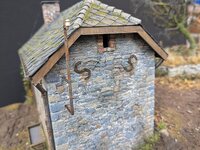
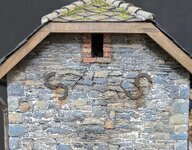
The 'S' shaped reinforcers were cut from thin plastic sheet with resin bolts added and textured with Mr Surfacer.
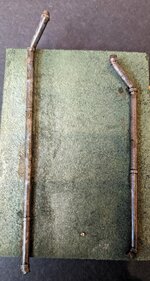
Guttering and downpipes were made in the usual way from plastic tubing / U shaped tubing. Reinforcing bands were added from masking tape.
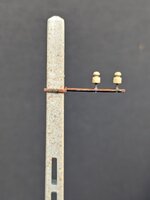
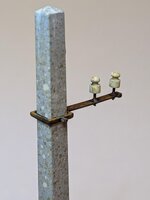
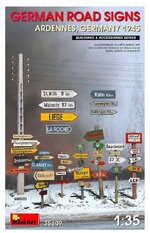
The Miniart Ardennes Roadsigns set is a useful source for the concrete telegraph pole. I added the concrete effect my speckling various shades of grey and brown using a toothbrush and cocktail stick.
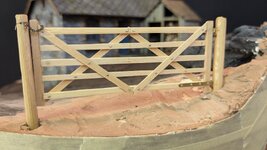
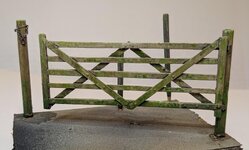
I decided to make the gate from wooden stirring sticks because I was worried that plastic card would warp. For the posts I used bamboo chopsticks. Nail heads were added from punched-out lead foil and I simply ad-libbed the hinges from bent brass sheet: they actually work...
The plant pots were a fun detail to add - and cheap (£2 for a pack from Red Zebra!).
The wooden trough was based on images I found on-line. And yes, they really did make them of wood - although lined with clay. It was scratchbuilt from plastic card.
I added the water from two-part clear resin with some half-submerged leaves, although I will be adding some ice.
The 'S' shaped reinforcers were cut from thin plastic sheet with resin bolts added and textured with Mr Surfacer.
Guttering and downpipes were made in the usual way from plastic tubing / U shaped tubing. Reinforcing bands were added from masking tape.
The Miniart Ardennes Roadsigns set is a useful source for the concrete telegraph pole. I added the concrete effect my speckling various shades of grey and brown using a toothbrush and cocktail stick.
I decided to make the gate from wooden stirring sticks because I was worried that plastic card would warp. For the posts I used bamboo chopsticks. Nail heads were added from punched-out lead foil and I simply ad-libbed the hinges from bent brass sheet: they actually work...
1/3
Looking superb, the detail is really excellent mate!
Steve
Steve
Legal Notice
scalemodelling.co.uk is a privately operated online discussion forum. All content posted by members reflects their own views and opinions and does not necessarily represent those of the forum owners or administrators. While reasonable efforts are made to moderate content, no responsibility is accepted for user-generated material. By using this site, you agree to comply with UK law and the forum rules.