Theme editor

Scale Model Shop

Nozzle size - what’s it all about?

  • Thread starter Thread starter Guest
  • Start date Start date
Status
Not open for further replies.
Thread owner
Hi John
The optics I’ve used it for have been mainly glass lenses in cameras, telescopes and binoculars to remove greasy fingerprints etc. I use washing up liquid for plastics whenever possible. I get the feeling that this could be a whole new thread?
Not wrong , the mention of cleaning will cause much discussion. let's sit back, have a cuppa and a slice of cake and wait. ! :smiling2:
John.
 
Interesting, I've never thought about using IPA to clean glass lenses. Could be useful for my rifle scopes. :thumb2:

I might not use it on my contact lenses though. :smiling2:
 
Thread owner
Interesting, I've never thought about using IPA to clean glass lenses. Could be useful for my rifle scopes. :thumb2:

I might not use it on my contact lenses though. :smiling2:
Bob.... I mix 30% IPA with water, we use it for cleaning in the house, good for wiping down work tops in the kitchen, just as good as most proprietary cleaners.
John.
 
I have uses various brands of 'enamel' paints since forever.

The best and cheapest option for thinning and cleaning is good old white spirits. You can by this cheaply at any DIY store.

People who tell you that you need expensive purpose made thinners for enamels are being dishonest, I use at least three different brands of enamel paints, all thinned with white spirits, on a regular basis.

For a really good 'deep clean' some cellulose thinners/lacquer thinners will do the trick. I don't do this as part of a routine, but only when I feel that the brush maybe working at something less than its maximum potential. It's the only time I strip a brush down and soak the bits, before thoroughly cleaning and reassembling everything. It's also when I check the various seals, needle, nozzle etc. and replace anything that looks a bit dodgy. I probably do it, on average, after three to four models have been completed.

Final tip: Don't be afraid to spray some WD 40 through the brush after cleaning. Everyone will say, but it's not a lubricant or that it will mess up the next paint load, but my experience is that it does lubricate the brush (at a fraction the cost of those little tubes of lube that manufacturers like Iwata will sell you) and as long as you follow it with a cup of your thinners (white spirits), before your next paint load, it has no impact on the subsequent spraying.

Cheers

Steve
 
Thread owner
I have uses various brands of 'enamel' paints since forever.

The best and cheapest option for thinning and cleaning is good old white spirits. You can by this cheaply at any DIY store.

People who tell you that you need expensive purpose made thinners for enamels are being dishonest, I use at least three different brands of enamel paints, all thinned with white spirits, on a regular basis.

For a really good 'deep clean' some cellulose thinners/lacquer thinners will do the trick. I don't do this as part of a routine, but only when I feel that the brush maybe working at something less than its maximum potential. It's the only time I strip a brush down and soak the bits, before thoroughly cleaning and reassembling everything. It's also when I check the various seals, needle, nozzle etc. and replace anything that looks a bit dodgy. I probably do it, on average, after three to four models have been completed.

Final tip: Don't be afraid to spray some WD 40 through the brush after cleaning. Everyone will say, but it's not a lubricant or that it will mess up the next paint load, but my experience is that it does lubricate the brush (at a fraction the cost of those little tubes of lube that manufacturers like Iwata will sell you) and as long as you follow it with a cup of your thinners (white spirits), before your next paint load, it has no impact on the subsequent spraying.

Cheers

Steve

Thanks Steve, all noted and understood. I’ve just had three Mr Metal colours come through the door, have you used white spirit with these by any chance? It’s advised to use their levelling thinners with them.
Max
 
Metal colours can be a bit more tricky!
I use Alclad for mine and there is no need to thin it. I can't comment on Mr Metal because I haven't used it.
The trick with all these metal finishes is in the preparation of the model surface prior to spraying. They all show up the smallest blemish!

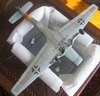
I use Alclad because rather than buying dozens of expensive shades you can tint it with a drop or two of gloss black or white to give different panels subtle different shades, as on the underside of this Ta 152, a work in progress when this picture was taken.

View attachment 319255

Cheers

Steve
 

Attachments

  • wash and wheels_1.jpg
    wash and wheels_1.jpg
    4 KB · Views: 0
Thanks Steve, all noted and understood. I’ve just had three Mr Metal colours come through the door, have you used white spirit with these by any chance? It’s advised to use their levelling thinners with them.
Max
I thought they were lacquer-based?
Pete
 
Thread owner
I thought they were lacquer-based?
Pete
Sorry Pete, somehow missed your reply. I’ve got to be totally honest mate, this paint business has got me completely confused at the moment! I just went with the Eduard paint recommendation, which in my ignorance I thought would simplify matters, instead it appears to have made it worse. I’ve spent a reasonable little sum on all the ‘required’ paints, and at this very moment don’t know how to use them! I thought I’d read that Mr Color had to be used with Gunze Levelling Thinners? Is that true? And are their Mr Metal colours any different in terms of thinner?
I think I’m going to bed, and I’ll research it tomorrow.
Max
 
Max, I still say make a test on your own. Get a metal pallette, line up your paints and thinners and do a trial mix.

All these years I have used cellulose thinners from the local hardware shop for all three paints Lacquer (Gunze, Mr Color), Enamel (Humbrol, Revell, Testors) and Tamiya (which is not a natural acrylic formula) with no problems except I get a slightly better mix and flow with their intended original thinners. I clean up with the same cellulose thinners. Make sure that you know they're all different from water base paints which will be labeled Aqueous...they don't mix with oil based solvents.

Levelling thinners are specially made (levelling being the key word) so that the paint has time to smoothen out with lengthened drying and curing time thus is best for car modellers using gloss paints. For Lacquers use Gunze Levelling Thinners, for Enamels use Turpentine and for Tamiya use Tamiya Retarder mixed into the paint.

All the above is applied with an airbrush. Paint brushing with a brush is another ball game.

My subjects have always been finished in matt and I take time to have the surface prepared so I don't need levelling for that extra shine.

I hope this diffuses the confusion. :smiling6:

Cheers,
Richard
 
Max, you've had loads of great advice above, I've picked a few tips up as well. So what can I add. Well, I would suggest buying a very cheap model in your preferred subject. Slap it together and practice on that. Spraying card board and yogurt pots are fine, but following the curve of a fuselage (if you are an aircraft person) is a bit different. I often reach for my old 1:48 Airfix Spitfire and 'brush up' my spraying skills on that, before aiming at the work piece.
 
Thread owner
I really appreciate all the continued interest in this thread, it really helping me at the moment. Richard, I think you’ve finally clarified the problem for me, thanks! Cellulose thinners is not so easily available in the UK but I’ve still got a little left in my garage which will suffice for experimenting with. Having now finally got my modelling station set up in my upstairs ‘study’, I’m having to create a spraying environment in my downstairs workshop. This is going to take a bit of time, due to lack of space, so it’s good that I’m not impatient! My spraying booth still hasn’t arrived anyway.
I’ve got an old Twin Otter kit that I’m going to ‘practice’ on prior to starting my SE5a.
Yet again, thanks for all the encouragement and experience you’re sharing.
Max
 
Cellulose thinners is a catch all term for various mixtures of solvents sold under different brand names. Some are even sold in the automotive trade as 'gun cleaners', meaning spray guns as we are in the UK!

Here again, some people will tell you that there preferred (and probably expensive) brand works better than all the others. More bollocks! I've been using the brand sold in Halfords (can't remember the name) for years now, and it works fine.

I tend not to by large amounts of cellulose thinners as I use so little of it, unlike white spirits which I use far more regularly for thinning and cleaning.

Whichever you use, it will contain some 'hot' solvents, so be careful about getting it into direct contact with your plastic!

Cheers

Steve

Edit: I use this https://www.halfords.com/motoring/p...reparation/barrettine-cellulose-thinner-500ml
 
Thread owner
Cellulose thinners is a catch all term for various mixtures of solvents sold under different brand names. Some are even sold in the automotive trade as 'gun cleaners', meaning spray guns as we are in the UK!

Here again, some people will tell you that there preferred (and probably expensive) brand works better than all the others. More bollocks! I've been using the brand sold in Halfords (can't remember the name) for years now, and it works fine.

I tend not to by large amounts of cellulose thinners as I use so little of it, unlike white spirits which I use far more regularly for thinning and cleaning.

Whichever you use, it will contain some 'hot' solvents, so be careful about getting it into direct contact with your plastic!

Cheers

Steve

Edit: I use this https://www.halfords.com/motoring/p...reparation/barrettine-cellulose-thinner-500ml
Thanks Steve!
 
We actually don't call them cellulose thinners here but industrial thinners. The local Chinese have a name for it For Soy (fire water) and are sold in bottles for around 0.46 British Pounds or less in local hardware shops. We have some colourful sounding brands like Swan, Anchor, Elephant and Horse. They probably come from the same barrel or drum. :tears-of-joy: Our local white spirits don't mix well with any modelling paint...perhaps a different formula here.

We do have the upscale hardware stores for expatriats called Ace Hardware and stock thinners in the same form as Halfords and usually eight times more expensive. This is the only place I can get Future. :smiling3:

Cheers,
Richard
 
Cellulose thinners is not so easily available in the UK
Max, any half-decent motor factor or good car accessory shop will sell you cellulose thinners.
I can't advise you about Mr Color or other lacquers, I'm sticking to aqueous and alcohol-based acrylics.

Pete
 
Thread owner
Max, any half-decent motor factor or good car accessory shop will sell you cellulose thinners.
I can't advise you about Mr Color or other lacquers, I'm sticking to aqueous and alcohol-based acrylics.

Pete
I gotta say at this point I wish I’d done the same Pete. But as I’ve spent so much money on these Gunze colors I’ve gotta try and make em work!
 
Status
Not open for further replies.
Back
Top