Theme editor

Scale Model Shop

unconventional modelling materials list

Hi, new here, few posts asking for advice, I was informed that fine grit sand paper makes realistic tarmac, thinking on this, have you guys considered using skateboard griptape? No need to glue or colour as chances are it'll be black, and is already adhesive. Going to be experimenting with this idea myself, just thought I'd pass the idea on.
 
Ok here is one for all you diorama builders, how to make great looking pine needles for trees, first take a ball of sisal string and some clothing dye in green. Sisal sting I hear you ask that is the old fashioned brown coloured stuff you can get from amazon... don't use the new polyester type stuff as it will not take the dye. Take your dye and plonk it in water cut up lengths of Sisal sting and submerge it in the dye, once the dye has full taken usually after a few hour remove the string and hang up to dry. Once the string is dry unravel it slightly and cut it up in very small lengths or bits, we are now ready to apply it to our trees to make coniferous trees, you can also scatter it around the base of your trees to make fallen pine needles. hope this is useful.


scott
 
That's a good idea. I have some brown gardening twine which seems just like Amazon's "Oasis Mossing Jute Twine String". I have cut it up into 1 cm lengths for spiky green growths and now have your idea of pine needles. Thanks for that.
 
\ said:
Hi again. Tony you never mentioned the halfords primer that many people use. It's cheaper and better than most model primers. I do a lot of Luftwaffe stuff and the white one is a good primer under those "difficult to get coverage" colours like yellow, red and ...err...white.
Steve
Hi, I used Halfords grey primer on a kit, but I seemed to get a very coarse finish, have you noticed this, or what could be the cause?
 
\ said:
Hi, I used Halfords grey primer on a kit, but I seemed to get a very coarse finish, have you noticed this, or what could be the cause?
I prefer the Poundshop primer, but try warming the can in a saucepan of hot water. Obviously not boiling - straight from your kitchen hot tap will do.


Stand it for 5 minutes before agitating the can, then the full 2 minute shake (you can add a circular swirling motion)


Rub the model down with IPA or an automotive tack cloth to remove dust & skin oils.


Start off with a couple of light mist coats to prepare the surface. When spraying, keep the can close to the model - about 6" is fine so the primer goes down 'wet'.


If you've done all this already Dan.... try a different brand of primer or a new can!


Cheers


Patrick
 
\ said:
Hi, I used Halfords grey primer on a kit, but I seemed to get a very coarse finish, have you noticed this, or what could be the cause?
That can happen. I always rub down the model with some 2500 grit wet 'n' dry anyway. It doesn't happen all the time and I don't know what caused it.


Cheers


Steve
 
\ said:
That can happen. I always rub down the model with some 2500 grit wet 'n' dry anyway. It doesn't happen all the time and I don't know what caused it.
Cheers


Steve
Thanks for that
 
Something like this might have been posted in the past, but whilst in Poundland today I espied these clothes pegs with rubber grips...
View attachment 271778
They seem ideal for clamping small parts & grip better than the wooden ones.
 
The bristles of paint brushes, clump them together and cut them down and you have winter grass if you paint them brown.

scott
Great advice, but also the use of bristles from more heavy duty brushes, the good old bass yard brush bristles can be used many ways in dioramas, also the nylon bristles from sweeping brushes, the list goes on.
Steve.
 
Great thread with lots of clever ideas. Thanks!
View attachment 302124
There are several unconventional materials used here. Pie tin foil for the tent. Old fibrous carpet underlay for the grass, cigarette paper for the dandelions. The figures are painted by Mike (the Kiwi) Butler - I made the base for them.
 

Attachments

  • 765307[1].jpg
    765307[1].jpg
    3 KB · Views: 0
Coffee grounds (done several years ago and no mold)
Dried out, added paint and PVA, then pressed over former or used as scatter, the hedge at the back is a scourer covered in various herbs, the climber is coffee grounds added to string.
Berries are poppy seeds painted.
View attachment 302179
 
Cheers Si, I did this as a test piece for a thread on somewhere.
In this pic you can see a dandelion, leaves made from cigarette papers, the seed head done from balling up Q-tip fibres. The purple flowers where actual flowers of some plant I found growing in-between flagstones, dried out, then painted, I believe that moss flowers would do the same. The grasses are paint bristles as mention by others.
View attachment 302180View attachment 302181
 
That hedge made me remember that I once made bushes on a base for some Vietnam figures from pieces of Iceland moss (my mother was a florist, and had the stuff in abundance) with dried tea leaves glued on somehow — I suppose by first spraying the moss with glue from a can, then sprinkling the leaves on. Afterwards I sprayed the whole thing green, followed by drybrushing etc. to create pretty good-looking bushes.
 
hopefully other modellers will find it worth joining in with this thread.

i am sure I an not the only person who uses all sorts of odd tools and things for modelling which were not designed for modelling, so I though it might be fun to share some. I'll start off with some of mine.

some obvious ones which I am sure others use are: bluetac for cammo masking when airbrushing, the metal from tomato paste tubes for making straps etc, less obvious ones:

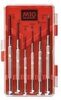
Jewellers screwdrivers - the flat head versions make great little chisels, they are easy to sharpen if you need to.
56FABF75-4407-415E-93AA-A556DDC48A8B.jpeg

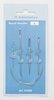
for sculpting creasess and folds in clothing, the different curves and shapes in set of darning needles are useful.
FA600949-2273-4CD3-876D-31F5F51BD192.jpeg

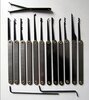
i bought a set lock-picking tools because I have always wanted to learn how to How to pick locks (it is worryingly straightforward). When they arrived I realised some are ideal for sculpting;
222FF5B5-8151-45C5-A479-A54ED030712F.jpeg
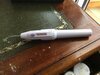
For a fiver on ebay I bought this battery powered nail polishing tool. It is a tight fit to get a Demel tool into its jaws but it is a lot quieter than the 'proper' ones.
BD9FAFA5-530E-4D73-B8E0-072808A40C7C.jpeg

anybody else what to share their non-modelling modelling tools?

Peter
 
The usual run of Cotton buds, hair grips, clothes pegs.

Another use for needles is by snipping the top of the eye away you get a CA applicator.

Do the tools used for making wooden bases count?
 
Very interesting Peter and thanks for giving away your sculpting secrets!

The lock picking tools remind me of the scientist Richard Feynman, who when working at Los Alamos on the atom bomb project in the 1940s, taught himself lock-picking, and was subsequently able to pick any lock on the base. He wanted to demonstrate that sensitive material could never truly be stored safely, and the whole thing became a game between himself and the administrators. He always won. As detailed in his book 'Surely You're Joking, Mr Feynman.'
 
Like Karl says, plastic clothes pegs with rubbery tips make excellent clamps. I tried the wooden ones but they're too slippery and wont grip the plastic.

I recently bought a pack of plastic shot glasses. I find with a blob of blue tack on the base, they make excellent handles for holding figures for painting.

Stainless steel chutney dishes are great for mixing washes, paints and diluting PVA.

The spatulas used for shaping and smoothing icing on cakes can do the same with thinner modelling clays and plaster.

A nail varnish shaker saves a lot of wear and tear on the arms when shaking paint prior to use - although sometimes the paint is too thick to mix with one.

Brake fluid and thick bleach make great paint and chrome removers respectively.
 
I also use plastic shot glasses, but for mixing paint before putting it in the airbrush. (I once lifted the wrong thinners and ended up with a cottage cheese like substance in my paint cup....)
 
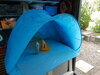
I needed something bigger than my spray booth for spraying the occasional large piece.
This goes perfectly on the freezer in the garage
IMG_20200830_153019088.jpg
it's a kids' beach shelter and a snip at £15.99

there's no extraction , though...........
 
Back
Top