
Theme editor

Scale Model Shop

Well whadya know?

stona

New member
Joined
Jul 22, 2008
Messages
9,889
Reaction score
9
Points
0
1/3
Thread owner
Cold weather means time to bleed the radiators. Do you know where that little radiator key thingy is?

After ransacking the kitchen draws and anywhere else I could think of, I was today's years old when I discovered that a drum key, of which I have many, will do the trick!
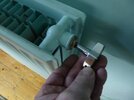
radiator key.jpg

I know this will not be useful for most people, but it took me sixty-five years to discover this, for at least fifty of which I have owned one or more drum keys, and I think it should be in the public domain :smiling3:
 
Cold weather means time to bleed the radiators. Do you know where that little radiator key thingy is?

After ransacking the kitchen draws and anywhere else I could think of, I was today's years old when I discovered that a drum key, of which I have many, will do the trick!


I know this will not be useful for most people, but it took me sixty-five years to discover this, for at least fifty of which I have owned one or more drum keys, and I think it should be in the public domain :smiling3:
I bet a rad key is cheaper though LOL……
 
NEVER knew you had to do this bleedin rads as ive never done an our C/H works fine ?
 
Cold weather means time to bleed the radiators. Do you know where that little radiator key thingy is?

After ransacking the kitchen draws and anywhere else I could think of, I was today's years old when I discovered that a drum key, of which I have many, will do the trick!


I know this will not be useful for most people, but it took me sixty-five years to discover this, for at least fifty of which I have owned one or more drum keys, and I think it should be in the public domain :smiling3:
Know drum keys very well from a couple of decades as a very amateur sound engineer.... Had never even considered the duel purpose!
 
Thread owner
NEVER knew you had to do this bleedin rads as ive never done an our C/H works fine ?
You don't have to, but I usually get a bit of air out of the (usually) upstairs radiators when I do it. Anything to make the system more efficient, especially when it's brass monkeys outside.
 
The best way to check if a radiator needs bleeding is to feel the top and the bottom when the heating is running. If the top feels hot all's well but if the top is cooler than the bottom there is air trapped in that radiator. It's worth checking Chris.
 
OK Jim many thanks for that info an will check our rads to see if ours need bleedin as by rights we should have a engineer come about this time of the yr to check the bolier an such but for some reason i he hasnt contacted us yet but will give it another month an then contack our land lord to tell him
chrisb
 
I know I've had one in the misc. section of the 'Tool Box' for decades.
 
NEVER knew you had to do this bleedin rads as ive never done an our C/H works fine ?
If its a fairly new system it might have automatic bleed valves. Or you are lucky to have a nice balanced system.
 
Never been lucky enough to have those Ian :sleeping2:
I Check mine regularly, because we have a microbore system that can airlock, but rarely have to bleed them. Only done so once this season, and that was after we had a rad removed and refitted for work. If you need to bleed them very often then your system probably needs you to add more inhibitor Steve. My rad key looks like a big clockwork train key by the way :tongue-out3:
 
Aaah the joys of central heating and their radiators, I remember them well, but fortunately a thing of the past for me.
 
Thread owner
Never been lucky enough to have those Ian :sleeping2:
I Check mine regularly, because we have a microbore system that can airlock, but rarely have to bleed them. Only done so once this season, and that was after we had a rad removed and refitted for work. If you need to bleed them very often then your system probably needs you to add more inhibitor Steve. My rad key looks like a big clockwork train key by the way :tongue-out3:
I usually do them once a year (maybe twice). I'd forgotten this year, which is why I did it today, and checked the water level in the system. Just a rather disappointing short hiss before the water arrived, so I reckon we're okay.

My radiator key was a tiny grey thing which I gave up looking for. Now I know a drum key works....
 
We have a microbore system, which has I think some muck in it. When we moved here in '93 the lid of the expansion tank was an offcut of kitchen worktop, the wrong way up, so the chipboard was disintegrating into the tank, and there was also a lot of scale as our water is fairly hard. For a long time I was needing to bleed the radiators every day!
We've now had it converted to a sealed system so air can't get in. I did have to bleed some gas earlier this winter so I'll get the inhibitor topped up when the boiler has its annual check.
Pete

PS I haven't got a clue what a drum key is!
 
Thread owner
PS I haven't got a clue what a drum key is!
It's a key, as in my piccy, that fits the heads of the screws that we tighten (or loosen) in the lugs to pull on the hoop and alter the tension in the head (skin) when we tune a drum. That sound a lot more complicated than it actually is! It also fits all the other bits of hardware, from stands and racks to the various adjustments of a bass drum pedal.
Drum manufacturers have somehow agreed on a standard size, though I expect that US keys (Ludwig, DW, Gretsch etc.) are imperial and others (Sonor/Germany, Tama/Japan, Mapex/Taiwan, etc.) are metric.

It's slightly oversized for the radiators, but works just fine.
 
It's a key, as in my piccy, that fits the heads of the screws that we tighten (or loosen) in the lugs to pull on the hoop and alter the tension in the head (skin) when we tune a drum. That sound a lot more complicated than it actually is! It also fits all the other bits of hardware, from stands and racks to the various adjustments of a bass drum pedal.
Drum manufacturers have somehow agreed on a standard size, though I expect that US keys (Ludwig, DW, Gretsch etc.) are imperial and others (Sonor/Germany, Tama/Japan, Mapex/Taiwan, etc.) are metric.

It's slightly oversized for the radiators, but works just fine.
Must admit Steve, I thought drum keys worked on hex nut heads, not square nut heads as are found on radiators?
Drum tensioners are the same as banjo tensioners aren’t they? Always think my banjo is a snare drum with strings…..
 
Thread owner
Must admit Steve, I thought drum keys worked on hex nut heads, not square nut heads as are found on radiators?
Drum tensioners are the same as banjo tensioners aren’t they? Always think my banjo is a snare drum with strings…..
The standard head on the tensioners and elsewhere is square for drum hardware.
 
The standard head on the tensioners and elsewhere is square for drum hardware.
Never knew that…..mind you, I found it a bit dangerous getting too close to the drummer in the bands I played in……
 
Thread owner
Never knew that…..mind you, I found it a bit dangerous getting too close to the drummer in the bands I played in……
I've got two grandkids who, when not hitting each other, like to take a swing at the e-kit I have set up in the house. Get too close to them and you'll lose an eye!
 
In my case it’s because I liked to stand on the snare side, being right handed it seemed tidier, and that’s the same side broken sticks fly out of…..
 
Back
Top