Ooh, ooh, I do know this one.
The colours started with the Gordon-Bennet Trophy in 1900. Gordon-Bennet was the proprietor of the New York Herald, who offered the Automobile Club de France a challenge trophy to various national automobile associations. The assigned colours were France Blue, Germany white, America red, Belgium yellow, but there was no British entry as motoring was sort of 'non-u' at the time. The first British entry was a Napier, painted red, in 1901. In the same year, the Englishman Charles Jarrott drove a Panhard, painted green, which was a lucky colour to the French, to assuage the bad luck of his car being numbered 13. For the 1902 G-B trophy, the Napiers were painted green. In 1903, the G-B trophy was held in Ireland, still part of the UK, as racing was actually banned on English roads. The Napiers were painted Emerald Green! The 'regulation' then assigned green to British cars. The last G-B race was run in 1905
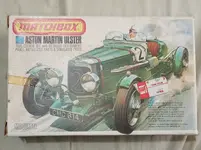
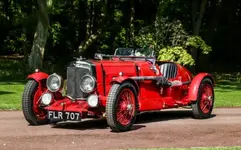
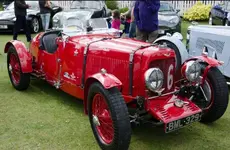
Then you get a short period of Grands Prix racing from 1906-1908. In 1911 L'Auto organised a race with national colours, but for the next few years of Grands Prix, British teams were either red or green. It wasn't until 1921 that the Grands Prix was revived, with the stipulated national colours, though the US may have changed to white with a blue stripe (that may not have happened until after WW2 tho'), and the Italians were entering with red cars; and that's a different shade of red for every manufacturer. The colours were true for National teams, but private entrants could have whatever colour they liked. And private cars could be whatever colour the buyer wanted. Hence the bright yellow and red Astons.
In the initial race of Grands Prix in 1946, British cars were officially supposed to be blue, with a Union Jack on the side, to distinguish them from French cars. There were Bentleys racing at Le Mans in that scheme in the early 'thirties. There was a bit of an outcry, so the cars went back to green
When the FIA established Formula 1 in 1950, national colours were again officially assigned. But you still had different manufacturers having different shades of green. BTW, Japans' national team raced in white in the late 'sixties (watch the Grand Prix movie!), because the US had pretty much dropped out of sending 'national' teams by then
So, to paraphrase two of my favourite YouTubes, 'Consider yourself updated. A little more in formation, a little more context, makes all the difference'
Phew!