Theme editor

Scale Model Shop

ICM 1/144 Type IIB Uboat ( 1943 )

Dave Ward

New member
Joined
Apr 27, 2018
Messages
10,549
Reaction score
43
Points
0
1/3
Thread owner
Fancy a floaty thing ( or semi-floaty), picked this from the stash.............................

icm IIB.jpg
I'm going to convert this to a waterline model - it means cutting off & throwing away about half the hull, but I hope it will be worth it!
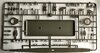
A few sprue shots
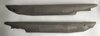
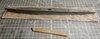
DSCF1308.JPGDSCF1309.JPGDSCF1310.JPG
There's no definitive waterline on the model, so I'm going to have to look at contemporary photos, to see where it actually is.
By 1943 most of the IIB boats were used as training vessels, but 6 were dismantled & transferred by water & road to the Black Sea
Dave
 
Dave, can you not just leave the hull in one piece, leave off all the underwater stuff and just bury the lower hull in whatever you are going to display it in?

Save all the work of cutting the thing in half.....

Oh, and be very careful when removing those flimsy railings.
 
Thread owner
Dave, can you not just leave the hull in one piece, leave off all the underwater stuff and just bury the lower hull in whatever you are going to display it in?

Save all the work of cutting the thing in half.....

Oh, and be very careful when removing those flimsy railings.

Ron,
that'd be too easy!....................;)
Dave
 
Thread owner
Off and cutting. I assembled the 3 parts of the hull, so I could lay out the waterline & cut without any discrepancies...................
DSCF1311.JPG
I marked the waterline with masking tape, then used a razor saw to cut transverse cuts to the masking tape - the saw will jam if you try to do long cuts
DSCF1312.JPG
After 10 mins of steady sawing - a waterline model - I've erred on the generous side, it's easier to remove excess than have to add bits. I'll get the waterline really flat, by sanding on a sheet of emery paper on a flat formica sheet ( drawer front ).
DSCF1313.JPG
The base would have to be at least 22mm thick to accommodate the full hull, a bit unwieldy, hence the waterline treatment. The hull will need a bit more work on it, but nothing major
Dave
 
Just seen this one Dave, so I’ve pulled up my chair. Very nice start with the cutting.
 
Thread owner
As a base, a piece of 0.75mm plastic card, edged with 1mm square strip to make a shallow tray.
DSCF1315.JPG
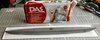
I've had this block of DAS in my cupboard for about 7 years, so I reckon it's time to use it ( it's still nice & soft! ) - I'll use a thin layer to give the water surface, let it dry thoroughly, before adding bow waves, texture etc. with further applications. I'll score the plastic base roughly, to give it a key, as DAS isn't noted for its adherence, which is why I'll build it up in thin layers.
Due to the shape of the sub, I'll apply the clay around the stuck down hull. If it were a conventional ship, I'd wrap the hull in clingfilm, so the hull could be removed. The sub hull just needs the anchors adding - all other detail is just added to the top deck.
Slow drying prevents large cracks, so It may take a day or so before I show any results.............
Dave
 
Coming along great Dave, you amaze me with the way you switch from vehicles to wingy things and boats.


Andy.
 
Thread owner
Coming along great Dave, you amaze me with the way you switch from vehicles to wingy things and boats.


Andy.
Andy,
I would get bored with one genre - I always like to vary whats on the bench ( or table ) - I even went veggie for 6 months last year! ( I got better, missed Steak & Kidney too much! )
Dave
 
I have to admit to having a preference for things with wheels although I did once build a Sergal kit of the Bounty about 25 years ago, to say it was a kit is a bit of a misnomer as only the ply keel and the bulkheads were pre-formed, the rest was just a box of wood, string PE and cloth for sails.

Andy.
 
Thread owner
First layer of DAS applied..........................
DSCF1316.JPG
It gradually turns white as it dries. My tool is what I would call a lolly stick, but sold as a drink stirrer - you can shape the end to produce whatever you like - keep it wet to prevent the clay from sticking. It's a damp cool day here, so the drying time is probably going to be a day or so. You don't want it to dry too quickly, as that will produce cracks & poor adhesion.
Next step will be to add bow wave, wake etc, using small bits of DAS applied pretty wet, so you can smooth the surface - I'm told that adding PVA can make the surface really shiny, I might try that................
Dave
 
Back
Top