Theme editor

Scale Model Shop

Making chilli sauce

PaulinKendal

SMF Supporters
Joined
Jul 13, 2021
Messages
1,729
Reaction score
266
Points
83
1/3
Thread owner
If you love commercial hot sauces (Encona, Sriracha etc.) you might consider making your own. I've started doing this, it's dead easy and absolutely delicious.

My first batch was made with Jalapeño peppers and garlic. You roughly chop the ingredients, cover them in brine and leave them to ferment. After a few weeks you drain off the brine, blitz the solids, then add some/all of the brine back in to give the consistency you're after.

I'm down to my last half bottle.
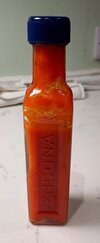
20230210_175953.jpg
Commercial sauces are fermented - it helps develop an amazing, complex flavour (Americans call it 'funky' - even if you don't particularly like sauerkraut, which is also fermented, you'll probably recognise the distinctive pong).

The brine is primarily there to deter the wrong sorts of bacteria from taking hold. Fortunately the probiotic bacteria we want, lactic acid bacteria (LAB), does well in brine, but harmful types do not.

LAB is present on and in the peppers, so you don't need to add anything - keep the chopped chillis in brine at room temperature and the LAB will do its work.

I've just started another batch, so I'll update this thread as it progresses. This time I've used scotch bonnet peppers, garlic, tomato, tinned peaches and tinned pineapple (the fruits complement the fruity flavours of the scotch bonnets, allegedly).

It takes about ten minute to prepare. I just remove the major part of the seeds (scotch bonnet peppers are fearsomely hot - you can leave the seeds in with milder varieties, or if you're Tarzan when it comes to chilli), roughly chop the flesh along with the chopped garlic, peach, tomato, pineapple and tomato. Pack it into a kilner jar, cover with brine and away it goes.
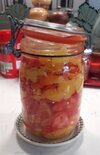
20230218_134018.jpg
I use a sauer stone - a puck-sized disc of glass - to keep the veg fully immersed, that stops the wrong bacteria getting a hold. Leave the lid ajar so the CO2 from fermentation can gas off and it's all systems go!
 
I’m 100% going to have a go with this at some point! What ratio brine do you use? Or does it not really matter?
 
Wow, chilli yoghurt…….lactobacilli are the core ingredient in live culture yoghurt.
We used to grow them commercially to be used as a silage activator as well……very useful bugs they are.
 
Thread owner
I’m 100% going to have a go with this at some point! What ratio brine do you use? Or does it not really matter?
I don't think it really matters. You roughly chop the chillis, pack them tightly in a jar and cover with the brine. So the amount of brine you need to add depends on how tightly you pack the chilli pieces.

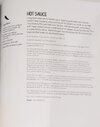
How salty does your brine need to be? That's largely a matter of taste, I believe. Here's a page from "Ferment you Vegetables" by Amanda Feifer, which may (or may not!) help.
20230219_100614.jpg

And here's the recipe from the same book I used as a starting point for my first go at this.
20230219_100912.jpg
My sense is that this is not an exact science. However, if my current batch goes pear-shaped, I'll certainly let folks know on this thread!
 
Thread owner
Wow, chilli yoghurt…….lactobacilli are the core ingredient in live culture yoghurt.
We used to grow them commercially to be used as a silage activator as well……very useful bugs they are.
Yep, they're the 'probiotic' part of the little pots of (allegedly) gut microbiome-enhancing yoghurt consumed in such volumes these days. Personally I would rather enjoy my own fermented chilli sauce than eat these rather expensive 'wonder' products!

If you don't boil your fermented sauce, then the benefits of fermentation - even more vitamins than the raw veg and increased digestibility of the mineral content - are retained. Commercial sauces are stabilised by boiling, which eliminates lots of the dietary benefits.

Some recipes recommend boiling to stop fermentation. You can also store the sauce in the fridge to slow fermentation right down, but it will continue, albeit very slowly. I just put it in the cupboard alongside the HP, and enjoy the subtle change in flavour over time.
 
Yep, they're the 'probiotic' part of the little pots of (allegedly) gut microbiome-enhancing yoghurt consumed in such volumes these days. Personally I would rather enjoy my own fermented chilli sauce than eat these rather expensive 'wonder' products!

If you don't boil your fermented sauce, then the benefits of fermentation - even more vitamins than the raw veg and increased digestibility of the mineral content - are retained. Commercial sauces are stabilised by boiling, which eliminates lots of the dietary benefits.

Some recipes recommend boiling to stop fermentation. You can also store the sauce in the fridge to slow fermentation right down, but it will continue, albeit very slowly. I just put it in the cupboard alongside the HP, and enjoy the subtle change in flavour over time.
Back in the day, when they had taste, flavour, and texture, all yoghurt contained lactobacillus Paul. These days they taste like liquid plastic so god knows what they use…..certainly doesn’t smell like lactobacillus.

A couple of slight misunderstandings in your text here, so I’ll try to clarify as best I can ( this is what I did for a living for over thirty years ;)).

Commercial fermentation undergoes sterilisation by steam so that unwanted organisms are eliminated. The production organism is then aseptically introduced so that the fermentation is grown as a controlled monoculture. This is the most cost effective way to produce a commercial end product. Any other approach risks loss of saleable product at best, and a danger to the consumer at worst……

Boiling of the finished product would be carried out to give a known start point for the tested shelf and user life. Yes, some vitamins and minerals are heat labile and will be damaged, but remember this product is being sold as a taste enhancer, not a dietary staple. If they were essential they could be added back in by sterile filtration into the product bulk. We used to do that with antibiotics during pharmaceutical production. The reason they don’t taste so good is because you don’t spin out the core ingredients of your home made sauce with filler….yours will be all flavour :thumb2:

Boiling will slow fermentation, by reducing the bioburden in the product, but it will not stop it. It simply isn’t a valid way of sterilising a bulk. To do that you need a minimum temperature of 121 for a minimum of 15 minutes. Refrigeration works as a preservative because most bacteria pretty much stop respiring below ten degrees

To be honest, home made sauces, jams and chutneys (I’ve made the last two for years) keep without spoiling due to air tight storage and the antibacterial effect of the concentration of salt and sugar in the product. I only refrigerate mine once they are opened and can get at least two years out of a batch.

The most important thing is that you enjoy the product though, so more power to your elbow…..
 
Thread owner
Thanks for the clarification, Tim. All makes sense to me!

I also make chutney and jam. Or rather marmalade - tons of it!
20230205_103945.jpg
 
We have a variety of local chilli sauces here that don't taste anywhere like their western counterparts. I've always wondered why Tabasco is famous...it's just heat and vinegar. Most of the time we prefer freshly made chilli sauce called sambal tumis made with fresh chillis seeds and all with shallots, garlic, shrimp paste pounded in pestle and motar topped with a couple of squeezed lime juice. The only fermented chillie sauce I know is Tempoyak with fermented durian and Cincalok a sour sauce made from fermented tiny pink shrimp. The tiny black dots in this sauce are the shrimp eyes. All these can be eaten just with plain rice or as a dip with cucumbers or prawn crackers.
Ofcourse nothing can beat the sambal in the Nasi Lemak.
If you guys like Chutneys then try Salt Fish chutneys...man that too can be eaten alone with plain rice.
The Vietcong rations were salt fish and rice. All they needed for flavour and greens were wild chillie, young mango, bamboo shoots and Tapioca leaves which can be found when they trek through the jungle. Pluck a banana for dessert. :smiling6:
Paul, I think your chillie sauce with tomato and peach sounds delicious too.

Cheers,
Wabble
 
Thanks for the clarification, Tim. All makes sense to me!

I also make chutney and jam. Or rather marmalade - tons of it!
Normal sugar, oranges, a little water, and nothing else…..what’s not to like…..you simply cannot buy marmalade like it…..
 
Marmalade yes, but not the garlic ! I like it but
banned at Race Towers by Mrs R :confused:
 
YEA i hate garlic urg an peppers of any kind these hot curries again to me id be ill for a month as i said on the other thread you guys must have cast iron stomakes phew but each to his or her own i suppose
chrisb
 
Thread owner
YEA i hate garlic urg an peppers of any kind these hot curries again to me id be ill for a month as i said on the other thread you guys must have cast iron stomakes phew but each to his or her own i suppose
chrisb
No garlic or chilli in my marmalade Chris, promise!
 
No garlic or chilli in my marmalade Chris, promise!
WELL Good for you Paul on that but i dont like marmalade either lol but you have done very good to make it as in the kitchen im a disater waitin to happen what with exsplodein omeletes Aaaaaaacccchhh an jen wont let me try an do any more cookin but i can do a beefburger in the microwave so i'll not starve lol
chrisb
 
A microwaved beefburger? Be still my fluttering stomach! (And you don't have a cast-iron stomach Chris ... )
Steve
 
Thread owner
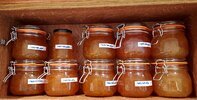
Kendal is too small (and, dare I say it, too Anglo-Saxon) to have any Asian mini-markets, so I have to wait until I'm somewhere more diverse to get chillis in bulk at a sensible price for this chilli sauce.

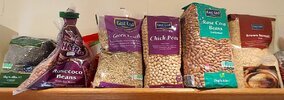
I stock up on dried pulses at the same time.
20230220_122253.jpg

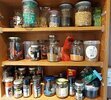
And yes, I do cook my own curries!
20230220_122335.jpg
I can even make chapati and paratha, from scratch - of which I'm rather proud, for a white boy!
 
Back
Top