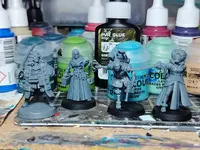
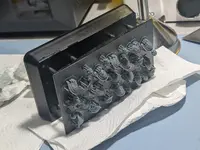
So, my son and I have purchased a resin 3D printer and I'm going to document how we're getting along with it. I'm struggling to find the time to post if I'm honest but I'll make a start and add to it as and when I can.
This is definitely not a how-to or tutorial as I'm a complete beginner myself, but hopefully it might help those that are thinking of taking the plunge to see how it goes right from the very start.
And this is how it started. I missed out on some extra Bank Holiday week discounts but around £400 got me a complete package of everything I needed, including 10l of IPA for cleaning.
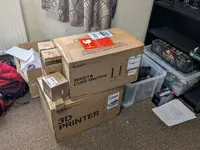
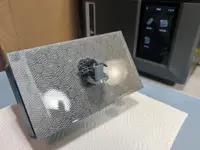
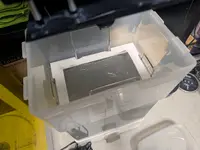
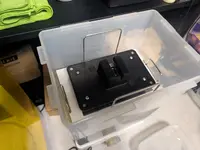
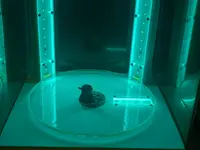
I could have spent less, the wash & cure machine isn't absolutely essential, but it seems much more elegant and efficient than other DIY options of washing the prints in a bucket of IPA then curing them in sunlight.
I also bought the wash & cure as separate machines as I had the desk space. If room is tight there are combination stations available that do both jobs but take a bit of reconfiguring between the two operations.
There was a small amount of assembly to do, mainly because everything is packaged separately to avoid damage in transit, but nothing that would tax a modeller. I probably took around an hour unpacking, assembling, and positioning it all, the hardest part being ferreting under my desk to run the cables neatly.
On that point, this wash & cure combo share a cable, so I only needed two outlets for the three pieces of equipment.
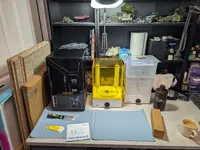
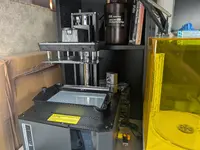
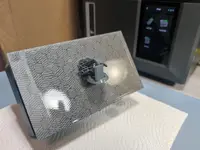
And this is the business end of the printer itself, with the UV protective cover removed. It will operate without it fitted but it's strongly recommended to keep it in place whenever possible to prevent stray UV from curing the resin in the vat at the bottom, or it getting contaminated with dust etc.
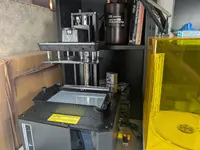
At the bottom you see the resin vat. On this model it moves around while printing (I'll get into why another time) and above you see the build plate, where the print actually forms, upside down.
All in all it was around 90 minutes before I set my first test print going, a file from the supplied USB stick. It could have been much faster if I'd not bothered getting the other machines in place too, or setting up the WiFi, software, firmware updates etc, but I was in no rush.
This particular machine - Elegoo Mars 5 Ultra is very beginner friendly so all set up steps are pretty much automatic, or explained very simply in the manual, so there's absolutely nothing to fear.
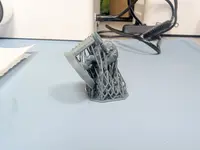
Here's the first print in progress
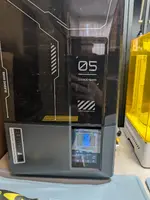
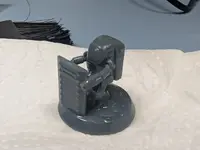
And the finished article, after about 2 hours of printing
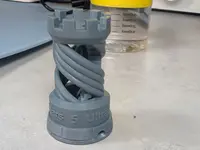
It's around 2 inches high and much of the detail is hidden inside, with a spiral staircase and unsupported handrail. If this was a taste of things to come, I was excited!
I have much more to add but at least I've kicked off.
Very quick conclusions : So far it's a much more straightforward process than I'd imagined, but you need to be organised or it can get very messy, very quickly. After just a few prints though we'd got into a system that cuts the mess down dramatically.
This is definitely not a how-to or tutorial as I'm a complete beginner myself, but hopefully it might help those that are thinking of taking the plunge to see how it goes right from the very start.
And this is how it started. I missed out on some extra Bank Holiday week discounts but around £400 got me a complete package of everything I needed, including 10l of IPA for cleaning.
I could have spent less, the wash & cure machine isn't absolutely essential, but it seems much more elegant and efficient than other DIY options of washing the prints in a bucket of IPA then curing them in sunlight.
I also bought the wash & cure as separate machines as I had the desk space. If room is tight there are combination stations available that do both jobs but take a bit of reconfiguring between the two operations.
There was a small amount of assembly to do, mainly because everything is packaged separately to avoid damage in transit, but nothing that would tax a modeller. I probably took around an hour unpacking, assembling, and positioning it all, the hardest part being ferreting under my desk to run the cables neatly.
On that point, this wash & cure combo share a cable, so I only needed two outlets for the three pieces of equipment.
And this is the business end of the printer itself, with the UV protective cover removed. It will operate without it fitted but it's strongly recommended to keep it in place whenever possible to prevent stray UV from curing the resin in the vat at the bottom, or it getting contaminated with dust etc.
At the bottom you see the resin vat. On this model it moves around while printing (I'll get into why another time) and above you see the build plate, where the print actually forms, upside down.
All in all it was around 90 minutes before I set my first test print going, a file from the supplied USB stick. It could have been much faster if I'd not bothered getting the other machines in place too, or setting up the WiFi, software, firmware updates etc, but I was in no rush.
This particular machine - Elegoo Mars 5 Ultra is very beginner friendly so all set up steps are pretty much automatic, or explained very simply in the manual, so there's absolutely nothing to fear.
Here's the first print in progress
And the finished article, after about 2 hours of printing
It's around 2 inches high and much of the detail is hidden inside, with a spiral staircase and unsupported handrail. If this was a taste of things to come, I was excited!
I have much more to add but at least I've kicked off.
Very quick conclusions : So far it's a much more straightforward process than I'd imagined, but you need to be organised or it can get very messy, very quickly. After just a few prints though we'd got into a system that cuts the mess down dramatically.


 )
)