


You are using an out of date browser. It may not display this or other websites correctly.
You should upgrade or use an alternative browser.
You should upgrade or use an alternative browser.
Battle of Britain diary
- Thread starter colin m
- Start date
Something that surprised me at this stage of the battle are the huge numbers of aircraft involved. With these numbers, it would seem, this stage of the war would last forever.
The Luftwaffe could send raids of 300+ aircraft two or three times a day, for a limited period. A few days of operations at such intensity would inevitably lead to a period of recuperation. It was a problem for the Germans, who struggled to maintain pressure, and a self evident relief for Fighter Command which could repair damaged infrastructure and shuffle squadrons and aircrew.
You can see from the numbers that Fighter Command would sometimes commit 10 or more squadrons to the defence. This might be 120-150 fighters at this stage, when the squadrons could almost invariably field a full complement of 12 aircraft. There were occasions when even more were committed. The Germans never met 150 fighters in one go. Park's tactics meant that they were harassed from the coast until they were either turned back or reached their targets, they were then harassed back to the coast and out to sea. His basic tactical unit was a single squadron. It would be unusual for more than two or three squadrons to be engaged with an enemy raid at any one time, which is why in British accounts the pilots always feel that they were hugely outnumbered. These tactics definitely affected German morale. It seems to have given the impression that the RAF had an almost limitless supply of aircraft which just kept coming at the bombers.
It was entirely possible that more than 500 aircraft could be involved on two or three occasions on the same day.
The problem was that despite the numbers the Germans were not destroying enough British Fighters. By far the best way to destroy an air force is on the ground and avoiding this was one of the great advantages of Dowding's system. You can see that the occasions in which a FIGHTER Command squadron was caught on the ground were rare. I haven't read back through the posts, but so far I think it has happened just twice. German doctrine did not really encompass a long slog, a battle of attrition, but sought a decisive blow, or series of blows, to settle the issue. Unfortunately for them, by this stage the Battle of Britain had become a battle of attrition.
The Germans had started off trying to destroy British aircraft, not least because they underestimated their numbers and the capacity of the British aircraft industry. The British problem was not aircraft, it was always pilots. This would come to a head in early September. The German problem was that they were trying to conserve their strength for future operations but were losing aircraft and aircrew at an unsustainable rate.
Even without hindsight it is clear that that the decisive phase of the contest was being fought. The Germans had obvious time constraints, barely two weeks until the proposed invasion. Both sides were suffering losses that were worrying the respective commanders. The question was, who would crack first?
I wish I could remember which book I read when the author (pilot) noted that aircraft was never a problem. I think he was even surprised at how quickly new aircraft appeared to replace lost / damaged aircraft. So, if we could build them this quickly, what was wrong with the Germans ? Then again, we were mainly replacing small fighters, the Germans were dealing with loosing larger aircraft, which just take longer to produce.The British problem was not aircraft, it was always pilots.

1/3
It would be interesting to see the production figures for the main types during this period....I seem to remember that Germany was not at war production until about 1942.

1/3
German industry was very inefficent, no women brought in, factories still making luxury goods, people still having servants. Hitler thought women should be at home and producing children, he also did not want to lower living standards. I think the UK outbuilt Germany on everything apart from rifles!
When Albert Speer took over he found one plane had over 3000 different types of nuts an bolts etc!
When Albert Speer took over he found one plane had over 3000 different types of nuts an bolts etc!
I've have some production figures...somewhere.
The number of airframes is not always the best measure, that being airframe weight, which accounts for building heavier aircraft (meaning primarily bombers and/or transports). Without looking I'm sure that the UK out-produced Germany in 1940.
Somewhere, on one of my shelves, is a book containing that information. The problem is I don't remember which one :smiling3:
What is certain is that the Luftwaffe started Barbarossa with only slightly more total aircraft than it started operations in the West in May 1940 (4,882 to 4,782). Crucially it had 200 fewer bombers in June 1941 (1,511 to 1,711) and FAR fewer twin engine fighters, principally the Bf 110, which proved a very useful aircraft in the East (188 to 354). It had never come close to making up the losses of these types.
The number of airframes is not always the best measure, that being airframe weight, which accounts for building heavier aircraft (meaning primarily bombers and/or transports). Without looking I'm sure that the UK out-produced Germany in 1940.
Somewhere, on one of my shelves, is a book containing that information. The problem is I don't remember which one :smiling3:
What is certain is that the Luftwaffe started Barbarossa with only slightly more total aircraft than it started operations in the West in May 1940 (4,882 to 4,782). Crucially it had 200 fewer bombers in June 1941 (1,511 to 1,711) and FAR fewer twin engine fighters, principally the Bf 110, which proved a very useful aircraft in the East (188 to 354). It had never come close to making up the losses of these types.
1/3
Same for tank production! In a book someone worked out that if they had ramped up tank build they could have had in the region of 1500 plus extra plus more planes etc. Grateful they did not!
I think it fair to say that German aircraft production took a while to ramp up.
If we look at the Bf 109 which was by far the most produced German fighter, 449 were produced in 1939 and 1,719 in 1940. That may seem a lot until you see that 14,765 were produced in 1944.
(Figures from 'German Aircraft Industry and Production 1933-1945, Vajda and Dancey)
There were only three weeks between that ending on 6 July and that ending on 2 November in which the British suffered a net loss of S/E fighters. Unsurprisingly, this happened at the peak of the Battle, but even here there was a positive week. Week ending 17 August, -78, the single biggest deficit of the entire Battle. Weeks ending 24 August +22, 31 August -40, 7 September -63.
In this period the British produced 1,047 Hurricanes and 620 Spitfires a combined total of 1,667 S/E fighters. In 18 weeks the British almost matched the entire year's output of Bf 109s in Germany.
If we look at the Bf 109 which was by far the most produced German fighter, 449 were produced in 1939 and 1,719 in 1940. That may seem a lot until you see that 14,765 were produced in 1944.
(Figures from 'German Aircraft Industry and Production 1933-1945, Vajda and Dancey)
There were only three weeks between that ending on 6 July and that ending on 2 November in which the British suffered a net loss of S/E fighters. Unsurprisingly, this happened at the peak of the Battle, but even here there was a positive week. Week ending 17 August, -78, the single biggest deficit of the entire Battle. Weeks ending 24 August +22, 31 August -40, 7 September -63.
In this period the British produced 1,047 Hurricanes and 620 Spitfires a combined total of 1,667 S/E fighters. In 18 weeks the British almost matched the entire year's output of Bf 109s in Germany.
Wednesday 28 August
There was cloud in the Channel, but clearer inland
Today the Luftwaffe came back in force.
Fighter Command had shuffled Nos. 32 and 65 Squadrons rotated out of, and Nos. 603 and 79 Squadrons rotated in to 11 Group. Both would be in action today.
O8.00 saw a substantial raid developing over Cap Gris Nez. Predicting a genuine raid 11 Group scrambled Nos. 79, 615 and 264 (Defiants) Squadrons. The raid comprised 20 He 111s, 20 Do 17s with and escort of 60 Bf 109s. As the raid crossed the coast two more squadrons, Nos 501 and 616, were scrambled to patrol inland of the coast. The raid headed for Eastchurch (again!) where two Fairey Battles were destroyed in the bombing. Several squadrons made contact with the raid and the RAF came off worst. 264 squadron’s Defiants again proved vulnerable, 4 were shot down and another 5 damaged. 3 Hurricanes were also lost. The Luftwaffe lost 3 Bf 109s.
The next action took place shortly after 11.00 when 6 Hurricanes from No 79 Squadron intercepted 2 He 59 floatplanes, escorted by 3 Bf 110s. Both He 59s were shot down for no loss.
At midday another raid was detected forming up over the French coast. Nos 615 and 54 Squadrons were scrambled to patrol airfields and as the first of what turned out to be two raids crossed the coast at Dungeness Nos 56, 1 and 603 Squadrons were also despatched. No 615 intercepted the first raid, a Freijagd of 30 Bf 109s. Another Freijagd also swept ahead of the bombers, 27 Do 17s of II./KG 3 with its own escort of more Bf 109s. No 54 Squadron had reached 30,000 feet and dived on the Dorniers, 56 Squadron attacked off the north Kent coast, No 1 Squadron near Southend and finally No 603 squadron attacked Bf 109s as the raid withdrew. 2 RAF fighters were shot down and another damaged. A notable victim was F/O A C ‘Al’ Deere who was shot down by an unidentified Spitfire as he himself engaged a Bf 109, another example of ‘friendly fire’. Deere bailed out and landed unhurt in a plum tree. The Luftwaffe lost 2 Bf 109s and 2 Do 17s. That of Lt Peter Krug and his crew made a forced landing just off Foreness point and he and his crew were fortunate to be rescued by the coxswain of the Margate lifeboat, who was out fishing in his own boat in the area.
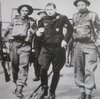
Above, Lt Peter Krug is marched into captivity. It is true that some downed German airmen were roughly handled, particularly during and after the Blitz, but usually they were not badly treated. Christabel Leighton-Porter, who modelled for the Daily Mail cartoon character Jane, was in Lyme Regis when she experienced a German raid.
"They shot down a German plane and I remember all the people on the beach getting in a circle and then a boat brought in the Germans that had baled out. Everybody was shouting. Even the little kiddies were encouraged to join in and boo. But when the Germans got out of the boat, people saw that these were very frightened young blond boys and everybody went very quiet."
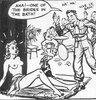
Edit: I couldn't find an image of Christabel, but I did find one of her cartoon character Jane. For reasons rarely specified, Jane had a tendency to lose her clothing, though she did not appear without at least her undies until 1943.
The next attack developed at 15.50 and the Luftwaffe used an entirely new tactic.
Seven small groups of Bf 109s varying in strength from 12 to 30 flew over Kent. The total was estimated at 100+ aircraft (which was accurate). 11 Group controllers could only send their squadrons to patrol lines, waiting for the German bombers. The bombers never came and a bizarre cat and mouse game developed between the opposing fighter forces across Kent. Nos 610, 85, 54, 56, 603 and 151 Squadrons all tangled with the Bf 109s. The RAF lost 4 fighters with 2 more damaged. The Luftwaffe lost 6 Bf 109s.
The final major action of the day came at 19.00 when another fighter sweep of 60 Bf 109s came across the Kent coast. Fighter Command did not react to this raid, but 11 Spitfires of No 603 Squadron, which were already on a defensive patrol, tangled with the Bf 109s. P/O N J V Benson was shot down and killed. The Luftwaffe lost 1 Bf 109.
In a strange incident the pilot of a Go 145 biplane trainer aircraft got lost on a routine mail flight in France and eventually landed, short of fuel, at Race Hill near Lewes. For Uffz Leonhard Buckle the war was unexpectedly over. The aircraft was adopted by the RAF with serial number BV207, before transferring to Maintenance Command with a new number, 2682M. By all accounts it was a pleasant aircraft to fly.
At the end of the day the RAF had lost 13 aircraft with 9 more damaged. The Luftwaffe had lost 23 aircraft with 4 more damaged.
The Luftwaffe would be back tonight, 340 bombers flew sorties over the UK. Bombs were widely scattered
There was cloud in the Channel, but clearer inland
Today the Luftwaffe came back in force.
Fighter Command had shuffled Nos. 32 and 65 Squadrons rotated out of, and Nos. 603 and 79 Squadrons rotated in to 11 Group. Both would be in action today.
O8.00 saw a substantial raid developing over Cap Gris Nez. Predicting a genuine raid 11 Group scrambled Nos. 79, 615 and 264 (Defiants) Squadrons. The raid comprised 20 He 111s, 20 Do 17s with and escort of 60 Bf 109s. As the raid crossed the coast two more squadrons, Nos 501 and 616, were scrambled to patrol inland of the coast. The raid headed for Eastchurch (again!) where two Fairey Battles were destroyed in the bombing. Several squadrons made contact with the raid and the RAF came off worst. 264 squadron’s Defiants again proved vulnerable, 4 were shot down and another 5 damaged. 3 Hurricanes were also lost. The Luftwaffe lost 3 Bf 109s.
The next action took place shortly after 11.00 when 6 Hurricanes from No 79 Squadron intercepted 2 He 59 floatplanes, escorted by 3 Bf 110s. Both He 59s were shot down for no loss.
At midday another raid was detected forming up over the French coast. Nos 615 and 54 Squadrons were scrambled to patrol airfields and as the first of what turned out to be two raids crossed the coast at Dungeness Nos 56, 1 and 603 Squadrons were also despatched. No 615 intercepted the first raid, a Freijagd of 30 Bf 109s. Another Freijagd also swept ahead of the bombers, 27 Do 17s of II./KG 3 with its own escort of more Bf 109s. No 54 Squadron had reached 30,000 feet and dived on the Dorniers, 56 Squadron attacked off the north Kent coast, No 1 Squadron near Southend and finally No 603 squadron attacked Bf 109s as the raid withdrew. 2 RAF fighters were shot down and another damaged. A notable victim was F/O A C ‘Al’ Deere who was shot down by an unidentified Spitfire as he himself engaged a Bf 109, another example of ‘friendly fire’. Deere bailed out and landed unhurt in a plum tree. The Luftwaffe lost 2 Bf 109s and 2 Do 17s. That of Lt Peter Krug and his crew made a forced landing just off Foreness point and he and his crew were fortunate to be rescued by the coxswain of the Margate lifeboat, who was out fishing in his own boat in the area.
Above, Lt Peter Krug is marched into captivity. It is true that some downed German airmen were roughly handled, particularly during and after the Blitz, but usually they were not badly treated. Christabel Leighton-Porter, who modelled for the Daily Mail cartoon character Jane, was in Lyme Regis when she experienced a German raid.
"They shot down a German plane and I remember all the people on the beach getting in a circle and then a boat brought in the Germans that had baled out. Everybody was shouting. Even the little kiddies were encouraged to join in and boo. But when the Germans got out of the boat, people saw that these were very frightened young blond boys and everybody went very quiet."
Edit: I couldn't find an image of Christabel, but I did find one of her cartoon character Jane. For reasons rarely specified, Jane had a tendency to lose her clothing, though she did not appear without at least her undies until 1943.
The next attack developed at 15.50 and the Luftwaffe used an entirely new tactic.
Seven small groups of Bf 109s varying in strength from 12 to 30 flew over Kent. The total was estimated at 100+ aircraft (which was accurate). 11 Group controllers could only send their squadrons to patrol lines, waiting for the German bombers. The bombers never came and a bizarre cat and mouse game developed between the opposing fighter forces across Kent. Nos 610, 85, 54, 56, 603 and 151 Squadrons all tangled with the Bf 109s. The RAF lost 4 fighters with 2 more damaged. The Luftwaffe lost 6 Bf 109s.
The final major action of the day came at 19.00 when another fighter sweep of 60 Bf 109s came across the Kent coast. Fighter Command did not react to this raid, but 11 Spitfires of No 603 Squadron, which were already on a defensive patrol, tangled with the Bf 109s. P/O N J V Benson was shot down and killed. The Luftwaffe lost 1 Bf 109.
In a strange incident the pilot of a Go 145 biplane trainer aircraft got lost on a routine mail flight in France and eventually landed, short of fuel, at Race Hill near Lewes. For Uffz Leonhard Buckle the war was unexpectedly over. The aircraft was adopted by the RAF with serial number BV207, before transferring to Maintenance Command with a new number, 2682M. By all accounts it was a pleasant aircraft to fly.
At the end of the day the RAF had lost 13 aircraft with 9 more damaged. The Luftwaffe had lost 23 aircraft with 4 more damaged.
The Luftwaffe would be back tonight, 340 bombers flew sorties over the UK. Bombs were widely scattered
1/3
Another great report Steve. Reading the last bit about German night raids, something else I seem to recall is that bomber command attacked (or attempted to attack) German airfields to disrupt the sleep of German pilots. Is there any truth in this or am I making this up? 
Bomber Command certainly attacked Luftwaffe airfields, though most of the operations at this time were by day, as long as there was sufficient cloud cover.
The 'Bomber Command War Diaries' do show that this month (August) airfields in Holland were attacked on the nights of 6/7, 9/10 and 16/17. French airfields were attacked on the night of 12/13 and then again on 17/18, 19/20, 22/23, 25/26, 28/29, 29/30, 30/31. In addition those in Holland and Belgium were attacked on the night of 31/1.
I would say there was a fairly concerted night time effort to attack Luftwaffe airfields along the Channel and North Sea Coasts from 17th August on. They don't seem to have caused much physical damage, they were often inaccurate and I doubt that the intention was to disrupt the sleep of German aircrew, but if they triggered air raid alarms and got them out of their cots I'm sure that would be regarded as a bonus.
Bomber Command was not exactly the rapier that pre-war proponents of the bomber had claimed, and its role in the Battle of Britain, however ineffective, is usually ignored. We, of course, don't even count its losses in our final tallies.
The 'Bomber Command War Diaries' do show that this month (August) airfields in Holland were attacked on the nights of 6/7, 9/10 and 16/17. French airfields were attacked on the night of 12/13 and then again on 17/18, 19/20, 22/23, 25/26, 28/29, 29/30, 30/31. In addition those in Holland and Belgium were attacked on the night of 31/1.
I would say there was a fairly concerted night time effort to attack Luftwaffe airfields along the Channel and North Sea Coasts from 17th August on. They don't seem to have caused much physical damage, they were often inaccurate and I doubt that the intention was to disrupt the sleep of German aircrew, but if they triggered air raid alarms and got them out of their cots I'm sure that would be regarded as a bonus.
Bomber Command was not exactly the rapier that pre-war proponents of the bomber had claimed, and its role in the Battle of Britain, however ineffective, is usually ignored. We, of course, don't even count its losses in our final tallies.
1/3
Cheers Steve

Thursday 29 August
Low cloud and showers in the morning, sunny later but cloud lingered over the Channel.
Today the Luftwaffe’s bombers were unable to sustain their effort. Two large raids were made, but though 700 fighter sorties were flown just 20 were flown by the bombers.
15.50 saw a raid approaching the coast at Dungeness. 20 He 111s escorted by 100 Bf 109s and 40 Bf 110s were met by fighters from Nos 603, 610, 616 and 85 Squadrons. Most of the RAF’s fighters failed to reach the bombers, reflected in the losses as a result of this action. 3 of the RAF’s fighters were shot down and another 4 damaged. The Luftwaffe lost 6 aircraft, all Bf 109s.
At 18.45 an estimated 120 Bf 109s, many in smaller formations appeared over the Channel off Dungeness. These small formations crossed the coast on a wide front but did not penetrate far inland. No 501 Squadron was dispatched along with several fresh from the previous raid, Nos 85, 610 and 603. Various combats took place along the coast and over the Channel, by definition these were fighter vs fighter. The RAF lost 4 of its fighters to the Luftwaffe’s 2 Bf 109s.
The weather was always an issue during the Battle. Today S/Ldr Townsend of 85 Squadron highlighted this in his combat report from the second action.
“Weather conditions extremely difficult. Thick haze below, obscuring ground, sun very bright giving diffused light.”
At the end of the day the RAF had lost 9 fighters, with another 3 damaged. The Luftwaffe had exactly the same figures for operations against Britain, its overall losses were considerably higher.
Merseyside was heavily bombed tonight, for a second time.
Much is made of the fate of German aircrew who arrived unintentionally in Britain. They would spend the rest of the war in captivity. The same applies for damaged aircraft. The number of damaged aircraft making it back to bases in France where they might be repaired was much smaller that the number of British aircraft being recovered and repaired. Many of the Luftwaffe aircraft that made forced landings in Britain were repairable, but instead they would be scrapped, valuable materials salvaged and recycled by the British aircraft industry. Some would be used to raise funds and morale, as was the case with Werner Bartels’s Bf 109.
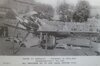
Incidentally, a local member of the Auxiliary Fire Service, Walter Solly, was prosecuted and fined by local magistrates for ‘liberating’ the pilot’s side arm from the cockpit of this Messerschmitt!
The weather forecast was ominous for Fighter Command, the meteorological officers were predicting an extensive anticyclone covering N W Europe, bringing several days of fine weather.
Today No 501 Squadron’s Bill Green was shot down. Most RAF pilots had minimal or no parachute training at all, just some instruction on the ground. Bill recounted his experience.
“There was a crash of glass, and a hole appeared in the middle of the supposedly bullet-proof windscreen about the size of a tennis ball, or a little larger. I heard bits falling into the cockpit and I was immediately covered in glycol liquid coolant. The aircraft was finished, the stick was just like any old bit of stick. I realised I had to get out and I already had the hood back and I got as far as just taking the weight on my feet and I was gone. I think my head must have been exposed to the wind and I was just sucked out. I found myself in space and I started to roll around trying to find the parachute release and thought to myself, I’m never going to find this ripcord.”
He eventually found it, pulled it, but nothing happened.
“I was going through the air at one hundred and forty miles per hour, terminal velocity, and the wind noise was terrific. I really thought my number was up”
His parachute was trapped between his legs. Finally, at a few hundred feet above the ground it freed itself and the canopy deployed.
“There was a jolt when the parachute kicked me backwards. After the noise of the freefall, I was struck by the sudden quiet. It made more impact on me than any noise I’d ever heard. I though, Gosh, I’m all right. I’d picked up some cannon splinters in my leg, and it was swollen and in the centre there was a hole, just as if you’d stuck a pencil right through it. When I got back to Hawkinge I went to the sick quarters and the doctor laid me out and started probing around with what looked like a knitting needle. I fainted.”
Low cloud and showers in the morning, sunny later but cloud lingered over the Channel.
Today the Luftwaffe’s bombers were unable to sustain their effort. Two large raids were made, but though 700 fighter sorties were flown just 20 were flown by the bombers.
15.50 saw a raid approaching the coast at Dungeness. 20 He 111s escorted by 100 Bf 109s and 40 Bf 110s were met by fighters from Nos 603, 610, 616 and 85 Squadrons. Most of the RAF’s fighters failed to reach the bombers, reflected in the losses as a result of this action. 3 of the RAF’s fighters were shot down and another 4 damaged. The Luftwaffe lost 6 aircraft, all Bf 109s.
At 18.45 an estimated 120 Bf 109s, many in smaller formations appeared over the Channel off Dungeness. These small formations crossed the coast on a wide front but did not penetrate far inland. No 501 Squadron was dispatched along with several fresh from the previous raid, Nos 85, 610 and 603. Various combats took place along the coast and over the Channel, by definition these were fighter vs fighter. The RAF lost 4 of its fighters to the Luftwaffe’s 2 Bf 109s.
The weather was always an issue during the Battle. Today S/Ldr Townsend of 85 Squadron highlighted this in his combat report from the second action.
“Weather conditions extremely difficult. Thick haze below, obscuring ground, sun very bright giving diffused light.”
At the end of the day the RAF had lost 9 fighters, with another 3 damaged. The Luftwaffe had exactly the same figures for operations against Britain, its overall losses were considerably higher.
Merseyside was heavily bombed tonight, for a second time.
Much is made of the fate of German aircrew who arrived unintentionally in Britain. They would spend the rest of the war in captivity. The same applies for damaged aircraft. The number of damaged aircraft making it back to bases in France where they might be repaired was much smaller that the number of British aircraft being recovered and repaired. Many of the Luftwaffe aircraft that made forced landings in Britain were repairable, but instead they would be scrapped, valuable materials salvaged and recycled by the British aircraft industry. Some would be used to raise funds and morale, as was the case with Werner Bartels’s Bf 109.
Incidentally, a local member of the Auxiliary Fire Service, Walter Solly, was prosecuted and fined by local magistrates for ‘liberating’ the pilot’s side arm from the cockpit of this Messerschmitt!
The weather forecast was ominous for Fighter Command, the meteorological officers were predicting an extensive anticyclone covering N W Europe, bringing several days of fine weather.
Today No 501 Squadron’s Bill Green was shot down. Most RAF pilots had minimal or no parachute training at all, just some instruction on the ground. Bill recounted his experience.
“There was a crash of glass, and a hole appeared in the middle of the supposedly bullet-proof windscreen about the size of a tennis ball, or a little larger. I heard bits falling into the cockpit and I was immediately covered in glycol liquid coolant. The aircraft was finished, the stick was just like any old bit of stick. I realised I had to get out and I already had the hood back and I got as far as just taking the weight on my feet and I was gone. I think my head must have been exposed to the wind and I was just sucked out. I found myself in space and I started to roll around trying to find the parachute release and thought to myself, I’m never going to find this ripcord.”
He eventually found it, pulled it, but nothing happened.
“I was going through the air at one hundred and forty miles per hour, terminal velocity, and the wind noise was terrific. I really thought my number was up”
His parachute was trapped between his legs. Finally, at a few hundred feet above the ground it freed itself and the canopy deployed.
“There was a jolt when the parachute kicked me backwards. After the noise of the freefall, I was struck by the sudden quiet. It made more impact on me than any noise I’d ever heard. I though, Gosh, I’m all right. I’d picked up some cannon splinters in my leg, and it was swollen and in the centre there was a hole, just as if you’d stuck a pencil right through it. When I got back to Hawkinge I went to the sick quarters and the doctor laid me out and started probing around with what looked like a knitting needle. I fainted.”
G
Guest
Guest
Is there any ground film of these giant raids over the coast ?

Is there any ground film of these giant raids over the coast ?
Not that I've ever seen. There were some photographs taken later of the even bigger raid on 7th September, one is a well known image of twisting contrails over the sky of Kent. It is impossible to distinguish individual aircraft.
Friday 30 August
Generally clear with only scattered cloud.
The men from the met were correct and the weather took a turn for the better. The Luftwaffe took advantage of the weather to launch several significant raids. Fighter Command was stretched to the limit, flying over 1,000 sorties (1,054) in defence of UK air space. The Luftwaffe started early with spoof raids in an attempt to dupe Fighter Command into scrambling its fighters. The controllers at Bentley Priory were not fooled. Just six aircraft were dispatched.
At 10.30 large formations assembling over France did elicit a response. A plot of 60+ over Calais and 50+ over Tramecourt triggered the scramble of six squadrons, Nos 501, 1, 603, 85, 56 and 610. By 11.00 the situation looked even more serious. The force from Tramecourt was heading towards Dungeness and a new plot, 50+ had appeared over Cap Gris Nez. Three more squadrons were scrambled, Nos 253, 151 and 234. The raids approaching comprised 50 He 111s escorted by 50 Bf 109s and 50 Bf 110s. No 85 Squadron was the first to engage with a trademark head on attack on the bombers. They broke up the formation and in a sign of the faltering Luftwaffe morale several bombers jettisoned their loads between Dungeness and Dover and turned for home. Another raid was met by Nos 501, 610 and 603 Squadrons, but pushed on towards SE London. Still more raids were reported approaching the coast and Fighter Command decided that the targets were Biggin Hill and Kenley. Seven more squadrons were scrambled to protect their airfields, Nos 616, 212, 54, 79, 19, 1 (just 3 Spitfires of a Flight not scrambled earlier) and 43. There was an hour of frantic activity before the last of the raiders withdrew.
There was a different sort of overclaiming today. Biggin Hill was bombed but the Luftwaffe claims did not reflect reality. Its bombers claimed that 180 bombs fell on Biggin Hill, industrial targets in Dorking were heavily bombed and 24 bombs fell on Aldershot Barracks. For their part the British found little worth commenting on.
In the aerial fighting the RAF had lost 9 fighters with several more damaged. The Luftwaffe had lost 9 aircraft, including 5 of the bombers.
16.15 a lone Do 17 was intercepted by three Spitfires of No 66 Squadron and shot down into the sea off Aldeburgh. P/O J H T Pickering’s Spitfire was shot down by return fire, he baled out into the sea and was lucky to be picked up, safe, by a lightship.
15.40 and plots showed another big raid developing and approaching the Thames estuary. 30 He 111s were escorted by 90 Bf 110s and 100 Bf 109s. Three squadrons were airborne to meet the raids, Nos 603, 501 and 151. Between 16.20 and 16.35 a further eight squadrons were scrambled, Nos 616, 242, 56, 54, 111, 601, 1 and 79. Also in the air was No 303 (Polish) Squadron. It was not operational but flying north from Northolt to St Albans for practice interceptions against Blenheims. No 603 was the first to intercept near Canterbury, followed by Nos 151 and 501. They could not stop the formations, which pressed on to bomb the Vauxhall works in Luton. 59 people were killed and a further 140 injured. The RAF lost 5 more fighters with several damaged. The Luftwaffe lost 16 aircraft, including 5 of the bombers.
This is the day on which B Flight of No 303 Squadron famously scored its first victory. The squadron Intelligence Report noted that after the enemy had been spotted
“Green 1 (F/O Paszkiewwicz) tried to communicate with Apany leader by radio, then went in front of formation and waggled his wings, turning towards enemy who were above and flying eastwards. He then saw Do 17 or 215, which was below this formation, banking towards him. When enemy aircraft was almost head on, he saw the Hurricane and dived steeply, followed by Green 1. When enemy aircraft straightened up, Green 1 closed and fired a burst at 250 yards at the fuselage from dead astern – no effect apparent. Green 1 closed to 100 yards and getting under E/A fired a long burst at the starboard engine, closing to point blank range. Engine stopped and caught fire. Green 1 broke away. Hurricane UC.J* came in to attack just as a parachute left E/A, which then dived. Green 1 attacked again with a short burst, though he realised at once that it was unnecessary. Enemy aircraft crashed and exploded.”
*This was US-J, flown by P/O Wicks of No 56 Squadron.
Paszkiewwicz had not shot down a Do 17 or a Do 215. He had not shot down a bomber at all, but a Bf 110 C-4 flown by Ofw Georg Anthony, who was killed and Uffz Heinrich Nordmeier, presumably seen leaving the aircraft shortly before Wicks’s attack, who was seriously injured. The enemy aircraft certainly did crash and explode. This is all that was left of it.
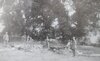
That’s what really happened in the ‘Repeat please’ incident immortalised in that film. The Intelligence Officer obviously didn’t fancy typing Polish names any more than I do. He consistently referred to Green 1 rather than Paszkiewwicz
The Luftwaffe mounted several fighter sweeps which served as feints for a raid by 15 Do 17s escorted by 40 Bf 109s on the Coastal Command airfield at Detling. For once Fighter Command was caught on the hop. The squadrons that had met the previous raid were all returning or landing low on fuel. Just two squadrons, Nos 253 and 43 were scrambled to intercept. At 17.20 Detling was heavily bombed, the British estimated 50-60 bombs fell on the airfield, the Luftwaffe claimed 160, and the field was out of action until the following morning. The RAF lost another 3 fighters in the action, the Luftwaffe suffered no losses.
At 18.00 one of several formations being plotted over the Channel turned inland and made for Biggin Hill. It comprised 20 Ju 88s escorted by 20 Bf 109s. Fighter Command had 6 Hurricanes of No 79 Squadron patrolling Biggin Hill and 12 Spitfires of No 222 Squadron over Manston, but only the fighters were engaged. Biggin Hill was accurately bombed, many buildings were destroyed and services, including telephone, broken. This was a serious situation and Hornchurch sector station was forced to take control of Biggin Hill sector while Post Office engineers worked to restore the base’s communications.
39 people were killed and another 26 wounded. It seems many casualties were inflicted when a shelter received a direct hit. I think this too may be referenced in that film but the real fatalities included two women, Edna Button, a medical orderly originally from Tasmania and Dorothy Mason from the NAAFI. Nine women and one ‘boy’ were among the injured. 4 of No 222 Squadrons Spitfires were shot down. The Luftwaffe lost 1 Bf 109.
There were other skirmishes around Lympne and as far inland as Redhill, but these involved Luftwaffe fighter sweeps that were largely ignored.
The British made some calculations about how many bombs would need to be dropped to disable an aerodrome of a typical 1,000 yard diameter. It was estimated that 900 250lb bombs would be required to achieve this. 200-300 craters ‘promiscuously’ scattered were not enough. Filling just fifteen craters would be enough to reform two clear runways. The problem was that this was not how aerodromes were disabled. They were rendered non-operational when their above ground infrastructure, services and communications were destroyed.
Today the RAF had lost 26 aircraft with a further 15 damaged. The Luftwaffe had lost 33 aircraft with another 8 damaged.
Small margins, and Dowding and Park were becoming increasingly concerned. Today was the first of a critical phase for Fighter Command, a week during which 11 Group’s airfields and the aircraft industry would become the Luftwaffe’s primary targets.
Generally clear with only scattered cloud.
The men from the met were correct and the weather took a turn for the better. The Luftwaffe took advantage of the weather to launch several significant raids. Fighter Command was stretched to the limit, flying over 1,000 sorties (1,054) in defence of UK air space. The Luftwaffe started early with spoof raids in an attempt to dupe Fighter Command into scrambling its fighters. The controllers at Bentley Priory were not fooled. Just six aircraft were dispatched.
At 10.30 large formations assembling over France did elicit a response. A plot of 60+ over Calais and 50+ over Tramecourt triggered the scramble of six squadrons, Nos 501, 1, 603, 85, 56 and 610. By 11.00 the situation looked even more serious. The force from Tramecourt was heading towards Dungeness and a new plot, 50+ had appeared over Cap Gris Nez. Three more squadrons were scrambled, Nos 253, 151 and 234. The raids approaching comprised 50 He 111s escorted by 50 Bf 109s and 50 Bf 110s. No 85 Squadron was the first to engage with a trademark head on attack on the bombers. They broke up the formation and in a sign of the faltering Luftwaffe morale several bombers jettisoned their loads between Dungeness and Dover and turned for home. Another raid was met by Nos 501, 610 and 603 Squadrons, but pushed on towards SE London. Still more raids were reported approaching the coast and Fighter Command decided that the targets were Biggin Hill and Kenley. Seven more squadrons were scrambled to protect their airfields, Nos 616, 212, 54, 79, 19, 1 (just 3 Spitfires of a Flight not scrambled earlier) and 43. There was an hour of frantic activity before the last of the raiders withdrew.
There was a different sort of overclaiming today. Biggin Hill was bombed but the Luftwaffe claims did not reflect reality. Its bombers claimed that 180 bombs fell on Biggin Hill, industrial targets in Dorking were heavily bombed and 24 bombs fell on Aldershot Barracks. For their part the British found little worth commenting on.
In the aerial fighting the RAF had lost 9 fighters with several more damaged. The Luftwaffe had lost 9 aircraft, including 5 of the bombers.
16.15 a lone Do 17 was intercepted by three Spitfires of No 66 Squadron and shot down into the sea off Aldeburgh. P/O J H T Pickering’s Spitfire was shot down by return fire, he baled out into the sea and was lucky to be picked up, safe, by a lightship.
15.40 and plots showed another big raid developing and approaching the Thames estuary. 30 He 111s were escorted by 90 Bf 110s and 100 Bf 109s. Three squadrons were airborne to meet the raids, Nos 603, 501 and 151. Between 16.20 and 16.35 a further eight squadrons were scrambled, Nos 616, 242, 56, 54, 111, 601, 1 and 79. Also in the air was No 303 (Polish) Squadron. It was not operational but flying north from Northolt to St Albans for practice interceptions against Blenheims. No 603 was the first to intercept near Canterbury, followed by Nos 151 and 501. They could not stop the formations, which pressed on to bomb the Vauxhall works in Luton. 59 people were killed and a further 140 injured. The RAF lost 5 more fighters with several damaged. The Luftwaffe lost 16 aircraft, including 5 of the bombers.
This is the day on which B Flight of No 303 Squadron famously scored its first victory. The squadron Intelligence Report noted that after the enemy had been spotted
“Green 1 (F/O Paszkiewwicz) tried to communicate with Apany leader by radio, then went in front of formation and waggled his wings, turning towards enemy who were above and flying eastwards. He then saw Do 17 or 215, which was below this formation, banking towards him. When enemy aircraft was almost head on, he saw the Hurricane and dived steeply, followed by Green 1. When enemy aircraft straightened up, Green 1 closed and fired a burst at 250 yards at the fuselage from dead astern – no effect apparent. Green 1 closed to 100 yards and getting under E/A fired a long burst at the starboard engine, closing to point blank range. Engine stopped and caught fire. Green 1 broke away. Hurricane UC.J* came in to attack just as a parachute left E/A, which then dived. Green 1 attacked again with a short burst, though he realised at once that it was unnecessary. Enemy aircraft crashed and exploded.”
*This was US-J, flown by P/O Wicks of No 56 Squadron.
Paszkiewwicz had not shot down a Do 17 or a Do 215. He had not shot down a bomber at all, but a Bf 110 C-4 flown by Ofw Georg Anthony, who was killed and Uffz Heinrich Nordmeier, presumably seen leaving the aircraft shortly before Wicks’s attack, who was seriously injured. The enemy aircraft certainly did crash and explode. This is all that was left of it.
That’s what really happened in the ‘Repeat please’ incident immortalised in that film. The Intelligence Officer obviously didn’t fancy typing Polish names any more than I do. He consistently referred to Green 1 rather than Paszkiewwicz
The Luftwaffe mounted several fighter sweeps which served as feints for a raid by 15 Do 17s escorted by 40 Bf 109s on the Coastal Command airfield at Detling. For once Fighter Command was caught on the hop. The squadrons that had met the previous raid were all returning or landing low on fuel. Just two squadrons, Nos 253 and 43 were scrambled to intercept. At 17.20 Detling was heavily bombed, the British estimated 50-60 bombs fell on the airfield, the Luftwaffe claimed 160, and the field was out of action until the following morning. The RAF lost another 3 fighters in the action, the Luftwaffe suffered no losses.
At 18.00 one of several formations being plotted over the Channel turned inland and made for Biggin Hill. It comprised 20 Ju 88s escorted by 20 Bf 109s. Fighter Command had 6 Hurricanes of No 79 Squadron patrolling Biggin Hill and 12 Spitfires of No 222 Squadron over Manston, but only the fighters were engaged. Biggin Hill was accurately bombed, many buildings were destroyed and services, including telephone, broken. This was a serious situation and Hornchurch sector station was forced to take control of Biggin Hill sector while Post Office engineers worked to restore the base’s communications.
39 people were killed and another 26 wounded. It seems many casualties were inflicted when a shelter received a direct hit. I think this too may be referenced in that film but the real fatalities included two women, Edna Button, a medical orderly originally from Tasmania and Dorothy Mason from the NAAFI. Nine women and one ‘boy’ were among the injured. 4 of No 222 Squadrons Spitfires were shot down. The Luftwaffe lost 1 Bf 109.
There were other skirmishes around Lympne and as far inland as Redhill, but these involved Luftwaffe fighter sweeps that were largely ignored.
The British made some calculations about how many bombs would need to be dropped to disable an aerodrome of a typical 1,000 yard diameter. It was estimated that 900 250lb bombs would be required to achieve this. 200-300 craters ‘promiscuously’ scattered were not enough. Filling just fifteen craters would be enough to reform two clear runways. The problem was that this was not how aerodromes were disabled. They were rendered non-operational when their above ground infrastructure, services and communications were destroyed.
Today the RAF had lost 26 aircraft with a further 15 damaged. The Luftwaffe had lost 33 aircraft with another 8 damaged.
Small margins, and Dowding and Park were becoming increasingly concerned. Today was the first of a critical phase for Fighter Command, a week during which 11 Group’s airfields and the aircraft industry would become the Luftwaffe’s primary targets.
Saturday 31 August.
The good weather continues with a clear and sunny day.
The Luftwaffe used the good weather to maintain its pressure on Fighter Command.
An RAF Intelligence Summary described the current Luftwaffe tactics. They were what Goering wanted, none of the nonsense about all the fighters providing a close escort, or Bf 110s having themselves to be escorted.
“The Germans resumed heavy fighter escorts, formations of up to 100 Messerschmitt Bf 109 and Messerschmitt Bf 110 being reported. When both these types of fighters are escorting bombers, it is general for the Bf 110 to be level with or just above the bombers at 15,000 ft with Messerschmitt Bf 109 stepped up behind to 20,000 ft. In another case thirty Dornier Do 17 were in vics of ten line astern stepped up from 15,000 to 15,500 ft with forty Bf 110 level with the last vic and on the right, left and behind it, and a considerable number of Messerschmitt Bf 109s at 25,000 ft behind them.”
The first action of the day was an attack on Debden. At 07.30 three squadrons were scrambled to patrol the Kent coast, Nos 1, 253 and 501. As the plots developed it became clear that a very large force made up of five formations, two of 30 Do 17s and others of a total of 120 Bf 109s and 60 f 110s were approaching targets inland. Another six squadrons, Nos 111, 19, 56, 222, 257 and 601 were dispatched. Debden was bombed at 08.00 and 08.20. Though one of the Luftwaffe targets was Duxford, III./KG 2 either bombed the wrong airfield or dumped their bombs in countryside when attacked by No. 111 Squadron, depending which version you believe (I think that at least some of them bombed Debden, because 19 aircraft reported bombing Duxford, which was not bombed). The RAF had for once come off badly in the exchanges, losing 12 fighters. The Luftwaffe had lost just 5 aircraft and none of the bombers were shot down.
At 08.50, as the previous raid withdrew a large number of fighters, 125 Bf 109s, swept over Kent, presumably to distract Fighter Command from the retreating raids. A formation of 6 Bf 109s shot down all 23 balloons of the Dover Barrage. There were skirmishes with Nos 603, 616, 79 and 1 (RCAF) Squadrons. Three of the still inexperienced Canadians were shot down. One Bf 109 was also shot down.
Between 10.00 and 10.45 numerous plots were made in the Dover Straits but did not cross the English coast. Finally, one crossed at Folkestone, headed towards Chatham. Nos 151 and 17 Squadrons were scrambled as various other raids were plotted by the Observer Corps across Kent and Essex. 151 Squadron tangled with a formation of Bf 109s and P/O Czajkowski was shot down and badly wounded. The Luftwaffe suffered no casualties.
At 12.30 two large raids crossed the coast at Folkestone. 11 Group controllers guessed that they were heading for Biggin Hill and Kenley and scrambled nine squadrons, Nos 79, 253, 17, 603, 616, 222, 85, 501 and 601. Some of these units were making a third scramble before lunch. By 12.50 the raids were approaching Croydon, where they were intercepted by No 79 Squadron. As they attempted to fight through to the Ju 88s the Bf 110s of Eprg 210 slipped in and bombed Croydon airfield. Today Ernst Glaeske who had a lucky escape a few days ago when he formated on a Spitfire, would run out of luck. He was shot down in Eprg 210’s attack on Croydon, making a good belly landing with Konrad Schweda, his wireless operator, wounded. He told his interrogators that he landed in the hope that Schweda’s life might be saved, but sadly this was not to be.
Between 13.00 and 13.10 a further three raids crossed the coast and four more squadrons, Nos 1, 151, 310 and 54 were scrambled. These raids made their way towards Hornchurch. Just before they reached their target, they were attacked by 40 Hurricanes of Nos 151, 501, 310 and 601 Squadrons. The escorting Bf 109s and Bf 110s withdrew towards Colchester, drawing off many of the British fighters, but 310 got to the bombers. More than 100 bombs fell on Hornchurch, destroying 4 of No 54 Squadron’s Spitfires and disrupting services, operations were not affected. Three of the destroyed Spitfires were in the act of taking off, another event referenced in that film. Including the four on the ground the RAF had lost another 12 fighters. The Luftwaffe had lost 10 aircraft including 4 bombers.
During the afternoon the Luftwaffe flew reconnaissance sorties over England. One of these aircraft, a Do 215 of 4./Aufklarungs Gruppe Ob.d.l was shot down into the sea by three Spitfires of No 66 Squadron at 15.00, off the Norfolk coast.
From 17.00 enemy formations were plotted once again, assembling over France. At 17.30 five raids totalling 100+ were moving across the Channel. Nos. 79 (which could only field 7 Hurricanes), 54 (9 Spitfires), 85 (10 Hurricanes), 222 (10 Spitfires) and 603 (which managed 13 Spitfires) were scrambled. All except 603 were under strength. 30 Do 17s with an escort of 100 Bf 19s and Bf 110s were engaged in a running battle by the first four squadrons from Maidstone to Purfleet. Maidstone was bombed at 18.00 and then Rainham and Hornchurch at 18.10, just as No 603 Squadron took off. The Hornchurch Operations Record Book noted
“This time, however, their aim was most inaccurate, and the line of bombs fell from them towards then edge of the aerodrome. Two Spitfires parked near the edge of the aerodrome were written off, and one airman was killed. Otherwise, apart from damage to dispersal pens, the perimeter track, and the aerodrome surface, the raid was abortive, and the aerodrome remained serviceable.”
As Hornchurch was being bombed, two more raids crossed the coast and were thought to be headed towards Biggin Hill and Kenley. Between 17.35 and 18.00 no less than thirteen squadrons were scrambled, Nos. 1(RCAF), 17, 616, 72, 501, 1, 253, 242, 611, 257, 609, 602 and 303 all took off…again. Only four of these squadrons could field a full complement of 12 aircraft. No 72 engaged first, near Dungeness, followed by 17 and 602 over Maidstone. No 79 engaged near Biggin Hill and finally No 303 as the raid retired. Biggin Hill was hit by over 100 bombs. The Operations Room was set on fire, telephone lines cut, and many buildings destroyed or damaged. This too is referenced in that film. The Emergency Operation Room, located off the airfield was brought into use. Biggin Hill was all but unserviceable and two of its three squadrons moved elsewhere. The RAF had lost 10 more fighters. The Luftwaffe had lost 10 aircraft, all fighters.
The Luftwaffe had made a maximum effort today. Today the RAF had lost 37 aircraft with 9 pilots killed and another 18 wounded. The Luftwaffe had lost 39 aircraft. The margins were narrowing.
As August came to a close it was hard to see who was winning. The RAF was running out of operational pilots, but the Luftwaffe was mystified as to where the seemingly endless supply of RAF fighters was coming from. The German intelligence assessments were far from the reality. On September 5 an intelligence assessment estimated that they had destroyed 1,334 RAF aircraft, which was both optimistic and nowhere near enough anyway, given their own losses.
The real figures for losses this month were more favourable to the British, who had lost 211 Hurricanes and 113 Spitfires, 324 of their frontline fighters, with another 84 damaged. Also lost were 13 Blenheims and 7 Defiants. Total Fighter Command losses amounted to 344 aircraft this month. More worrying was the loss of the 139 pilots killed, with another 110 wounded and just 7 listed as missing.
The Germans had lost 217 Bf 109s and 119 Bf 110s, 336 of its frontline fighters with another 95 damaged, and was doing slightly worse than the RAF in fighter vs fighter combat at this stage of the Battle. They had also lost 71 Do 17s, 89 He 111s and 89 Ju 88s, 249 of their medium bombers, with a further 78 damaged. Also lost were 57 Ju 87 dive bombers. Total Luftwaffe losses amounted to 669 aircraft this month. A heavy toll was taken on the Luftwaffe aircrew, 463 had been killed, 201 wounded and a staggering 804 were missing, many of whom were PoWs in Britain.
If neither side was sure who was winning, it was the German leadership which was most confident. There was a feeling on both sides that matters would be decided in the coming days.
The good weather continues with a clear and sunny day.
The Luftwaffe used the good weather to maintain its pressure on Fighter Command.
An RAF Intelligence Summary described the current Luftwaffe tactics. They were what Goering wanted, none of the nonsense about all the fighters providing a close escort, or Bf 110s having themselves to be escorted.
“The Germans resumed heavy fighter escorts, formations of up to 100 Messerschmitt Bf 109 and Messerschmitt Bf 110 being reported. When both these types of fighters are escorting bombers, it is general for the Bf 110 to be level with or just above the bombers at 15,000 ft with Messerschmitt Bf 109 stepped up behind to 20,000 ft. In another case thirty Dornier Do 17 were in vics of ten line astern stepped up from 15,000 to 15,500 ft with forty Bf 110 level with the last vic and on the right, left and behind it, and a considerable number of Messerschmitt Bf 109s at 25,000 ft behind them.”
The first action of the day was an attack on Debden. At 07.30 three squadrons were scrambled to patrol the Kent coast, Nos 1, 253 and 501. As the plots developed it became clear that a very large force made up of five formations, two of 30 Do 17s and others of a total of 120 Bf 109s and 60 f 110s were approaching targets inland. Another six squadrons, Nos 111, 19, 56, 222, 257 and 601 were dispatched. Debden was bombed at 08.00 and 08.20. Though one of the Luftwaffe targets was Duxford, III./KG 2 either bombed the wrong airfield or dumped their bombs in countryside when attacked by No. 111 Squadron, depending which version you believe (I think that at least some of them bombed Debden, because 19 aircraft reported bombing Duxford, which was not bombed). The RAF had for once come off badly in the exchanges, losing 12 fighters. The Luftwaffe had lost just 5 aircraft and none of the bombers were shot down.
At 08.50, as the previous raid withdrew a large number of fighters, 125 Bf 109s, swept over Kent, presumably to distract Fighter Command from the retreating raids. A formation of 6 Bf 109s shot down all 23 balloons of the Dover Barrage. There were skirmishes with Nos 603, 616, 79 and 1 (RCAF) Squadrons. Three of the still inexperienced Canadians were shot down. One Bf 109 was also shot down.
Between 10.00 and 10.45 numerous plots were made in the Dover Straits but did not cross the English coast. Finally, one crossed at Folkestone, headed towards Chatham. Nos 151 and 17 Squadrons were scrambled as various other raids were plotted by the Observer Corps across Kent and Essex. 151 Squadron tangled with a formation of Bf 109s and P/O Czajkowski was shot down and badly wounded. The Luftwaffe suffered no casualties.
At 12.30 two large raids crossed the coast at Folkestone. 11 Group controllers guessed that they were heading for Biggin Hill and Kenley and scrambled nine squadrons, Nos 79, 253, 17, 603, 616, 222, 85, 501 and 601. Some of these units were making a third scramble before lunch. By 12.50 the raids were approaching Croydon, where they were intercepted by No 79 Squadron. As they attempted to fight through to the Ju 88s the Bf 110s of Eprg 210 slipped in and bombed Croydon airfield. Today Ernst Glaeske who had a lucky escape a few days ago when he formated on a Spitfire, would run out of luck. He was shot down in Eprg 210’s attack on Croydon, making a good belly landing with Konrad Schweda, his wireless operator, wounded. He told his interrogators that he landed in the hope that Schweda’s life might be saved, but sadly this was not to be.
Between 13.00 and 13.10 a further three raids crossed the coast and four more squadrons, Nos 1, 151, 310 and 54 were scrambled. These raids made their way towards Hornchurch. Just before they reached their target, they were attacked by 40 Hurricanes of Nos 151, 501, 310 and 601 Squadrons. The escorting Bf 109s and Bf 110s withdrew towards Colchester, drawing off many of the British fighters, but 310 got to the bombers. More than 100 bombs fell on Hornchurch, destroying 4 of No 54 Squadron’s Spitfires and disrupting services, operations were not affected. Three of the destroyed Spitfires were in the act of taking off, another event referenced in that film. Including the four on the ground the RAF had lost another 12 fighters. The Luftwaffe had lost 10 aircraft including 4 bombers.
During the afternoon the Luftwaffe flew reconnaissance sorties over England. One of these aircraft, a Do 215 of 4./Aufklarungs Gruppe Ob.d.l was shot down into the sea by three Spitfires of No 66 Squadron at 15.00, off the Norfolk coast.
From 17.00 enemy formations were plotted once again, assembling over France. At 17.30 five raids totalling 100+ were moving across the Channel. Nos. 79 (which could only field 7 Hurricanes), 54 (9 Spitfires), 85 (10 Hurricanes), 222 (10 Spitfires) and 603 (which managed 13 Spitfires) were scrambled. All except 603 were under strength. 30 Do 17s with an escort of 100 Bf 19s and Bf 110s were engaged in a running battle by the first four squadrons from Maidstone to Purfleet. Maidstone was bombed at 18.00 and then Rainham and Hornchurch at 18.10, just as No 603 Squadron took off. The Hornchurch Operations Record Book noted
“This time, however, their aim was most inaccurate, and the line of bombs fell from them towards then edge of the aerodrome. Two Spitfires parked near the edge of the aerodrome were written off, and one airman was killed. Otherwise, apart from damage to dispersal pens, the perimeter track, and the aerodrome surface, the raid was abortive, and the aerodrome remained serviceable.”
As Hornchurch was being bombed, two more raids crossed the coast and were thought to be headed towards Biggin Hill and Kenley. Between 17.35 and 18.00 no less than thirteen squadrons were scrambled, Nos. 1(RCAF), 17, 616, 72, 501, 1, 253, 242, 611, 257, 609, 602 and 303 all took off…again. Only four of these squadrons could field a full complement of 12 aircraft. No 72 engaged first, near Dungeness, followed by 17 and 602 over Maidstone. No 79 engaged near Biggin Hill and finally No 303 as the raid retired. Biggin Hill was hit by over 100 bombs. The Operations Room was set on fire, telephone lines cut, and many buildings destroyed or damaged. This too is referenced in that film. The Emergency Operation Room, located off the airfield was brought into use. Biggin Hill was all but unserviceable and two of its three squadrons moved elsewhere. The RAF had lost 10 more fighters. The Luftwaffe had lost 10 aircraft, all fighters.
The Luftwaffe had made a maximum effort today. Today the RAF had lost 37 aircraft with 9 pilots killed and another 18 wounded. The Luftwaffe had lost 39 aircraft. The margins were narrowing.
As August came to a close it was hard to see who was winning. The RAF was running out of operational pilots, but the Luftwaffe was mystified as to where the seemingly endless supply of RAF fighters was coming from. The German intelligence assessments were far from the reality. On September 5 an intelligence assessment estimated that they had destroyed 1,334 RAF aircraft, which was both optimistic and nowhere near enough anyway, given their own losses.
The real figures for losses this month were more favourable to the British, who had lost 211 Hurricanes and 113 Spitfires, 324 of their frontline fighters, with another 84 damaged. Also lost were 13 Blenheims and 7 Defiants. Total Fighter Command losses amounted to 344 aircraft this month. More worrying was the loss of the 139 pilots killed, with another 110 wounded and just 7 listed as missing.
The Germans had lost 217 Bf 109s and 119 Bf 110s, 336 of its frontline fighters with another 95 damaged, and was doing slightly worse than the RAF in fighter vs fighter combat at this stage of the Battle. They had also lost 71 Do 17s, 89 He 111s and 89 Ju 88s, 249 of their medium bombers, with a further 78 damaged. Also lost were 57 Ju 87 dive bombers. Total Luftwaffe losses amounted to 669 aircraft this month. A heavy toll was taken on the Luftwaffe aircrew, 463 had been killed, 201 wounded and a staggering 804 were missing, many of whom were PoWs in Britain.
If neither side was sure who was winning, it was the German leadership which was most confident. There was a feeling on both sides that matters would be decided in the coming days.
1/3
Fantastic work, building nicely to the climax......pity we can’t have Walton’s suite playing in the background!
Legal Notice
scalemodelling.co.uk is a privately operated online discussion forum. All content posted by members reflects their own views and opinions and does not necessarily represent those of the forum owners or administrators. While reasonable efforts are made to moderate content, no responsibility is accepted for user-generated material. By using this site, you agree to comply with UK law and the forum rules.