Monday 16th September
Cloud and rain blanketing the UK and Channel area.
In the early hours of the morning, before first light, as Fighter Command’s pilots dragged themselves out of their beds and prepared for the next phase of the Battle they were greeted by what, for them, was the most perfect weather. It was obvious that for the time being any flying would be limited.
This was not what the Germans wanted to see. Ulrich Steinhilper wrote to his mother,
“This morning we wanted to go to London again but there was so much cloud and a high risk of icing, so no chance. Now we hope for good weather; about another eight days would finish things. Let’s hope for an improvement.”
This young fighter pilot was clearly still more confident than some of his more senior colleagues.
Goering convened a conference with his commanders in Boulogne. He made some valid tactical points. Yesterday, the fighter commanders had failed to get the second wave of fighters in place at the right time; they should have been able to shoot down more British aircraft. The objection from one of his commanders that the British surprised the Germans by sending in their fighters ‘en masse’ did not impress the Reichsmarschal. ‘If they attack en masse, we should also be able to shoot them down in large numbers!’ It is a fair point that underlay the entire Luftwaffe strategy. He also acknowledged that his men were becoming exhausted before once more making several points that would later appear in Spiedel’s report to the OKW. The British had used the breathing space to strengthen their fighter force with pilots from flight schools and new aircraft from their factories, including aircraft that have not yet even been painted; the British engaged the German bomber units with less well trained fighter squadrons, with several cases of deliberate ramming taking place as a last resort; German fighters came under attack from better trained British fighter pilots; the weak resistance that the two attacks against Portsmouth and Southampton had met on the afternoon on 15 September proved that the British had concentrated their remaining fighters to defend London.
None of this was true. It is impossible to overstate just how bad the German Intelligence assessments of Fighter Command strength and capabilities were, throughout this entire period.
Goering concluded that a few more days were all that were required to finish “British fighter aviation”
There would be a change in tactics. The Luftwaffe had found a way to make the British fight, raids on London would continue. The British aviation industry would be targeted in an attempt to deny the British the ability to replace their losses. On the other hand, the Luftwaffe’s losses of the 15th were not sustainable either. Large bomber formations would no longer be used, unless circumstances were exceptional. Instead, small formations of bombers with large fighter support and escort would be used. Fighter sweeps would attempt to lure the British fighters into combat.
This evening Goering boarded his special train and headed back to Germany.
From a British perspective, Park felt that more of the German aircraft should have been shot down, but he acknowledged that his system had worked well. The high interception rates were particularly pleasing and would be unmatched for the rest of the Battle.
The Luftwaffe made sporadic raids usually with single aircraft, using the cloud as protection. Most were unmolested as interceptions were almost impossible. A Section of No 616 Squadron intercepted and shot down a Ju 88 of the east coast. The drama was increased when one of the three aircraft, flown by Sgt Iveson, ran out of petrol and ditched in the sea twenty miles off Cromer. He was fortunate to be rescued by an RAF launch.
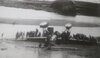
An He 115 was shot down by anti-aircraft fire attacking shipping. It was towed, upside down, into Eyemouth harbour Northumberland. Here the inverted aircraft has clearly become a major attraction for the locals.
Another He 115 ran out of fuel and came down at New Aberdour, about 12 miles from Frazeburgh in the Scottish Highlands. A Ju 88 of 1./KG 54 crashed near Coventry after hitting a balloon cable.
Today the Luftwaffe had lost just 4 aircraft on operations against Britain, with another 2 damaged. Fighter Command had lost just 1, Iveson’s Spitfire (L1023), with another, a 605 Squadron Hurricane, damaged.
The Luftwaffe would make a major effort tonight. 170 aircraft dropped 200 tons of bombs, London again being the principal target.
Bomber Command bombed barges in the Channel ports again. The bombing of the ports was having a possibly unintended effect on the Luftwaffe personnel based at the nearby airfields. Today JG 54’s Hannes Trautloft wrote in his diary,
“The nightly anti-aircraft gunfire disrupts the pilots’ important sleep. Explore the possibilities to accommodate pilots further inland. Possibly it must be done even at the cost of longer routes to the airfields!”




