wotan
Active member
- Joined
- May 16, 2018
- Messages
- 1,317
- Location
- Brome Lake Quebec
- First Name
- John
1/3
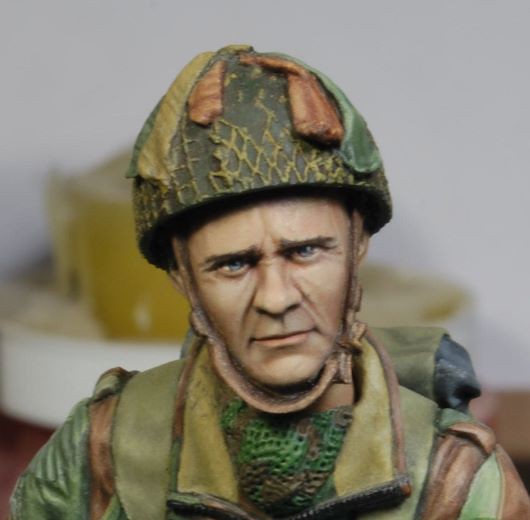
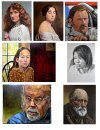
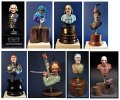
As more of a traditional artist/painter I tend to spend much of my time working in 2 dimensions. However I do enjoy sculpting and painting figures in small scale and have learned a lot about techniques along the way. I think there are a number of issues that make a successful paint job and they can all be learned (as Tim pointed out) by anyone who has the interest to persist at it. I also teach figure drawing and portraiture, two skills that most people would consider "hard", however I have seen many regular folks become very competent artists by a little technique and a lot of perseverance. Here are some areas that I would suggest that you concentrate on
1. Accuracy of paint application. Nothing detracts from the appearance of painted figures more than colours that "go outside the lines". If you are painting belts or strapping etc etc, be sure to make your lines straight, and with no paint spreading over the surrounding features. Some decent brushes will help to achieve this.
2. Learn a few basics about colour theory and the way in which your chosen paints mix. Don't just shade with black, look at how colours can be made more interesting by mixing their complementary colours into shadows. Also learn to identify warm and cool colours and how they work together. Colours have three properties, VALUE, CHROMA, and HUE. Hue is the most obvious being simply is it red, blue or green etc. Value is the darkness or lightness of a colour, in other words what would it look like if you photographed it in black and white only. Finally Chroma is the intensity of the colour, in other words is it a brilliant glaring colour or is it a greyed down version of the colour.
3. Finally look and look again at real people to see how many colours, nuances and lighting variations you can see. Remember the effect of scale. Most models are anything from 1/72 to 1/6 the size of real people so you will be obliged to exaggerate colours and shadows in a scale figure in order to give it any realism.
If you choose to use Acrylic, acrylic gouache, Gouache, Enamels, Oils or Alkyd Oils really doesn't matter. I use them all and, not my efforts, but I have seen great results with all of them. Having said that I would suggest you start with acrylics since they dry fast, are not expensive, and can be found anywhere (check out your local art stores as well as model suppliers). Finally make sure you find a good MATTE varnish (I suggest artist's matte spray varnish) since nothing looks more false on a figure model than shiny cloth trousers or jackets.
John
1. Accuracy of paint application. Nothing detracts from the appearance of painted figures more than colours that "go outside the lines". If you are painting belts or strapping etc etc, be sure to make your lines straight, and with no paint spreading over the surrounding features. Some decent brushes will help to achieve this.
2. Learn a few basics about colour theory and the way in which your chosen paints mix. Don't just shade with black, look at how colours can be made more interesting by mixing their complementary colours into shadows. Also learn to identify warm and cool colours and how they work together. Colours have three properties, VALUE, CHROMA, and HUE. Hue is the most obvious being simply is it red, blue or green etc. Value is the darkness or lightness of a colour, in other words what would it look like if you photographed it in black and white only. Finally Chroma is the intensity of the colour, in other words is it a brilliant glaring colour or is it a greyed down version of the colour.
3. Finally look and look again at real people to see how many colours, nuances and lighting variations you can see. Remember the effect of scale. Most models are anything from 1/72 to 1/6 the size of real people so you will be obliged to exaggerate colours and shadows in a scale figure in order to give it any realism.
If you choose to use Acrylic, acrylic gouache, Gouache, Enamels, Oils or Alkyd Oils really doesn't matter. I use them all and, not my efforts, but I have seen great results with all of them. Having said that I would suggest you start with acrylics since they dry fast, are not expensive, and can be found anywhere (check out your local art stores as well as model suppliers). Finally make sure you find a good MATTE varnish (I suggest artist's matte spray varnish) since nothing looks more false on a figure model than shiny cloth trousers or jackets.
John