Theme editor

Scale Model Shop

Is "Scale-Effect" a myth?

And half of us need glasses so probably can't see bugger all properly anyway :tongue-out3:
Mark .
Along with those with one good eye and the other covered up ! Doesn't look good for me then .:nerd:
 
No more flippant comments from me.

It really does seem to come down to the individuals perception of 'perception'. Personally, my modelling skills are nowhere near the point that I need to consider such things. I'm just glad if everything gets painted and there's not too much glue splodging out.

My over all opinion is this though. Yes, models are smaller than the real thing, but the way that they are presented to observers is either in close up photographs or first-hand where one can get up close to have a look using whatever eyesight enhancing equipment we need, if necessary. For the most part the model will fill our view. If that's the case, surely the scale thing becomes less relevant.

Or not.

I'm really not sure & don't see how one can actually quantify any shading/colour change that might needed. If it's un-quantifiable, then it comes down to personal opinion.

/ And for that reason, I'm out.
 
Mark .
Along with those with one good eye and the other covered up ! Doesn't look good for me then .:nerd:

So on the basis of this discussion we can come to the conclusion that most modellers are verging on adding a white stick to the toolkit :smiling5: :cool:
 
Spot on Dan. It’s not quantifiable. To be honest, I don’t think there is anyone on this forum that buys in to the view that it is. The railway modelling world used to be rife with them though. Some of them even tried to compensate for the thickness of the paint film when building a model…..utter lunacy :money-face:
 
So on the basis of this discussion we can come to the conclusion that most modellers are verging on adding a white stick to the toolkit :smiling5: :cool:
Well, it comes in handy when mixing the paint :thumb2:
 
I'd like to say you've got be kidding....
Mate, some of them even calculated the bend angle required for etched brass so they could over bend then file the corner back to a right angle…..mind you, we did work to a track gauge of 18.83mm, but that was set by width gauges not measured….I’ve still got mine LOL….
 
No more flippant comments from me.

It really does seem to come down to the individuals perception of 'perception'. Personally, my modelling skills are nowhere near the point that I need to consider such things. I'm just glad if everything gets painted and there's not too much glue splodging out.

My over all opinion is this though. Yes, models are smaller than the real thing, but the way that they are presented to observers is either in close up photographs or first-hand where one can get up close to have a look using whatever eyesight enhancing equipment we need, if necessary. For the most part the model will fill our view. If that's the case, surely the scale thing becomes less relevant.

Or not.

I'm really not sure & don't see how one can actually quantify any shading/colour change that might needed. If it's un-quantifiable, then it comes down to personal opinion.

/ And for that reason, I'm out.
Correct, it is not quantifiable , it is art and art cannot be judged by purely quantifiable measures. It is all about what looks right to you.

With what I know best, aircraft, it is not just about modulating the colour for replicating the effect of light on large irregular surfaces, it is also about how the paint will weather in the conditions of where it operated. That is without the weathering effect of dust, wearing and chipping paint.

What I say to those who think their skills and experience are not up to it or are worried because it seems so complicated, just do it, experiment. You do not have to do the whole, full jobby, just try out different things, doing something different with each model seeking to keep improving. Trying it is the only way to learn and develop your skills. You won’t ruin the model, you can always strip up and try again. In fact why not start by getting a cheap ‘mule’ to use to experiment on before trying it on a kit.

The only way to learn this and develop the skills is by having a go.

So where do you start? I have made several posts giving tips and ways of doing this and there are a lot of videos and posts on the web to help.

I would recommend starting with a simple modulation technique and the easiest and most basic is to black base. I also think that it is the most effective.

1/ Prime with black primer
2/ Start on the lighter underside and spray a light base coat. The black will show though and it will look dark
2/ Spray more of the base coat inside the panels. Important, don’t worry about overspray and dont worry about being to neat. If it’s too neat and meticulous then it won’t look right. Remember this is NOT panel line accentuation but colour modulation. You accentuate the panel lines with washes later.
4/ Stop while there is still plenty of contrast between dark and light areas.
5/ Next you want your paint to be thinned a lot more than you normally thin. Thin it about 50% beyond the level that you usually thin for spraying. Of course, if you use MRP it is easier you won’t have thinned it at all until now, with MRP it is enough to add about 25% thinner because of its qualities.
6/ Spray this very thinned paint as a mist coat. Leave a minute or so then check the contrast between coats. Gradually these mist coats blend the look of the model, reducing the contrast very gradually. Stop when it looks right to you. These mist coats mean the process is controllable and pretty much foolproof. Remember though the contrast will look different when the paint dries so at various points in the process stop and let it dry before deciding whether to carry on.

The great thing about this is it is simple using the panels as a guide. No need to be complex and it helps give the appearance of ‘stressed metal’ adding to the impact and realism.

What I described for the underside is repeated for the topside camo but for the darker colours I add one more step. I add a little white to the base coat to lighten it and spray that inside the panels. This adds to the contract. The mist coats of the base colour will bring it together so don’t worry if the white makes it too light, better too light than light enough.

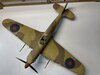
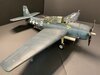
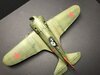
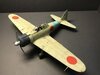
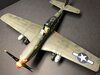
Some examples. With these, of course, I followed up with panel line washes, chipping and streaking to get the finish pictured. I have selected some examples where the effect is more pronounced.

The I -16, being largely wood, had some additional washes and oil dotting to discolour the highly trafficked areas.
View attachment 431983View attachment 431984View attachment 431985View attachment 431986View attachment 431987
 

Attachments

  • C91395F5-97B1-45D2-98CC-08A4EDB777C3.jpeg
    C91395F5-97B1-45D2-98CC-08A4EDB777C3.jpeg
    3.1 KB · Views: 0
  • BA742576-F8AC-47B0-A452-944F718CCCC9.jpeg
    BA742576-F8AC-47B0-A452-944F718CCCC9.jpeg
    2.9 KB · Views: 0
  • 531DD2E6-C5D5-4E47-BD5F-301767BD3925.jpeg
    531DD2E6-C5D5-4E47-BD5F-301767BD3925.jpeg
    2.9 KB · Views: 0
  • 4E88D19C-5EAF-4239-8C95-AA28BA7102B4.jpeg
    4E88D19C-5EAF-4239-8C95-AA28BA7102B4.jpeg
    2.9 KB · Views: 0
  • E74D2A15-9A9F-4FB6-8A8F-7A9A68A1F913.jpeg
    E74D2A15-9A9F-4FB6-8A8F-7A9A68A1F913.jpeg
    3.3 KB · Views: 0
I had my tuppence worth as the first responder to the original post, but given all the points and opinions raised I would respectfully like to add another penny's worth ...

From the point where an aircraft leaves the factory in a pristine state to the eventual disposal/destruction, the external paint colours go through all kinds of tonal change due to usage, weather, oil, etc., and maybe even a respray (or two) on the way. Some aircraft are even restored after their initial lifespan to be used again as flying machines or static museum displays. You won't see any aircraft at the Shuttleworth Collection in a heavily weathered condition.

So my point is that as a modeller you decide what sort of condition you are going to portray your efforts. As I display all of my models in a glass shelved cabinet, heavily weathered models look odd to me. So I opt for cart down, cockpit open (if kit allows), no pilot, and 'museum' type finish. If I were to build a diorama, my models would look quite ridiculous in one done that way (unless portrayed at the factory hanger door). Diorama realism requires appropriate weathering, some engine exposure perhaps and paint finishes that match the setting. For models depicted as flying then it's cart up, no prop blades, a well painted pilot and optional paint/weathering conditions.

It all gets back to one simple criteria. If you're happy with your work then it's been done well. For what it's worth I've built well over a 100 models and I'm yet to build one that I was 100% happy with. That's what keeps me trying ...
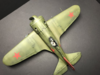
 
Just to add. The Zero is included to show that you can get a very subtle effect by black basing. The black barely shows through. This was done on the premise that it was a Pearl Harbour aircraft so the wear and weathering would not be as severe as later during a high tempo of operations. It is proof that you can get a light solid colour over black.
 
Doe's it really matter does anybody honestly care , I don't lose sleep over it ,no one gets hurt ,I dont need to put my face of concern on , I've got better things to do than worry that there's a rivet missing or thoes are the wrong wheel nuts , let alone some saddo trying to tell me (us) that green doesn't look Iike that in what ever scale let's bash on with what we like doing best and flip them the bird.
 
Doe's it really matter does anybody honestly care , I don't lose sleep over it ,no one gets hurt ,I dont need to put my face of concern on , I've got better things to do than worry that there's a rivet missing or thoes are the wrong wheel nuts , let alone some saddo trying to tell me (us) that green doesn't look Iike that in what ever scale let's bash on with what we like doing best and flip them the bird.
I'll have one of those, and raise you two 'do it how you feel'.
Well said.
 
From the point where an aircraft leaves the factory in a pristine state to the eventual disposal/destruction, the external paint colours go through all kinds of tonal change due to usage, weather, oil, etc., and maybe even a respray (or two) on the way. Some aircraft are even restored after their initial lifespan to be used again as flying machines or static museum displays. You won't see any aircraft at the Shuttleworth Collection in a heavily weathered condition.

So my point is that as a modeller you decide what sort of condition you are going to portray your efforts. As I display all of my models in a glass shelved cabinet, heavily weathered models look odd to me. So I opt for cart down, cockpit open (if kit allows), no pilot, and 'museum' type finish. If I were to build a diorama, my models would look quite ridiculous in one done that way (unless portrayed at the factory hanger door). Diorama realism requires appropriate weathering, some engine exposure perhaps and paint finishes that match the setting. For models depicted as flying then it's cart up, no prop blades, a well painted pilot and optional paint/weathering conditions.

It all gets back to one simple criteria. If you're happy with your work then it's been done well. For what it's worth I've built well over a 100 models and I'm yet to build one that I was 100% happy with. That's what keeps me trying ...

Superb summing up Murfie. Out of the factory, standing in the open for months In Afghanistan being blastered by sun & wind.
Even to the point where paint is stripped.

Spot on I produce only diorama so each is reduced to being in theater for many many months. They look patchy in reality scale
colour is not a consideration in such circumstances. I just study intensely the pictures of the real thing & it gives the clue.

I would not over do effects. That is not a criticism that is just my take on the subject. Again in reality they are an artistic licence.
Effects some where between a sober real photo & a painting which depicts the artists impression not real. Take your pick.

In the Falklands Conflict a different scenario. The Invincible had a spray unit. My bet is that the invincible Harriers looked in better
fettle than the Hermes types.

Laurie
 
1629546341938.png

Very nice indeed.
I can see your point on the painting to have a finish like the above Barry.

Don't know now having seen that what camp I'm in. One part of me agrees with Dave Lovell about its just a model and the other I'd like to be able to do that !

The late Simon T and I had numerous pm about 4BO paint, weathering etc sun damage /time expose to the elements ( Remembering the photo Tim posted )
now its reached a point where distance and scale has been mentioned Its a step too far for me. I shall just model on and enjoy, right or wrong.
 
This is my interpretation of colour etc.

I found a picture of a Seaking as in the field on duty in Afghanistan. This I copied from
a photo as best I could.

In fact there is no difference in reality to the colours. The effects are those which come from the original.

 
Back
Top