

You are using an out of date browser. It may not display this or other websites correctly.
You should upgrade or use an alternative browser.
You should upgrade or use an alternative browser.


Tim Marlow
SMF Supporters
1/3
Couldn’t find any images myself, but that clears it up……

Why not write to the experts at the Tank Museum, Imperial War Museum or the Royal Marines Museum? If they don't know then who does?
Steve
Steve
G
Guest
Guest
That thought also crossed my mind, indeed. But even then I can’t work out the hows or whys of it. For example: why would they use the recoil cylinder of an anti-tank gun for this? Maybe because it was available and worked as a pressure vessel. But then, why are those big lugs with the pin through them on the forward end? Those are completely unnecessary if it is a tank for air or hydraulic oil or something like that.Something is strange about this hydraulic cylinder. Have you ever thought that it could be an external connection for a hydraulic tool, or something to do with diving?
To be honest, I’m not even clear on whether it was welded onto the tank or not … It definitely is on the BARV in the Ahmednagar museum, but doesn’t seem to be on the running one, for example. Which could mean the museum welded it to stop it being stolen, of course, or maybe that the running tank has subtler welds.
I had also thought of that, and somebody else suggested it too on another forum — and I think I might just do that. Not that I have much hope of getting a useful answer, but it can’t hurt to try.Why not write to the experts at the Tank Museum, Imperial War Museum or the Royal Marines Museum? If they don't know then who does?


I expect that towing a bogged down tank needs a stronger tow bar than towing a sledge.the tow bars are fairly thin and not at all like the thing on the BARV.
Pete

G
Guest
Guest
Definitely, and that’s why the BARV carried two tow bars on the superstructure roof:I expect that towing a bogged down tank needs a stronger tow bar than towing a sledge.
Which is part of why I think this is not towing-related. But nobody across four different forums seems to have any clue what it actually is for.
I intend to do that, and/or to the museum in Portsmouth where they have a real one … hopefully someone will reply, and even better would be if it they do so with an answerI'm sure a nice email to the Tank Museum at Bovington will, (fingers crossed), get the answer you seek.

Well, I found a better photo of a restored example at
but other than convincing me that it's not a towbar, that doesn't help much. This one is definitely welded in place, but as you said Jakko that might just be to stop thieves. It's also had something flame-cut off towards the left-hand end.
Pete
Pete
Tim Marlow
SMF Supporters
1/3
To be honest it looks like a refillable compressed gas or liquid cylinder with an oversized coupling shackle on the end…..god knows what it’s use was though…..I can’t think of a function that pushes or pulls from one end only….the openable end isn’t strong enough to take any pressure and what looks like the pressure charge port is fitted to that end as well……it could be some sort of hydraulic cylinder that’s bolted in place by the casting directly behind the coupling shackle, perhaps for a dozer blade as Paul said earlier, but there’s only one on the vehicle isn’t there, the other side has the tools, not another cylinder.
Interesting conundrum this one :thumb2:
Interesting conundrum this one :thumb2:
G
Guest
Guest
Yep, I had seen that photo too alreadyWell, I found a better photo of a restored example
 The only good pictures of the thing you can find, are of preserved vehicles like this one, which doesn’t help at all with figuring out what it’s for. However, I’ve written e-mails tonight to both the REME Museum and Bovington to ask if they can shed some light on it.
It can’t really be anything other than a 6-pounder recoil/recuperator cylinder — compare it to the photo I posted earlier. The sections that are welded to the tank are the rails the barrel rides in, so the whole thing is essentially upside-down and the front end is pointing to the rear of the tank. I suspect the crosspin at the front end is what held the piston to the barrel.I can’t think of a function that pushes or pulls from one end only….
In addition to pondering this odd piece of kit, I also did a little more work on the model
View attachment 515983
I had noticed in the photos of the running example that it had mesh over L-profile at the front, “inside” the bumper, but I wasn’t sure if this was an original feature or something added to the restored vehicle for some reason. After finding another photo that showed it, I added it by making some L-profile from strip, cutting three lengths and glueing them to the hull before adding a bit of mesh on top of them.
Tim Marlow
SMF Supporters
1/3
Agreed ref 6pdr recuperator Jakko. I’ve had a good look this morning and the front end with the toggle bolts is the same as late mark 6pdrs. The breech end has been modified though. It looks like the cross pin was added just for this vehicle.
Here are a couple of restoration pictures I’ve found that show the breech end on the gun more clearly.
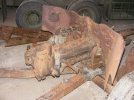
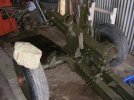
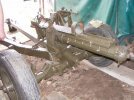
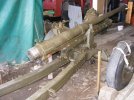
It certainly looks like this was a repurposed component used on the BARV, but what its function was is a bit of a mystery?
Here are a couple of restoration pictures I’ve found that show the breech end on the gun more clearly.
It certainly looks like this was a repurposed component used on the BARV, but what its function was is a bit of a mystery?
G
Guest
Guest
Good photos, especially that last one seems to confirm that they cut the cylinder down and added the plates with the pin. Thanks
This morning I found a reply from the REME museum in my spambox, but it only says that my e-mail has been forwarded “to the relevant person” so I have some hope that I might get an answer in the near future.
This morning I found a reply from the REME museum in my spambox, but it only says that my e-mail has been forwarded “to the relevant person” so I have some hope that I might get an answer in the near future.
Tim Marlow
SMF Supporters
1/3
I’m all ears on a reply. I simply can’t think of any application that needs what is, in effect, a single oversized shock absorber :smiling:Good photos, especially that last one seems to confirm that they cut the cylinder down and added the plates with the pin. Thanks :smiling3:
This morning I found a reply from the REME museum in my spambox, but it only says that my e-mail has been forwarded “to the relevant person” so I have some hope that I might get an answer in the near future.

It's hollow, used for storing fishing rods and snooker cues....I’m all ears on a reply. I simply can’t think of any application that needs what is, in effect, a single oversized shock absorber :smiling:

G
Guest
Guest
You don’t know how close you areI’m all ears on a reply. I simply can’t think of any application that needs what is, in effect, a single oversized shock absorber :smiling:
View attachment 516015
The REME museum’s archivist, Celia Cassingham, replied to tell me they’ve had that question before and helpfully provided that scan and a link to a page on their web site that also includes the scan above.
This, I think, also explains the oval ring at the front of the left catwalk (that is still missing from my model): that must be a guide for the cable going to the 6-pounder recoil mechanism.
Bovington also got back to me, saying they think they know what bit I mean but asking me to send a photo to make sure, which of course I did. With a bit of luck they will be able to confirm or even explain some more about it.
Legal Notice
scalemodelling.co.uk is a privately operated online discussion forum. All content posted by members reflects their own views and opinions and does not necessarily represent those of the forum owners or administrators. While reasonable efforts are made to moderate content, no responsibility is accepted for user-generated material. By using this site, you agree to comply with UK law and the forum rules.