Hi all, have decided to do a plastic model, not my favorite, but it was a viking so I thought why not, however after cleaning up a few parts I went to glue them with this smelly glue. Unfortunately I knocked it and it spilt not only on the mat but a part of my viking, I then noticed in horror it started to melt the part and when I wiped the mat the printed bit came of on the paper towel, what is in it for that to happen and why the horrid smell, is this normal, I'm now not a happy viking, the part I think can be salvaged as it will be hidden, the mat however I think needs replacing as I'd be worried that it will contaminate my normal wood models. While I'm here what's the difference between glue and cement, not the building type.


You are using an out of date browser. It may not display this or other websites correctly.
You should upgrade or use an alternative browser.
You should upgrade or use an alternative browser.
Tamiya Extra Thin Cement Question
- Thread starter Bortig the Viking
- Start date
Hi all, have decided to do a plastic model, not my favorite, but it was a viking so I thought why not, however after cleaning up a few parts I went to glue them with this smelly glue. Unfortunately I knocked it and it spilt not only on the mat but a part of my viking, I then noticed in horror it started to melt the part and when I wiped the mat the printed bit came of on the paper towel, what is in it for that to happen and why the horrid smell, is this normal, I'm now not a happy viking, the part I think can be salvaged as it will be hidden, the mat however I think needs replacing as I'd be worried that it will contaminate my normal wood models. While I'm here what's the difference between glue and cement, not the building type.
Think Jakko found out (from his post in 'Latest Acquisitions) -
In an earlier discussion on this forum not too long ago, we were talking about the ingredients of Tamiya cement. Last week, because my bottle of it is running low, I did a bit more digging and found a material safety data sheet claiming it to be 50% butyl acetate and 50% acetone. So, I thought, what do those cost and where can I buy them? That turned out to have easy answers too, and I therefore decided to purchase a 100 ml bottle of each, plus a 10 ml pipette to more easily measure them :smiling3: Each of the bottles was under €3, so if this works as intended, I spent less than €6 for 200 ml while a bottle of Tamiya extra thin cement is around €7 for 40 ml. I’ll probably report my findings once I’ve mixed up a little batch and tested it.
Since I was at a web store selling solvents, I also added a litre bottle of isopropanol, for thinning acrylic paints for airbrushing, as a replacement for the windscreen wiper fluid I’ve been using for the last several years.

1/3
Tamiya extra thin is a solvent. It melts the parts together by dissolving the surface of both and then evaporating to leave them welded together. The spill will evaporate from the mat and then cause no further issues. Likewise the part will dry hard when the solvent evaporates and can then be repaired if necessary.
G
Guest
Guest
Best thing Mark is not to knock over Tamiya Extra Thin & all the other solvents :fearful: They are not glues they soften plastic to a point where, as Tim pointed out, weld together. They also, as you have found out, make a huge mess & stink :confounded: when knocked over. In large pools they are horrible. :flushed:
Suspect that a great number of us have knocked over Tamiya, Mr Cement S.
However there is a simple solution. I am your saviour Mark. :tongue-out3: I will let you into the secret. It is called ---- no no not yet.
Stick a piece of the harder part to your work top. I have 3 positions.
Stick a piece of the softer part to all the base of bottles of Tamiya etc including bottles of Mr Surfacer.
Great advantage is you can with one hand open & close bottle tops. Easily attached equally easily removed. It is the wonder of the century. :hungry:
It is called VELCRO specially designed just for this application. :smiling::smiling2::smiling3:
Laurie
Suspect that a great number of us have knocked over Tamiya, Mr Cement S.
However there is a simple solution. I am your saviour Mark. :tongue-out3: I will let you into the secret. It is called ---- no no not yet.
Stick a piece of the harder part to your work top. I have 3 positions.
Stick a piece of the softer part to all the base of bottles of Tamiya etc including bottles of Mr Surfacer.
Great advantage is you can with one hand open & close bottle tops. Easily attached equally easily removed. It is the wonder of the century. :hungry:
It is called VELCRO specially designed just for this application. :smiling::smiling2::smiling3:
Laurie

Brilliant Laurie...I use that already to secure all mats for cats to their favorite surfaces. Now my bottles will be done the same way.Best thing Mark is not to knock over Tamiya Extra Thin & all the other solvents :fearful: They are not glues they soften plastic to a point where, as Tim pointed out, weld together. They also, as you have found out, make a huge mess & stink :confounded: when knocked over. In large pools they are horrible. :flushed:
Suspect that a great number of us have knocked over Tamiya, Mr Cement S.
However there is a simple solution. I am your saviour Mark. :tongue-out3: I will let you into the secret. It is called ---- no no not yet.
Stick a piece of the harder part to your work top. I have 3 positions.
Stick a piece of the softer part to all the base of bottles of Tamiya etc including bottles of Mr Surfacer.
Great advantage is you can with one hand open & close bottle tops. Easily attached equally easily removed. It is the wonder of the century. :hungry:
It is called VELCRO specially designed just for this application. :smiling::smiling2::smiling3:
Laurie
Cheers,
Richard
1/3
I use blue tac, it’s infinitely repositionable 
G
Guest
Guest
You’ve just taken one more step to being a proper modellerUnfortunately I knocked it and it spilt not only on the mat but a part of my viking, I then noticed in horror it started to melt the part
Everybody spills liquid cement at some point — you can try to minimise the chance by using squat, square bottles and stands for them (or velcro, or Blue Tac, or anything else that helps keep the bottle upright) but you will at some point. And almost certainly more than once.You mean a cutting mat? That won’t really absorb the cement, but it may be softened by it and almost certainly, cleaning up the spilt cement will wipe off any markings printed on the mat. The mat itself should still be usable, though, and since you’ve spilled a solvent, once that evaporates it shouldn’t affect anything anymore. You may want to put the mat outside or in a shed or someplace to get rid of all the solvent, though, rather than inside your house.I'd be worried that it will contaminate my normal wood models.
It’s mostly semantics, I think.While I'm here what's the difference between glue and cement
The difference between glues and cement in the modelling area is largely semantics.
The difference comes from those like Tamiya S, revel contacta, that work as solvents, dissolve The surfaces which are welded together as the solvent evaporates. And those like CA and PVA were molecules in the glue provide the bond between the surfaces.
The difference comes from those like Tamiya S, revel contacta, that work as solvents, dissolve The surfaces which are welded together as the solvent evaporates. And those like CA and PVA were molecules in the glue provide the bond between the surfaces.
G
Guest
Guest
When I read that quickly I read it as secured the cats to the mat !Brilliant Laurie...I use that already to secure all mats for cats to their favorite surfaces. Now my bottles will be done the same way.
Cheers,
Richard
TAXI !
I now keep my glue in a coffee lid

For water for brushes I've glued a hair spray lid into and another larger lid, used UHU.

Anyone considered using this .
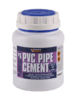
According to the contents it also contains acetone. Plumbers that I have worked with used it for waste pipes
Everbuild P16 Plumbers PVC Pipe Cement Hazardous components Chemical name CAS-No. EC-No. acetone / butanone / ethyl acetate.
1/3
I’ve used PVC pipe cement.....for pipes....it’s very aggressive and once it grabs you can’t realigned the joints.....when I found that out I went back to compression joints....much friendlier!
By the way, cement reacts chemically with both material surfaces to create the bond and glue forms a bond by interference with the surfaces, without changing the materials being joined. Solder is therefore a glue, but plastic adhesive is a cement.
By the way, cement reacts chemically with both material surfaces to create the bond and glue forms a bond by interference with the surfaces, without changing the materials being joined. Solder is therefore a glue, but plastic adhesive is a cement.

That definition would make solder a glue, welding would be a cement.I’ve used PVC pipe cement.....for pipes....it’s very aggressive and once it grabs you can’t realigned the joints.....when I found that out I went back to compression joints....much friendlier!
By the way, cement reacts chemically with both material surfaces to create the bond and glue forms a bond by interference with the surfaces, without changing the materials being joined. Solder is therefore a glue, but plastic adhesive is a cement.
Pete
G
Guest
Guest
Also read they use cement in concrete :rolling:
G
Guest
Guest
So cement is a glue?
So cement (house building stuff) is a glue?? :tongue-out3: :thinking:I’ve used PVC pipe cement.....for pipes....it’s very aggressive and once it grabs you can’t realigned the joints.....when I found that out I went back to compression joints....much friendlier!
By the way, cement reacts chemically with both material surfaces to create the bond and glue forms a bond by interference with the surfaces, without changing the materials being joined. Solder is therefore a glue, but plastic adhesive is a cement.
Archetype beat me to it, doh!
G
Guest
Guest
I'm going to have to lie down ! and change my name to Confused . :smiling2:
G
Guest
Guest
Yes you get "stuck" in their John.I'm going to have to lie down ! and change my name to Confused . :smiling2:
Dot Com?I'm going to have to lie down ! and change my name to Confused . :smiling2:
1/3
Love it LOL....
by the way, cement holds bricks apart.....if it was a glue it would hold them together :tongue-out3:
Getting technical, cement is a constituent part of mortar and concrete.....and it reacts chemically to do its job. It’s therefor a glue, so there:tongue-out3::tongue-out3::tongue-out3:
by the way, cement holds bricks apart.....if it was a glue it would hold them together :tongue-out3:
Getting technical, cement is a constituent part of mortar and concrete.....and it reacts chemically to do its job. It’s therefor a glue, so there:tongue-out3::tongue-out3::tongue-out3:
Do you want a job as a builder, got a little wall needs building.:tongue-out3:Love it LOL....
by the way, cement holds bricks apart.....if it was a glue it would hold them together :tongue-out3:
Getting technical, cement is a constituent part of mortar and concrete.....and it reacts chemically to do its job. It’s therefor a glue, so there:tongue-out3::tongue-out3::tongue-out3:
Legal Notice
scalemodelling.co.uk is a privately operated online discussion forum. All content posted by members reflects their own views and opinions and does not necessarily represent those of the forum owners or administrators. While reasonable efforts are made to moderate content, no responsibility is accepted for user-generated material. By using this site, you agree to comply with UK law and the forum rules.