rickoshea52
Active member
1/3
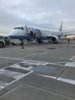
Only in New Zealand? Couldn't resist these pics, sheep everywhere in the adjoining paddock!
View attachment 290851
View attachment 290852
I thought you'd gone off the runway!


Only in New Zealand? Couldn't resist these pics, sheep everywhere in the adjoining paddock!
View attachment 290851
View attachment 290852
On my way to Egypt in this
View attachment 290888

Nice one Rupert. A truly satisfying job isn't it, sometimes happy and sometimes very sad but the flying can be very rewarding and varied. I did it for 8 years, your photo brings back some memories.B200 to Jersey and back. I'm an air ambulance pilot.

Dave, explain those 'bent' propeller blades would you, are they much more efficient than 'typical' straight blades ? Assuming that efficiency is the reason behind them.Flew to Glasgow from Southend on this ATR72-600 this afternoon. It was a replacement for the usual Embraer 195View attachment 294434
Dave, explain those 'bent' propeller blades would you, are they much more efficient than 'typical' straight blades ? Assuming that efficiency is the reason behind them.
That's brilliant Joe. I had to read your explanation twice to get it all in, but yes, I understand, thank you. I've seen a few old films about flying experiments and pilots trying to break the sound barrier. So I imagine 'wave drag' was the problem they were trying to overcome, but of course at the time, didn't know what the problem was.Colin, from my memory banks it's to do with wave drag reduction. Wave drag is the sudden increase in drag caused by compression of the air in front of an object about to break the speed of sound (subsonic to supersonic).
In the ATR's case, six blades instead of the ATR's original four on the earlier version, are fitted for power absorption. Turboprops utilise the efficiency and power of turbine engines to drive a propeller. Unlike jets, propeller driven aircraft suffer from serious issues at higher speeds (jets suffer at the slower end of the scale). The tip of a propeller blade can easily reach the speed of sound (think of a Texan/Harvard, that raspy sound is the compression of air at the prop tips). Exceeding the speed of sound causes loss of lift (thrust in this case) due to a massive wave drag increase. The onset of the speed of sound can be delayed by sweeping the leading edge aft of the relative airflow (the same reason for a swept wing on a jet). This means a propeller blade can spin faster and retain efficiency over a larger area of the blade for longer, delaying the speed of sound (critical Mach number for those interested), allowing for a higher cruise speed. Hence the 'scimitar' shaped blades on the ATR in Dave's picture.
Not that anyone in an ATR would ever notice...
It's one of those phenomenon that you rarely see in the back, purely a consequence of flying through electrically-charged air at high speed. Thought it might be of interest. We've had a lot of electrical storms lately.Jeez joe that looks mildly terrifying to someone who doesnt see it all the time like you do!
scalemodelling.co.uk is a privately operated online discussion forum. All content posted by members reflects their own views and opinions and does not necessarily represent those of the forum owners or administrators. While reasonable efforts are made to moderate content, no responsibility is accepted for user-generated material. By using this site, you agree to comply with UK law and the forum rules.