1/3
Cheers MikeTim, no problem.
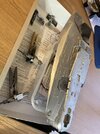
From left to right.
The long scalpel with #10A blade is for applying c/a along edges, for example a 90 degree corner.
The next three are #9 blades with the centre one having being re shaped for cutting etch brass from the fret. The other two are for the same but resin and plastic.
The next is a #10A used for general cutting of plasticard.
The Stanley is the workhorse and is used for most work with plasticard, there is a thin white strip next to the blade where is goes into the handle, this is a thin piece of plasticard that is there to stop the blade from moving when cutting.
And finally on the bench there is another scalpel with a #10A blade and that is re-cycled and sanded to a point to pick up the rivets - dip them into c/a and then position them onto the model - or any other small item.
Mike
Always interested in how others do things. I lucked into a decent number of handles when health and safety removed scalpels from our workplace…..safe knives are nowhere near as useful for modelling…..
I find retractaway handles great for protecting the edge on the best use scalpels as well.
I use 10a for straight cuts in plasticard as well. Never used one for applying CA though, just use a scrap of wire. Might try that
 Got an x-acto curved blade with the edge smoothed off with wet and dry to apply filler though.
 Only use a Stanley for heavy duty cuts myself. Got a couple of other heavier straight scalpel blades (number 25 I think) on a 3 handle for that job.
Never used a 9 blade. Tend to use a big curved blade (21?) on a number 4 handle for that job. Might try that one as well.
My most used is a number 15 on a three handle for scraping part seams. The curved edge doesn’t leave scratch marks on the workpiece.
Seems like there are almost an infinite number of scalpel shapes doesn’t it