Theme editor

Scale Model Shop

Chipping woes

Jolly Roger

New member
Joined
May 18, 2022
Messages
26
Reaction score
0
Points
0
1/3
Thread owner
Hi guys. I'm new to this forum so forgive me if I make any gaffs.
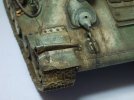
I have been modelling for a couple of years (AFV's), although I did some when I was a youngster. Anyhow my skill level is slowly improving and eventually decided I needed to master chipping. So bought some VMS Chip & Nick materials. Then saw that they recommend varnishing using their brand of varnish (no surprise there!) and leaving it to dry for 3 - 5 days. Well, I was hoping to have the weathering completed within those 3 - 5 days !! Therefore I decided to try the Hairspray technique. Watched several YouTube vids on the subject, did some trials on pieces of plastic, then applied the technique to my Stug IV. I used Mig Satin Lucky varnish over a rust colour. Left it for 2-3 hours then lightly sprayed two very light coats of Tresemme hairspray. Allowed it to dry for 30 minutes or so, then covered the model with 'Vallejo Air' Dark Yellow, again waited for approx 20-30 minutes. When I came back to the model the yellow had "crazed" all over the model, so I tried to concentrate on removing paint from the worst affected areas. As a result the chipping is well beyond acceptable.
Can anyone help by explaining why the paint 'crazed' and how to prevent it occuring on future models. I use all Vallejo paints. Either their 'Air' or 'Model' colours..
 
I don't use those paints, but I can only imagine it has reacted badly with the hairspray. I'd suggest testing on plastic spoons first before committing to a model wherever possible. :)
 
My guess would be that the hairspray wasn't dry enough.
Pete
 
Unfortunately I also think the paint has reacted with the hairspray. Maybe some ingredient in the hairspray or as Pete said it needed longer to dry.
I know many use hairspray very successfully but given that it contains all sorts of 'stuff', perfumes etc. I'm not surprised really that some paints react badly. I much prefer the dedicated chipping fluid for modelling. It's used in exactly the same way but I find you get much more predictable, consistent results.
Jim
 
Hi Roger

I HS chip all the time with Vallejo. I apply HS thickly then apply Vallejo and heat it all quickly with a hairdryer to create a crazed heavy chipped effect. I would assume therefore your HS has been either applied to thickly or/and the Vallejo was applied before the HS had fully dried. I can understand why you have laid down a layer of varnish first to protect your work. However if this has not dried properly ie one to two days dependant on the layers of varnish added, then this could have caused a reaction also.

For what its worth, for standard HS chipping, make sure the surface you are applying the HS to is fully dry. Do two quick passes of the hairspray over the area at arms length and THATS IT!. Leave to dry for 10 minutes and then repeat the process. Leave to dry fully then apply two or three THIN coats of Vallejo and then leave for around an hour (Dependant on your surroundings) to dry. The thickness of the paint layers will determine the quality of the chips. Thick coats will create heavy chips, thin coats will be small chips. Then either apply an amount of water to the area and allow it to react to the HS and then start chipping, or use a wet brush and gently start activating the HS and chip that way. Remember the HS will stay active for a few days if you do subsequent chipping layers. Practice is the key to this form of weathering. Happy modelling my friend
 
Hi Roger

I HS chip all the time with Vallejo. I apply HS thickly then apply Vallejo and heat it all quickly with a hairdryer to create a crazed heavy chipped effect. I would assume therefore your HS has been either applied to thickly or/and the Vallejo was applied before the HS had fully dried. I can understand why you have laid down a layer of varnish first to protect your work. However if this has not dried properly ie one to two days dependant on the layers of varnish added, then this could have caused a reaction also.

For what its worth, for standard HS chipping, make sure the surface you are applying the HS to is fully dry. Do two quick passes of the hairspray over the area at arms length and THATS IT!. Leave to dry for 10 minutes and then repeat the process. Leave to dry fully then apply two or three THIN coats of Vallejo and then leave for around an hour (Dependant on your surroundings) to dry. The thickness of the paint layers will determine the quality of the chips. Thick coats will create heavy chips, thin coats will be small chips. Then either apply an amount of water to the area and allow it to react to the HS and then start chipping, or use a wet brush and gently start activating the HS and chip that way. Remember the HS will stay active for a few days if you do subsequent chipping layers. Practice is the key to this form of weathering. Happy modelling my friend
Steve.
Surprised you don't then set fire to it , I know I would:nerd:;)
 
I use the cheapest hairspray I can find. Sometimes I just give it one good spray. Other times I decant and brush it on wherever needed.
I normally let it dry overnight.
 
Well I've tried the HS method and it didn't do it for me . Out late friend Simon convinced me that using chipping fluid was a more controlled method with consistent results. Tried and have to agree.
 
Hairspray does it for me, never used anything else but I always use Tamiya acrylic paint, just an old man stuck in the past. :smiling5:


Andy.
 
Thread owner
I don't use those paints, but I can only imagine it has reacted badly with the hairspray. I'd suggest testing on plastic spoons first before committing to a model wherever possible. :smiling3:
Hi Bob. I did in fact use around twenty plastic spoons and some other bits of plastic. Thinking that I had 'cracked it' lol, I proceeded with the process that seemed to work. Based on the helpful replies here, I'm thinking that I didn't allow enough time between the varnish and top coat. Back to the drawing board !
 
Thread owner
Unfortunately I also think the paint has reacted with the hairspray. Maybe some ingredient in the hairspray or as Pete said it needed longer to dry.
I know many use hairspray very successfully but given that it contains all sorts of 'stuff', perfumes etc. I'm not surprised really that some paints react badly. I much prefer the dedicated chipping fluid for modelling. It's used in exactly the same way but I find you get much more predictable, consistent results.
Jim
Hi Jim. Which brand of chipping fluid do you use and have you ever used VMS Chip & Scratch ?
 
Thread owner
Hi Roger

I HS chip all the time with Vallejo. I apply HS thickly then apply Vallejo and heat it all quickly with a hairdryer to create a crazed heavy chipped effect. I would assume therefore your HS has been either applied to thickly or/and the Vallejo was applied before the HS had fully dried. I can understand why you have laid down a layer of varnish first to protect your work. However if this has not dried properly ie one to two days dependant on the layers of varnish added, then this could have caused a reaction also.

For what its worth, for standard HS chipping, make sure the surface you are applying the HS to is fully dry. Do two quick passes of the hairspray over the area at arms length and THATS IT!. Leave to dry for 10 minutes and then repeat the process. Leave to dry fully then apply two or three THIN coats of Vallejo and then leave for around an hour (Dependant on your surroundings) to dry. The thickness of the paint layers will determine the quality of the chips. Thick coats will create heavy chips, thin coats will be small chips. Then either apply an amount of water to the area and allow it to react to the HS and then start chipping, or use a wet brush and gently start activating the HS and chip that way. Remember the HS will stay active for a few days if you do subsequent chipping layers. Practice is the key to this form of weathering. Happy modelling my friend
Hi Steve. That is an interesting thought " spraying at arms length". Any reason for that idea ? I know for a fact that I didn't do that, maybe 25-30cms max. Two light coats with a few minutes between coats. The base colour, varnish, H.S and top coat were all done in an afternoon. So It seems I didn't allow enough drying time between applications.
 
As mentioned, the paint has reacted with hairspray.

Primer coat, leave for at least 24 hrs to harden.

Hairspray, leave for 24 hrs to set.

Top coat, always do a patch test on the model, normally underside.

Then chip away.

Finally, varnish coat.
 
Thread owner
Steve.
Surprised you don't then set fire to it , I know I would:nerd:;)
Hi John. Based on all the replies here I suspect I didn't give it enough time between applications. Maybe I'll stick a couple of 'L' plates on the Stug. :rolling:
 
Thread owner
I use the cheapest hairspray I can find. Sometimes I just give it one good spray. Other times I decant and brush it on wherever needed.
I normally let it dry overnight.
Hi Ian. Do you decant into an airbrush at all, besides brushing it on ?
 
Thread owner
Hairspray does it for me, never used anything else but I always use Tamiya acrylic paint, just an old man stuck in the past. :smiling5:


Andy.
Hi Andy. I have never used Tamiya paints. Having a fair range of Vallejo paints I am reluctant to purchase other brands.
 
Thread owner
As mentioned, the paint has reacted with hairspray.

Primer coat, leave for at least 24 hrs to harden.

Hairspray, leave for 24 hrs to set.

Top coat, always do a patch test on the model, normally underside.

Then chip away.

Finally, varnish coat.
Hi Si. Yes it seems you are correct, based on all the replies, including yours. I like your idea of testing on the underside of the vehicle. Must remember that one.
 
Back
Top