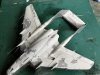
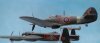
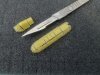
1. I spray the underside colour, which is almost invariably lighter than the upper surfaces, not worrying about the demarcation, except to make sure I cover it.
2. I mask the demarcation between upper and lower colours and then mask the underside of the model. I use a combination of tape and kitchen (aluminium) foil. The foil is a lot cheaper than Tamiya tape

3. Spray the lighter (or lightest) camouflage colour on the upper surface. I post-shade so I do anything in a version of this colour at this stage.
4. Mask the lighter colour. A splinter type pattern can simply be done with tape. Curvy patterns can be done with Blutack.
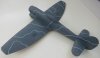
Once you are happy with the demarcations, fill in the area to be masked with tape and spray the next colour.
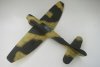
Remove masking and....voila!
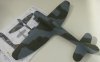
I work at 1/32, so I often spray the various national and other markings.
And then do all the usual gloss coat(s) and decaling thing.
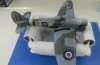
Small piccies, because they are just illustrations and will load a lot faster!
Canopies are a thing unto themselves. I like to have mine attached to the model, permanently or temporarily, when I paint because I don't want it to look 'stuck on' later. I have tried all sorts of methods, but almost always revert to the masking tape and new, sharp, No 11 scalpel blade. It is quite often a fiddle and on very complicated framing I am not averse to splashing out on some pre-cut masks. I certainly did that when I made a 1/48 Lancaster and it was worth every penny!
Cheers
Steve