Theme editor

Scale Model Shop

Please help.

Status
Not open for further replies.

scottie3158

SMF Supporters
Joined
Apr 27, 2018
Messages
14,674
Reaction score
1,120
Points
113
1/3
Thread owner
Hi all I need help, we know that I can hear you cry. I am having real issues with using my airbrushes. I never seem to be able to get the balance right of paint thickness and air pressure. I use an Iawata and a steenbach and have the same issues with both so I know its not them at fault.
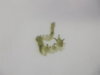
The first as you can see from the picture is spidering I was trying to spray really thin lines one second it sprays a perfect 1-2mm line then its starts to spider or splutter or stop completely.
The other issue is the airbrushes stop spraying but when you release the trigger it sprays a bit operate the trigger and it stops release the trigger and its sprays a small amount.
This is the spidering
DSCF2009.JPG

I usually use Valejo paints but have also tried Tamyia and get the same results.

Any help or pointers will be greatfully received, I am pulling my hair out.

cheers
Scottie
 
I am far from an expert, or even a proficient user, but I have had the spidering when my air pressure from the compressor has been too high in relation to the distance from the model I am spraying at...so very close for thin lines.

In terms of thinning...I have no clue and found this the biggest reason for my own airbrush fails when I have tried to thin myself. I therefor go exclusively for 'ready to spray' paints, which give me much more consistent results (Vallejo Air, Mig and MRP have all given me great results).

Other members will definitely be able to help more!
 
Thread owner
I am far from an expert, or even a proficient user, but I have had the spidering when my air pressure from the compressor has been too high in relation to the distance from the model I am spraying at...so very close for thin lines.

In terms of thinning...I have no clue and found this the biggest reason for my own airbrush fails when I have tried to thin myself. I therefor go exclusively for 'ready to spray' paints, which give me much more consistent results (Vallejo Air, Mig and MRP have all given me great results).

Other members will definitely be able to help more!
Jack, thanks mate I normally spray at about 20-25psi
 
I'm no expert, but 20 - 25 psi seems too high to me, I use about 15 psi. The continuing to spray after you release the trigger must be be something stopping the needle returning fully, so strip it and give a really good clean.
Pete
 
I agree with Pete regarding the spitting when releasing the needle, maybe a bit of dried paint in the nozzle. Do you have a nozzle reamer?

I also agree that the psi sounds high. I tend to thin Tamiya paints 50:50, I've never got the hang of the "skimmed milk consistency" and prefer a repeatable formula. I probably spray at around 15 psi. I say proabably because I have a MAC valve, and the compressor is actually set at 50 psi, but with the MAC valve open around 1 turn the restricted airflow equates to around 15. :)
 
Hi Scottie
I would agree that the air pressure may be too high. 20/25 psi is probably OK to lay down large areas of paint or primer but for close work I'd drop it right down. Like Bob my compressor is set at 30psi but I have a MAC valve and adjust with that. I have no idea really what I spray at - I mix the paint and test spray and depending on the result I adjust the MAC.
On my H&S the tension of the trigger spring can be adjusted and maybe yours is too weak so the needle return is not positive. I have my spring quite 'fierce' so that the trigger really snaps forward when released.
Jim
 
I use a H&S Ultra and i tend to thin my mixes to a 'cheeky' 50/50..(works brilliantly with Tamiya and Model AIR), Also i tend to spray around 10 to 15 psi.. although i have gone even lower when i'm doing close up detail work, or painting 'mottling' like you'd see on a BF109..
 
Thread owner
I'm no expert, but 20 - 25 psi seems too high to me, I use about 15 psi. The continuing to spray after you release the trigger must be be something stopping the needle returning fully, so strip it and give a really good clean.
Pete
Thanks Pete
 
Thread owner
Thanks Guys I will take everything on board and give it ago tomorrow. Many thanks for your prompt replies.
 
Yup the guys have pin pointed the problem. If the problem affects both your airbrushes then discount the split in the nozzle. Air pressure at the minimum for close ups...also a quick drying paint really diluted helps perhaps something that uses solvents like Tamiya or Gunze.

Cheers,
Richard
 
Thread owner
Yup the guys have pin pointed the problem. If the problem affects both your airbrushes then discount the split in the nozzle. Air pressure at the minimum for close ups...also a quick drying paint really diluted helps perhaps something that uses solvents like Tamiya or Gunze.

Cheers,
Richard
cheers Richard.
 
Also test it on actual plastic smooth surfaces and not paper as paper is absorbant. Totally different effect.

Cheers,
Richard
 
Spidering can be caused by overthinned paint, spraying too close, and using too much air.....also could be caused by too much paint....
Try reducing pressure and using a very light touch with the paint to start with....think of it as a brush rather than a spray gun....

For the blocking....
What size nozzles Scottie? I spray Tamiya using Mr levelling thinners easily with a 0.2 mm but find it too small for pure acrylic. You may need a 0.3 or bigger nozzle...
The blocking sounds like tip drying....or dirty paint path....I would carry out a full strip and scrupulous clean of the brush before doing anything else....
Just to be sure (not trying to insult you LOL) when using the brush remember it’s air on paint on to start, then paint off air off to stop......never run the paint without air.....
If any of this seems counterintuitive then feel free to ignore me LOL...
Cheers
Tim
 
Thread owner
Spidering can be caused by overthinned paint, spraying too close, and using too much air.....also could be caused by too much paint....
Try reducing pressure and using a very light touch with the paint to start with....think of it as a brush rather than a spray gun....

For the blocking....
What size nozzles Scottie? I spray Tamiya using Mr levelling thinners easily with a 0.2 mm but find it too small for pure acrylic. You may need a 0.3 or bigger nozzle...
The blocking sounds like tip drying....or dirty paint path....I would carry out a full strip and scrupulous clean of the brush before doing anything else....
Just to be sure (not trying to insult you LOL) when using the brush remember it’s air on paint on to start, then paint off air off to stop......never run the paint without air.....
If any of this seems counterintuitive then feel free to ignore me LOL...
Cheers
Tim
Thanks Tim, insult away mate lol all sounds good I will give it a try tomorrow.
 
Paul
If all else fails there is always .
1569500508570.png
Not that I would of course contemplate anything so extreme.


I always have used a little thinners and flow improver Vallejo 71-562 with my Vallejo .
is.
20 drops of paint,

5 drops of thinners,

2 drops flow improver.
Pressure 15 up.

Any spitting or lack of paint I always find it is crap in the needle housing
HTH
 
Thread owner
Paul.
improverIf all else fails there is always .

Not that I would of course contemplate anything so extreme.


I always have used a little thinners and flow improver Vallejo 71-562 with my Vallejo .
is.
20 drops of paint,

5 drops of thinners,

2 drops flow improver.
Pressure 15 up.

Any spitting or lack of paint I always find it is crap in the needle housing
HTH
Thanks John, I will try that. I have found a split in the nozzle on my Iawata Neo so will order some spares, and possibly treat myself to a new brush.
 
Status
Not open for further replies.
Back
Top